Summary
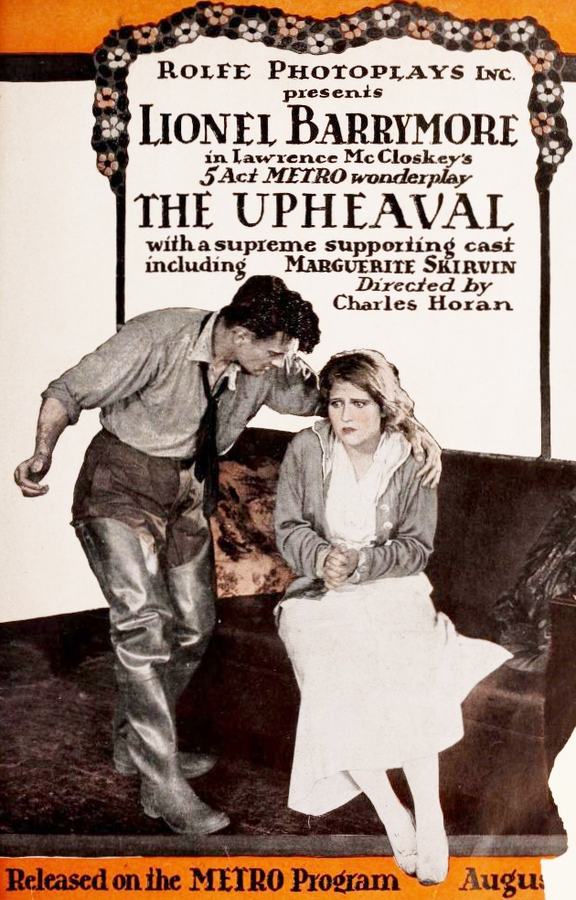
In the labyrinthine corridors of municipal power, "The Upheaval" unfurls the compelling saga of Jim Gordon, a man thrust into the ignominious legacy of his father, "Big Jim," whose name echoes with the taint of entrenched corruption. Yet, guided by the spectral hand of his deceased mother's ideals, Jim harbors a profound determination to transmute this inherited apparatus of graft into a force for genuine civic betterment. His every reformative endeavor, however, is met not with approbation but with an ingrained public and political skepticism, each action meticulously scrutinized through the jaundiced lens of his predecessor's malfeasance. The successful passage of vital legislation, from the Utilities Bill to the critical Water Rate Bill, is paradoxically interpreted by the reform-minded "New American" newspaper as a sophisticated charade, a calculated prelude to a more insidious scheme to defraud the unsuspecting populace. Gordon's most egregious error in judgment materializes in his appointment of Sidney Benson as Director of Public Safety—a charismatic but ultimately venal figure whose veneer of progressivism merely masks a rapacious self-interest. Benson's perfidy extends to his engagement to Joan Madison, a fervent advocate for the squalid tenement dwellers, whose urgent plea for support on the Sanitary Bill is met with his characteristic prevarication. Madison, disillusioned, seeks recourse with Benjamin Waters, the astute editor of "The New American," embarking on an investigative series that, by serendipitous design, leads her to a mountain retreat. There, destiny orchestrates a fateful encounter, kindling an unexpected romance with none other than Jim Gordon, also seeking solace from the city's relentless pressures. Their nascent connection faces its ultimate crucible upon their return, as Joan discovers Gordon's impassioned pursuit of the Sanitary Bill directly imperils her own father, the absentee landlord of the very properties she champions. A searing moral dilemma ensues, culminating in Joan's courageous subjugation of personal interest to the greater principle. The bill passes, leaving her father financially ruined. Gordon's subsequent proposal—a marriage offered as a solution to her father's destitution—casts a pall of transactional cynicism over Joan's burgeoning affection. Though she acquiesces, convinced of his mercenary motives, their union is forged in a crucible of profound mistrust. The dramatic entry of a new traction company into the city's political arena further complicates matters, prompting Gordon to strategically acquire the incumbent concern. This pivotal move is tragically misconstrued by Joan, who, fueled by lingering suspicions and Benson's insidious whispers, believes it another act of public deceit, leading her to inadvertently betray her husband to Benson. The ensuing front-page exposé in "The New American" ignites a furious public outcry, culminating in a dramatic, tension-fraught confrontation before the city council. In this climactic moment, Gordon, with a clarity born of desperation, unveils his true, magnanimous intent: the outright donation of the newly acquired traction company to the city, a profound act of civic atonement for his father's transgressions and a heartfelt tribute to his mother's enduring legacy. This extraordinary gesture leaves the Gordons utterly penniless but irrevocably united, embarking on a new life, stripped of material wealth but immeasurably enriched by integrity, mutual understanding, and an unshakeable bond.
Synopsis
On Jim Gordon falls the political mantle of his father, "Big Jim" Gordon. The father has been the leader of a corrupt ring, but the son determines to be true to the teaching of his dead mother, and use his position for good purposes. However, he is not given credit for altruism. It is taken for granted both by the general public and by the politicians whose leadership he has inherited that he is a grafter, as his father has been. He succeeds in getting the Utilities Bill passed. The New American, a newspaper under reform management, warns the public against what it calls his hypocrisy. When he gets the Water Rate Bill passed they still accuse him of having some nefarious scheme "up his sleeve" to defraud the public. Gordon's only mistake is in making Sidney Benson Director of Public Safety. Benson is a fraud, who is posing as a reformer to further his own ends. He is engaged to Joan Madison, who is interested in the passing of the Sanitary Bill to provide for better conditions among the tenement dwellers. She goes to Benson for aid in the matter, but he gives an evasive answer. She then goes to Benjamin Waters, the editor of the New American, and he asks her to write a series of articles exposing local conditions. She consents, but goes to a mountain resort for quiet in order to write. Through an accident she meets Gordon, who has also gone to the same county for a rest, and they fall in love. On her return to the city she decides to plead with Gordon himself to have the Sanitary Bill passed, and is surprised to meet her friend of the mountains. He tells her that her own father is the owner of the houses in the debated district and that the destruction of these buildings will mean penury for her. Principle triumphs over selfishness and she tells him to go ahead and have the bill passed. He does so, and her father is left without means. Gordon tells him that all his money difficulties will be solved if he will influence Joan to become his wife. Joan's instinctive fondness for Gordon is clouded by what she thinks is his contemptible bargaining, but she consents. They are married, but she still believes that her husband is a grafter. A new traction company comes into the field to fight the methods of the old one. The original company accuses Gordon of no longer looking after its interests. His answer, which is an offer to buy the concern, is gladly accepted. Joan learns of the transaction and tells Benson, thinking her husband intends to defraud the public. An accusation of Gordon is made on the front page of the New American on the morning the franchise bill is to come up before the city council. A great crowd congregates, determined to fight Jim Gordon and any measure he may advocate. He demands a hearing. Briefly outlining the benefits he has conferred on the city, he tells them he has bought the company in order to make a present of it to the city in honor of his dead mother and to atone for the wrongs his father has done the community. Gordon and Joan are left penniless, but they begin a new life together.
Review Excerpt
"
The Upheaval: A Masterclass in Political Intrigue and Moral Fortitude
In the annals of cinematic storytelling, few narratives capture the thorny essence of political idealism battling entrenched corruption with the visceral intensity of "The Upheaval." This film is not merely a period piece; it's a timeless exploration of character, perception, and the relentless pursuit of integrity in a world determined to doubt it. From its opening frames, we are plunged headlong into a municipal la..."