DbcultAccessing Vault...
5.4/10
Senior Film Conservator
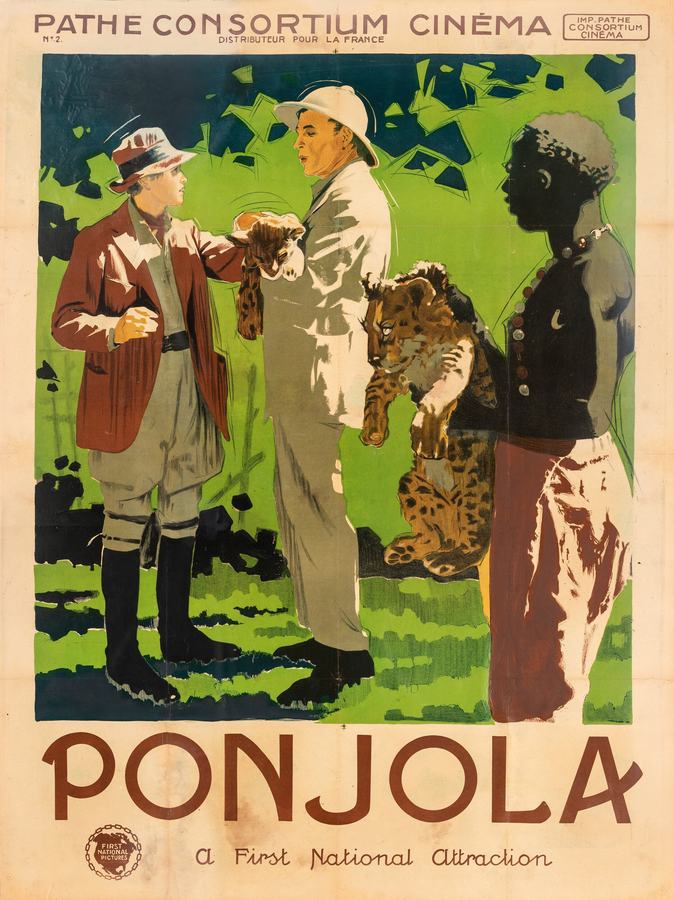
A definitive 5.4/10 rating for a film that redefined the boundaries of cult cinema. Ponjola remains a cornerstone of transgressive art.
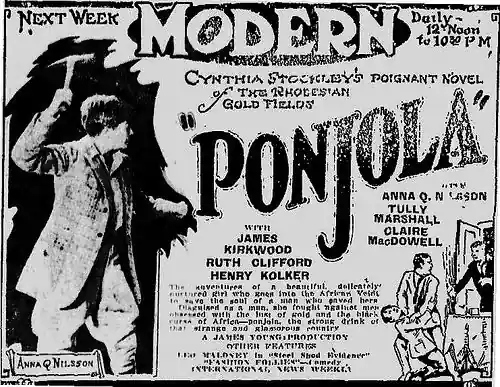
The year 1923 brought forth a cinematic curio, a silent film steeped in exoticism and the high drama of human fallibility: Ponjola. This isn't just another tale of a damsel in distress; it's a vibrant, sometimes unsettling, exploration of agency, sacrifice, and the corrosive power of environment. At its core lies the magnetic performance of Anna Q. Nilsson as Flavia Desmond, a character so resolutely determined she shatters the conventional molds of early 20th-century heroines. Her journey into the sun-baked, gold-fevered heart of Rhodesia is less a physical expedition and more a spiritual crusade, a compelling testament to the depths of human connection and the lengths one might go to repay a life-altering debt.
The narrative, adapted from Cynthia Stockley's novel by Charles Logue, plunges us headfirst into a world where the stakes are existential. Flavia Desmond, a woman whose past is hinted at with a certain gravity, finds herself beholden to Lundi Druro (James Kirkwood), a man who, at a critical juncture, offered her salvation. The specifics of this initial rescue are deliberately veiled, lending an almost mythical quality to their bond, but the audience understands the profound nature of her obligation. This isn't a transactional debt; it's a soul-deep commitment. When news reaches her that Druro has succumbed to the siren call of the Rhodesian gold fields and, more insidiously, to the potent, mind-numbing local brew known as Ponjola, Flavia doesn't hesitate. Her mission transcends mere gratitude; it is an act of reciprocal grace, an attempt to pull a drowning soul back from the abyss.
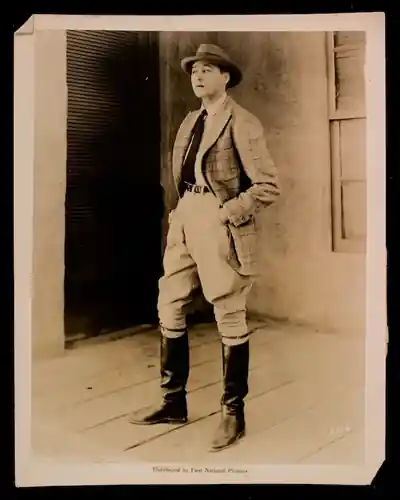
The African veldt itself functions as a character in Ponjola, a vast, untamed expanse that both promises fortune and threatens to consume those who venture into its depths. The cinematography, though limited by the technology of the era, strives to convey the rugged beauty and inherent dangers of this exotic locale. One can almost feel the scorching sun and the dust motes dancing in the air. This setting is far removed from the drawing-rooms and urban landscapes prevalent in many contemporary dramas, offering audiences a thrilling escapism that was a hallmark of silent cinema's appeal. The gold fields are not just a backdrop; they are a crucible, a testing ground for morality and endurance, where the veneer of civilization thins to reveal raw human desires.
Central to the film's thematic tapestry is the titular 'Ponjola,' a drink that embodies the 'black curse of Africa' as described in the plot synopsis. This isn't merely alcohol; it's presented as an almost mystical, destructive force, an elixir that strips men of their reason, their integrity, and ultimately, their lives. It represents the ultimate temptation in a land already brimming with the lust for gold. Lundi Druro's descent into its thrall is depicted not as a simple weakness, but as a tragic capitulation to a powerful, almost supernatural influence inherent in the very soil of this glamorous, yet dangerous, country. The film uses Ponjola as a potent metaphor for all the seductive dangers of unchecked desire and the perils of frontier life, a constant, insidious threat lurking in the shadows of every gold prospector's dream.
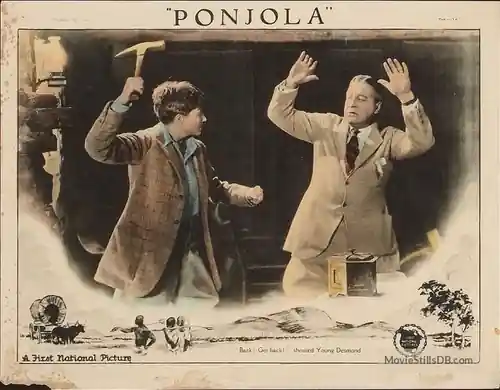
Flavia's decision to disguise herself as a man is a stroke of narrative genius, allowing her to navigate a patriarchal, rough-and-tumble environment that would otherwise be inaccessible or overtly hostile to a woman. This trope, while not entirely unique to Ponjola, is deployed here with particular effectiveness, emphasizing Flavia's courage and resourcefulness. It speaks volumes about the limitations placed upon women in that era, even as it celebrates a woman's ability to transcend them through sheer force of will. In a world dominated by men 'charged with the lust of gold,' her disguise is not just a practical necessity but a symbolic act of defiance, enabling her to fight on equal footing, albeit under false pretenses, against the very forces that threaten Druro.
Anna Q. Nilsson's portrayal of Flavia is a masterclass in silent film acting. She conveys strength, vulnerability, and an unshakeable resolve through expressive physicality and nuanced facial performance. Her eyes, in particular, are windows into Flavia's soul, reflecting both her determination and the profound emotional toll of her mission. She embodies the 'gallant girl' of the synopsis, but imbues her with a layered complexity that elevates the character beyond a simple adventurous type. Her performance anchors the film, making Flavia's seemingly impossible task believable and her emotional journey resonant. This kind of robust, independent female character was a powerful draw for audiences, much like the compelling central figures in dramas such as The Girl Who Wouldn't Quit, where a woman's sheer tenacity drives the narrative forward against overwhelming odds. Nilsson's Flavia is cut from a similar cloth, a woman who refuses to be a bystander in her own or another's fate.
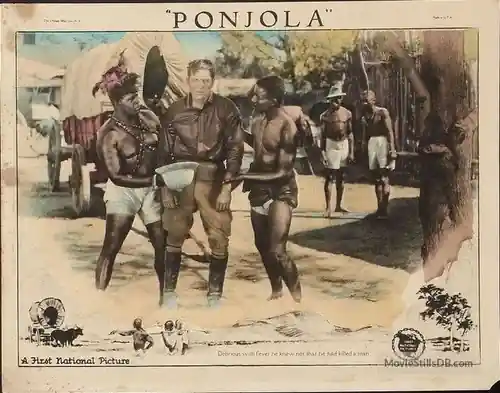
The film delves into universal themes that resonate far beyond its specific setting. Redemption is paramount, not just for Lundi Druro, but implicitly for Flavia herself, who seeks to balance a moral ledger. The idea of saving another's soul is a powerful, almost spiritual concept, elevating the narrative above a mere adventure story. It suggests that human connection and empathy can triumph over the most destructive forces, whether they be greed, addiction, or the harsh realities of a lawless frontier. The juxtaposition of the raw, untamed landscape with these deeply personal moral struggles creates a compelling tension that keeps the audience invested.
James Kirkwood as Lundi Druro delivers a performance that effectively portrays a man teetering on the brink of self-destruction. His character's arc is one of tragic decline and potential rebirth, a mirror to the dangers inherent in the very pursuit of wealth. The film doesn't shy away from depicting the ugly side of human nature, showing how easily men can be corrupted when isolated from societal norms and exposed to powerful temptations. This exploration of moral decay and the potential for salvation aligns with the weighty themes often found in character-driven dramas of the era, perhaps even echoing the profound moral quandaries explored in a film like The Blindness of Virtue, which examined societal pressures and personal integrity.
Silent films, particularly those of the early 1920s, often served as a fascinating mirror to societal anxieties and aspirations. Ponjola, with its exotic setting and strong female lead, tapped into a public fascination with adventure and the burgeoning notion of female independence. The film's depiction of a woman taking charge of her destiny, even if under disguise, would have been particularly appealing to audiences grappling with changing gender roles in the wake of the suffrage movement and the First World War. It offered a vision of female strength that transcended traditional expectations, making Flavia a compelling and aspirational figure.
The representation of Africa, while undoubtedly viewed through a colonial lens typical of the period, nonetheless provides a vibrant, albeit simplified, backdrop for the human drama. The 'glamorous country' is also a dangerous one, a place where fortunes are made and lost, and where the boundaries of morality are constantly tested. The film's ability to transport audiences to such a distant and thrilling locale was a significant part of its appeal, showcasing the power of cinema to expand horizons and ignite the imagination. This escapist quality, combined with a potent dramatic core, marks Ponjola as a noteworthy entry in the silent film canon, perhaps finding a thematic kinship with other epic journeys of its time, though few dared to venture quite so far into the wilderness for such a personal quest.
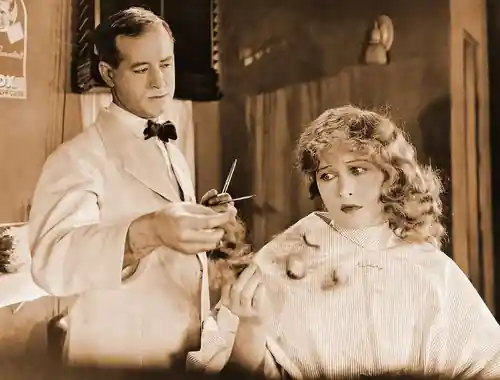
The direction, while not attributed in the provided details, would have been critical in shaping the film's atmosphere and pacing. Silent films relied heavily on visual storytelling, intertitles, and the emotional resonance of their actors. The effective portrayal of the vast Rhodesian landscape, the chaotic energy of the gold fields, and the internal turmoil of the characters would have required a keen directorial eye. The use of close-ups to convey emotion, wide shots to establish setting, and dynamic editing to build suspense were all tools in the silent filmmaker's arsenal, and Ponjola likely employed them to great effect to draw its audience into Flavia's high-stakes mission.
The visual language of the film, from the costumes (especially Flavia's disguise) to the set design (even if rudimentary for the veldt), played a crucial role in immersing viewers in the narrative. The contrast between Flavia's initial elegance and her rugged male attire underscores her transformation and commitment. Similarly, the depiction of the gold fields, teeming with desperate men, would have been crafted to evoke both the promise and the peril of such an environment. The silent era's reliance on expressive gestures and exaggerated emotions, often misunderstood by modern audiences, was precisely what allowed the dramatic weight of a story like Ponjola to land with impact, translating complex feelings and motivations without spoken dialogue.
While Ponjola may not be as widely remembered as some of its more famous contemporaries, it represents a fascinating example of early 20th-century adventure cinema infused with significant dramatic weight. It's a film that challenged conventions, not just through its exotic setting but through its portrayal of a proactive, determined female protagonist. For those interested in the evolution of cinematic storytelling, particularly the development of character-driven narratives within the silent era, Ponjola offers rich material for study. It stands as a testament to the enduring power of stories about courage, sacrifice, and the relentless pursuit of redemption in the face of overwhelming odds.
The film’s exploration of addiction, greed, and the human capacity for both degradation and elevation remains remarkably pertinent. The 'black curse' of Ponjola, while specific to its setting, can be seen as a timeless metaphor for any destructive force that threatens to consume the human spirit. Flavia Desmond’s unwavering commitment to saving Lundi Druro’s soul, even when it means risking her own life and identity, speaks to a universal truth about the strength of love, friendship, or simply, profound human compassion. In an era often caricatured for its melodramatic excesses, Ponjola delivers a surprisingly nuanced and emotionally resonant journey, proving that silent cinema was capable of tackling complex themes with both flair and gravitas. It reminds us that sometimes, the greatest adventures are those undertaken for the sake of another's very essence, a journey to reclaim not just a life, but a soul. This profound quest for redemption and self-sacrifice could even draw parallels with the moral struggles depicted in a film like The Soul of Kura San, which likely explored the deeper, more spiritual dimensions of human existence and ethical dilemmas within its own unique narrative framework.
The enduring appeal of such narratives lies in their ability to tap into fundamental human experiences – the desire for purpose, the struggle against temptation, and the profound impact one individual can have on another’s destiny. Ponjola, with its vibrant characters and perilous setting, encapsulates these elements, making it a compelling, if lesser-known, gem of silent film history. It invites us to consider the true cost of salvation and the extraordinary courage it takes to pursue it, especially when the path is fraught with danger, disguise, and the insidious pull of a potent, soul-stealing drink. Its narrative echoes the timeless struggles of humanity, proving that even a century later, its core message of selfless devotion and the fight for redemption remains powerfully resonant, illuminating the enduring spirit of adventure and the unbreakable bonds that can tie one human heart to another.
IMDb —
1918
Community
Log in to comment.