DbcultAccessing Vault...
Cult Review
Senior Film Conservator
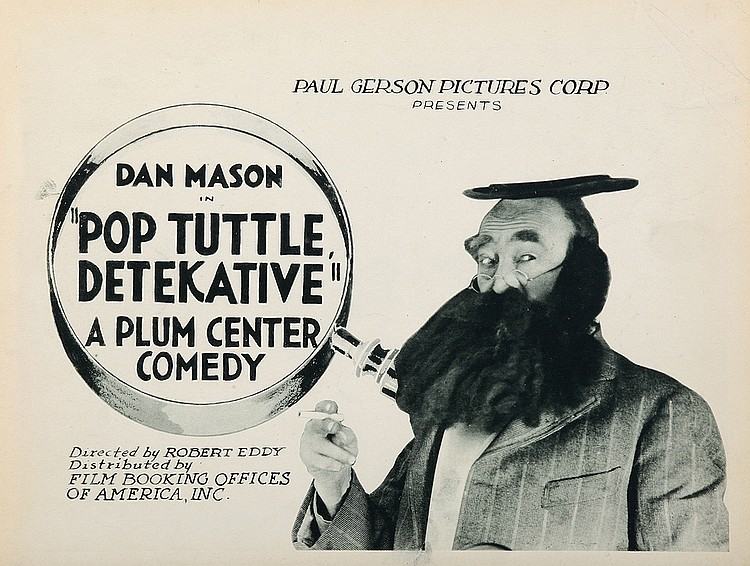
Stepping back into the nascent days of cinema, we encounter "Pop Tuttle, Deteckative", a film that, despite its seemingly simple premise, offers a rich tapestry of comedic potential and a fascinating glimpse into the cultural zeitgeist of its era. On the surface, the plot — Pop takes a correspondence school course in the art of sleuthing — might appear almost laughably concise. Yet, within this brevity lies an entire universe of character study, social commentary, and, most importantly, the boundless possibilities for physical and situational comedy that defined the silent film age. This isn't just a film about a man learning a new skill; it's a delightful deconstruction of aspiration, the allure of the heroic, and the often-hilarious disconnect between theoretical knowledge and practical application.
At its core, "Pop Tuttle, Deteckative" taps into a universal human desire: the yearning for significance, for a role beyond the everyday. Pop Tuttle, portrayed by the venerable Dan Mason, is not a professional, nor is he naturally gifted. He is, by all accounts, an everyman, whose decision to enroll in a correspondence course speaks volumes about the burgeoning accessibility of education and the American spirit of self-improvement. These courses, popular at the time, promised to transform ordinary citizens into experts in various fields, from engineering to, indeed, detective work. The humor, then, springs from the inherent absurdity of someone attempting to apply textbook theories of deduction, disguise, and surveillance to the often-unremarkable realities of suburban life. It’s a premise ripe for the kind of gentle satire that characterized many silent comedies, where grand ambitions frequently collided with clumsy execution.
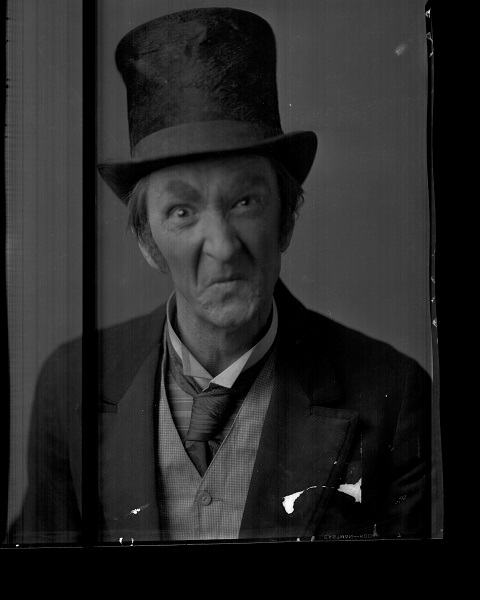
Dan Mason, a prolific actor of the early 20th century, brings to Pop Tuttle a particular brand of earnestness that makes his eventual blunders all the more endearing. Mason was known for his ability to convey character through subtle facial expressions and well-timed physical comedy, a necessity in an era devoid of spoken dialogue. One can envision Pop, perhaps with a newly acquired magnifying glass, meticulously inspecting a scuff mark on his kitchen floor, or donning a poorly fitting trench coat and slouch hat while attempting to shadow his own mailman. The effectiveness of such gags relies heavily on Mason's ability to maintain a serious, almost scholarly demeanor, even as chaos erupts around him. This commitment to his character's self-perception as a master sleuth, despite all evidence to the contrary, is where the true comedic gold lies. His performance likely resonates with the same kind of well-meaning but ultimately inept protagonist seen in films like Fools and Their Money, where characters often stumble into or out of predicaments through sheer accident rather than design.
The presence of Wilna Wilde as a co-star suggests a dynamic often found in these domestic comedies: the long-suffering, pragmatic spouse who serves as a foil to the protagonist's flights of fancy. Wilde, a talented actress of the period, would likely have portrayed Pop’s wife with a mixture of exasperation and underlying affection. Her reactions – a raised eyebrow, a sigh, a roll of the eyes – would have provided a crucial grounding element, allowing the audience to share in her bewilderment and amusement as Pop’s detective escapades inevitably spiral into domestic disarray. Imagine her attempting to prepare dinner while Pop, convinced of a nefarious plot, dismantles the pantry in search of 'clues' or interrogates the family cat about a missing sardine. This interplay between the aspiring hero and the everyday reality, often personified by the spouse, is a timeless comedic trope, as seen in other films exploring marital dynamics and misunderstandings like My Wife's Relations, where domestic bliss is constantly challenged by external or self-imposed absurdities.
Al Giebler, credited as the writer, was a prolific scribe during the silent era, known for crafting narratives that often blended humor with relatable human situations. His work on "Pop Tuttle, Deteckative" demonstrates a keen understanding of comedic pacing and character development, even within the confines of short-form silent cinema. Giebler’s genius would have been in orchestrating a series of escalating misunderstandings, where each attempt by Pop to apply his textbook knowledge leads to a more convoluted and amusing predicament. The humor is derived not from malice or cruelty, but from Pop's earnestness and the sheer incongruity of his actions. It’s a gentle, observational humor that invites the audience to laugh with, rather than at, the protagonist. This kind of nuanced writing is essential for a film that relies heavily on visual storytelling and character-driven gags, ensuring that the audience remains invested in Pop's journey, however misguided it may be.
The film likely leverages the visual language of silent cinema to great effect. Intertitles, far from being mere dialogue substitutes, would have been employed for comedic timing, delivering punchlines or highlighting Pop's grandiose internal monologues. Exaggerated expressions, rapid-fire editing for chase sequences (even if they're just around the house), and the classic 'reveal' shot would have been vital tools in Giebler's and the director's arsenal. One can imagine a sequence where Pop, having learned about fingerprint dusting, covers every surface of his home in a fine powder, much to his wife's chagrin, or attempts to 'tail' a suspicious-looking cat, only to be led on a wild goose chase through the neighborhood. The physical comedy, a cornerstone of silent film, would have been paramount, with Mason’s movements conveying Pop’s clumsy attempts at stealth or his exaggerated reactions to perceived breakthroughs.
The narrative arc, though brief, allows for exploration of classic comedic tropes. Pop's 'cases' are undoubtedly mundane, perhaps a missing pie, a strange noise in the attic, or a neighbor's odd gardening habits. But to Pop, these are high-stakes mysteries, demanding the full application of his newly acquired skills. This transformation of the ordinary into the extraordinary, through the lens of a deluded amateur, is a rich source of humor. The film could even delve into mistaken identity, a staple of silent comedies, where Pop's attempts at disguise or surveillance lead him to accuse innocent parties, creating further comedic chaos. This parallels the kind of misdirection and comical confusion seen in films like The Ghost in the Garret, where perceived threats turn out to be far less sinister, but no less entertaining in their unfolding.
Moreover, "Pop Tuttle, Deteckative" speaks to a broader cultural fascination with detectives and mysteries that was surging in the early 20th century. Sherlock Holmes was a global phenomenon, and dime novels featuring amateur sleuths were devoured by the public. The idea that anyone, with a bit of schooling and a lot of gumption, could become a master of deduction was incredibly appealing. This film, then, functions as a lighthearted commentary on this cultural trend, gently poking fun at the romanticized image of the detective while celebrating the common person's desire for excitement and purpose. It's a reminder that heroism isn't always found in grand adventures, but sometimes in the earnest, if misguided, attempts of an individual to make their mark on the world, even if that world is just their own backyard.
The film's enduring appeal, even today, lies in its simplicity and its universal themes. We've all, at some point, felt the urge to be more, to do more, to solve a puzzle. Pop Tuttle embodies that innocent ambition. His journey, from student to self-proclaimed sleuth, is a comedic odyssey of self-discovery, albeit one paved with pratfalls and misunderstandings. The film’s charm would also stem from its ability to evoke genuine warmth for its protagonist, despite his flaws. He's not malicious or arrogant; he's simply enthusiastic and perhaps a little too literal in his interpretation of his correspondence course materials. This makes him relatable and his predicaments genuinely funny, rather than pathetic.
Comparing Pop Tuttle to other contemporary characters, one might see echoes of the 'fish out of water' comedic stylings found in films like Hop to It, Bellhop, where an inexperienced individual is thrust into a role beyond their immediate capabilities, leading to predictable yet delightful pandemonium. Both films likely capitalize on the humor derived from an ordinary person trying to navigate an extraordinary (or self-imposed extraordinary) situation with limited practical skills. The earnest effort, combined with the inevitable fumbling, creates a sympathetic and humorous character arc. The stakes in Pop's world are low, but his commitment is absolute, which is where the comedic tension truly resides.
The film also serves as a valuable historical artifact, showcasing the visual grammar and narrative conventions of early silent comedies. The reliance on clear, emphatic gestures, the use of props as extensions of character (Pop’s magnifying glass, his 'disguises'), and the rapid-fire succession of gags would have been expertly crafted to keep audiences engaged. The absence of sound meant that every visual cue had to be precise, every reaction exaggerated enough to be understood, yet nuanced enough to convey emotion. Al Giebler's script would have provided the framework, but it was the actors' physical prowess and the director's visual storytelling that truly brought Pop's adventures to life.
The success of "Pop Tuttle, Deteckative", even if it's not as widely known today as some of its contemporaries, lies in its ability to capture a specific type of innocent, aspirational humor. It’s a film that doesn't aim for grand philosophical statements or complex character arcs, but rather seeks to entertain through the simple, relatable premise of an ordinary man trying to be extraordinary. It celebrates the spirit of endeavour, even when that endeavour is comically misguided, and reminds us that sometimes, the greatest mysteries are the ones we invent for ourselves. The enduring legacy of such films is their capacity to transport us to a simpler time, where a correspondence course could turn an everyman into a hero, at least in his own mind, and where laughter was found in the most unexpected of domestic investigations. It's a charming, unpretentious piece of cinematic history that reminds us of the power of a good, honest laugh. Pop Tuttle's journey is a testament to the enduring appeal of the underdog, the dreamer, and the well-intentioned amateur who, despite all odds, manages to keep us utterly entertained. His adventures, though likely confined to the parameters of his immediate environment, resonate with a universal desire to find purpose and excitement in the mundane. The film, in its quiet way, champions the spirit of an individual daring to step beyond their perceived limitations, even if the results are more comical than heroic.
Ultimately, "Pop Tuttle, Deteckative" is more than just a silent comedy; it is a cultural touchstone reflecting the aspirations of a burgeoning middle class, the burgeoning popularity of self-improvement, and the timeless appeal of a good-hearted buffoon. It's a film that, through its unassuming premise, delivers a masterclass in comedic storytelling, utilizing the unique strengths of silent cinema to craft a memorable and genuinely funny experience. The performances of Dan Mason and Wilna Wilde, under the guidance of Al Giebler's sharp wit, would have undoubtedly created a charming and indelible portrait of an amateur detective whose biggest challenge wasn't solving a crime, but simply navigating the hilarious pitfalls of his own boundless enthusiasm. The film’s resonance echoes through the decades, reminding us that the human spirit, in its earnest pursuit of self-betterment, often provides the richest source of both humor and heartwarming connection. It’s a delightful journey into the heart of early cinematic comedy, a testament to the power of a simple idea executed with charm and wit.
IMDb —
1928
Community
Log in to comment.