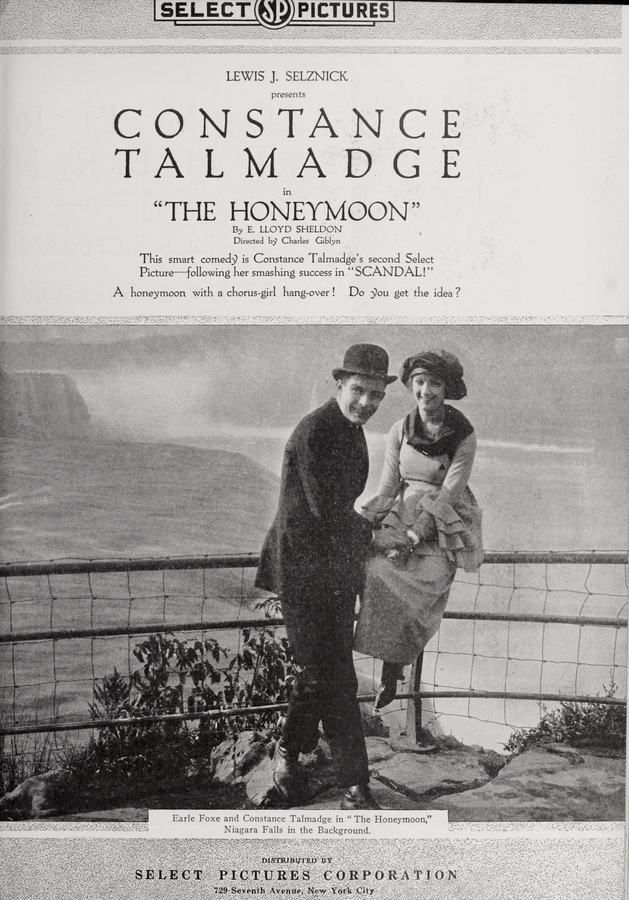
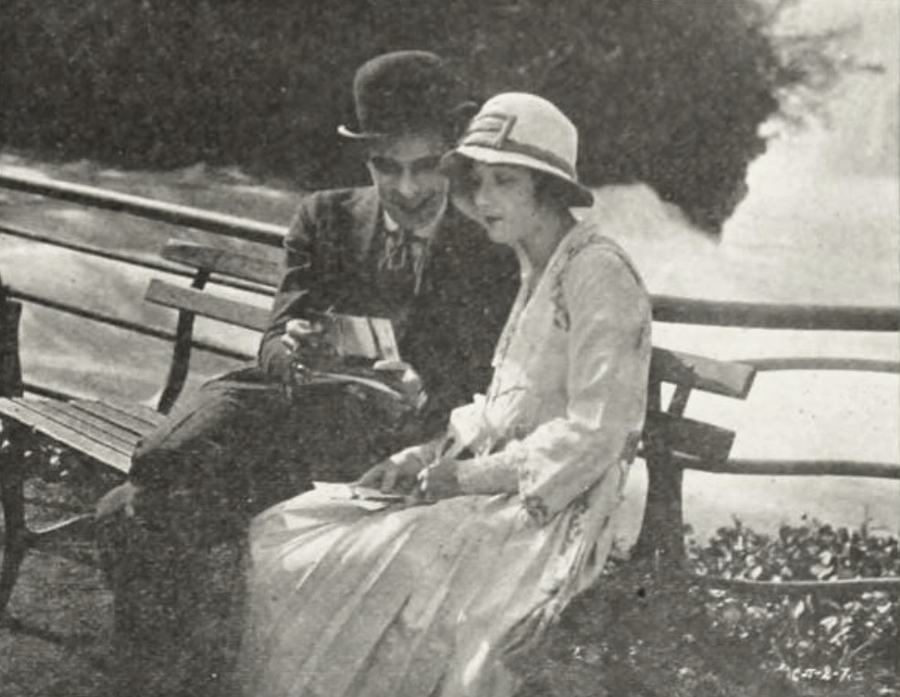
Picture Niagara Falls in the early twenties: a honeymoon conveyor belt where newlyweds pose under rainbows that feel leased from Heaven and due back by check-out time. Into this postcard steps The Honeymoon, a brisk one-reel confection that pretends to be a marriage manual yet behaves like a gin rickey splashed in the face of monogamy. Julia Burns, all darting eyes and bee-stung grin, plays Susan Lane whose freshly inked marriage license might as well be litmus paper: one acidic gaze at her husband chatting up bridesmaid Marion and the whole thing turns scarlet.
Earle Foxe’s Richard Greer is no mustache-twirling cad; he’s the era’s default gentleman—pocket square like a peace flag, smile that promises brokerage tips rather back-seat trysts. The tension, then, is entirely interior, a reminder that in silent cinema the psyche performs in pantomime. Every shrugged shoulder from Foxe becomes a Rorschach test for Burns’s escalating paranoia. The camera, wedged somewhere between observatory and accomplice, lingers on her nostrils’ micro-flare, the way one might study ticker tape for portents of crash.
Legal Farce, Spiritual Fog
Russell Bassett’s Uncle Jimmy is supposed to function as deus ex machina, instead he’s more like a carnival barker who swears the bean-bag toss is easy. His master plan—to let Susan believe she’s divorced—feels almost Jacobean: a moral experiment conducted on a soul too fragile for the petri dish. But the law partner, equal parts Mercury and numbskull, rushes the paperwork, and the farce crystallizes into tragedy. There’s something chillingly modern here: institutional velocity trampling intention, a theme that prefigures Sleepy Sam, the Sleuth where red tape strangles justice as efficiently as any villain’s garrote.
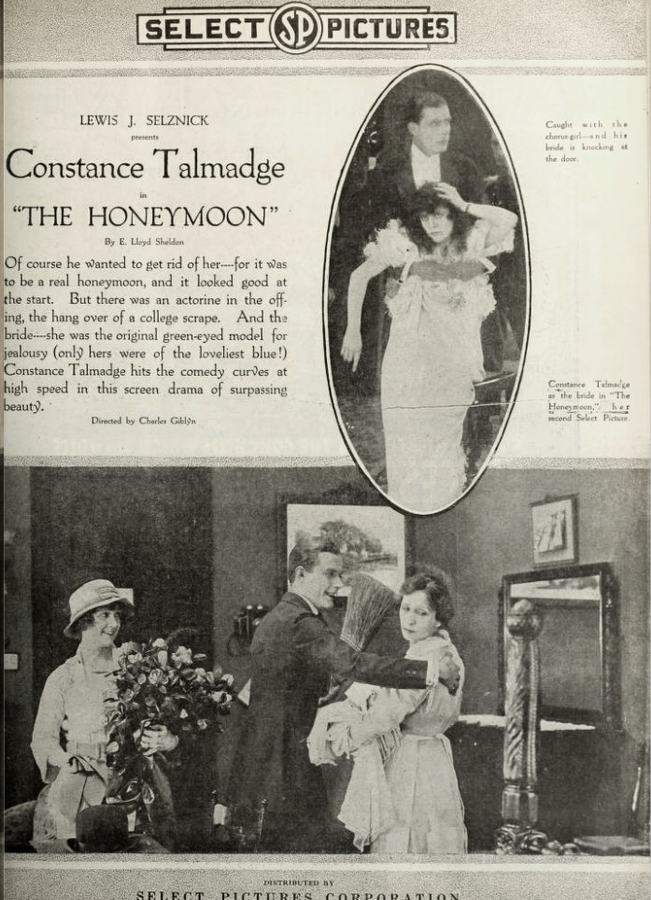
Once Susan receives the telegram of doom, director E. Lloyd Sheldon swaps slapstick for chiaroscuro. Burns sits at a dressing table whose bulbs click off one by one, as though even electricity can’t bear to watch. The lighting turns her tear into a molten bead of copper; the Falls outside roar on, indifferent. In that moment the film vaults from bedroom farce to existential shiver, cousin in spirit to The Heart of Lady Alaine where a single social misstep ricochets into spiritual exile.
Performances: Microscope, Not Megaphone
Because dialogue is exiled to intertitles, faces bear the freight of Shakespearean monologues. Julia Burns never telegraphs her jealousy; she lets it metastasize across three tight close-ups: the blink that lasts a heartbeat too long, the swallow that ripples like a skipped stone, the smile offered to a hotel clerk that collapses the instant he turns away. It’s acting calibrated for the front row of a cathedral, not the back row of a nickelodeon.
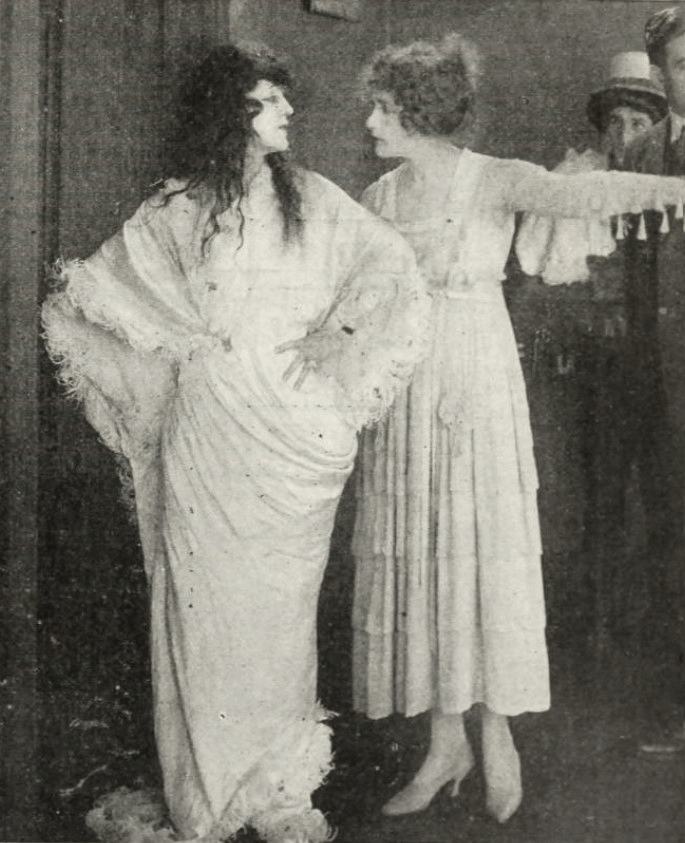
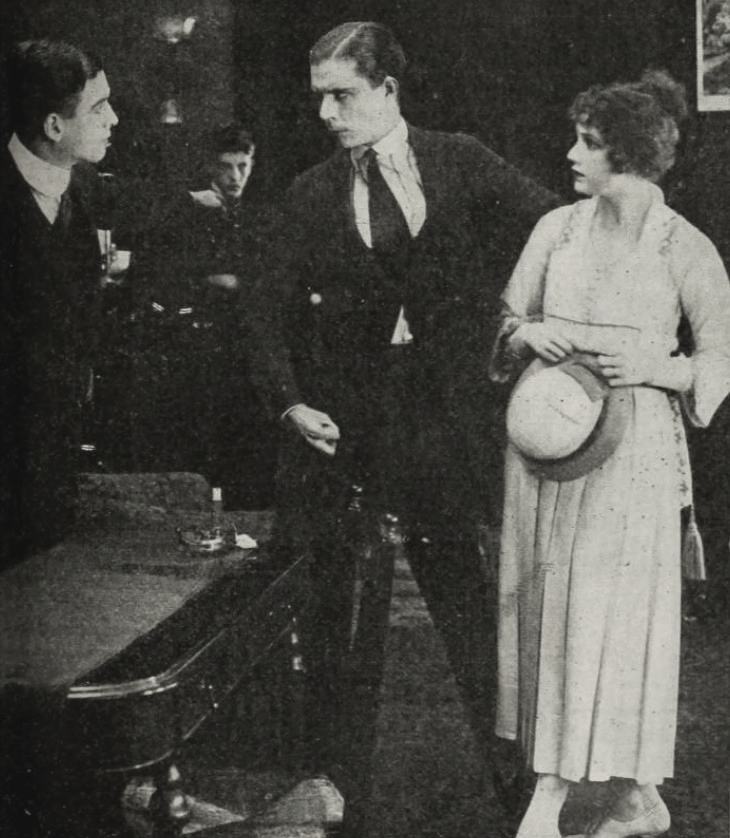
Constance Talmadge, cameoing as actress Maizie Middleton, pirouettes through her single reel like a champagne bubble that’s read too much Nietzsche. She understands that the silent flapper’s power lies in the promise of speech never delivered; her kohl-rimmed eyes mock the institution of marriage while her batted lashes cash the checks it provides. The moral ledger, however, lands squarely on the men: Dick’s attempt to "buy her off" feels transactional enough to prefigure the Wall Street ethos that would crater the decade’s end.
Niagara as Character
Most honeymoon films use the Falls as wallpaper; Sheldon weaponizes them. When Susan flees the dressing room, a reverse shot reveals the cataract at twilight, floodlights tinting the mist the color of blood-orange sorbet. The roar is, of course, absent, but the image is so synesthetic we swear we hear it. Cinema becomes a conjurer of phantom sound, much like A Venetian Night where gondolas glide through moonlight dense enough to choke on. The waterfall’s perpetual churn mirrors the couple’s recursive argument: gravity forcing the same water over the cliff again and again, marriage as eternal return.
Race Against Remarriage
The final reel is a steeplechase against time: Uncle Jimmy scouring Niagara for a preacher willing to perform a ceremony that technically isn’t needed. The gag structure borrows from Beating Back: each potential officiant presents a new impediment—one demands a denominational conversion, another insists on blood tests that would take days. Meanwhile Susan, draped in a kimono whose peacocks look ready to fly off the fabric, teeters on the precipice of melodramatic collapse. When the vows are finally re-exchanged, Sheldon drowns the frame in confetti that looks suspiciously like the shredded divorce decree. A circular narrative closes, yet the viewer suspects the snake of jealousy has only paused to molt.
Cinematography: Silver Nitrate Alchemy
Surviving prints (MoMA’s 4K restoration from a 35mm tinted nitrate) reveal a palette that digital grayscale betrayed for decades. Hotel corridors pulse with amber, suggesting gaslight rather than Edison bulbs; the bridal suite is awash in sea-foam blue, as though the couple sleepwalks underwater. Compare this to the monochrome austerity of The House of Temperley and you appreciate how color tinting could externalize emotional barometric pressure long before Technicolor cried its first primary.
Gender & Genre: A Volatile Cocktail
Scholars often tag The Honeymoon as a "divorce comedy," yet that label papers over its gendered angst. Susan’s agency lies not in seeking freedom but in re-caging herself. The film’s catharsis demands she repudiate autonomy to reclaim security, a narrative twist that makes modern viewers squirm. Still, within the constraints of 1923 censorship, the movie sneaks subversion: a woman who files (even mistakenly) for divorce traverses a social minefield that male characters navigate with insouciant ease. The intertitle—"She asked for release, and the world granted it too eagerly"—could be stitched on a 21st-century protest banner.
Comparative Lattice
If Three Strings to Her Bow celebrated the polyamorous permutations available to the flapper, The Honeymoon snaps the curtain shut on such possibilities, insisting that monogamy, however bruised, remains the sole passport to social respectability. Conversely, The Ventures of Marguerite sends its heroine on globe-trotting escapades to avoid the altar; Susan’s globe is her own heart, its continents shifting overnight.
Sound of Silence: Musical Accompaniment Today
Modern screenings—whether at the Billy Wilder Theater with a toy-piano score or at home via Kino’s Blu-ray—expose how fragile the film’s tone is. A too-zany accompanist turns the third-act despair into custard; a minimalist drone renders the comic flourishes maudlin. Ideally, a Wurlitzer should alternate between ragtime and Satie-esque Gymnopédie, mapping the emotional whiplash that the characters undergo. Think of it as curatorial DJ-ing for a 12-minute emotional roller-coaster.
Legacy: A Bridge Too Quiet
Because The Honeymoon clocks in at a mere 720 feet of celluloid, historians treat it as a footnote to Talmadge’s more expansive features. Yet its DNA keeps replicating: the accidental divorce device resurfaces in 1930’s Under the Rainbow, the Niagara-as-ticking-clock reappears in Hitchcock’s Niagara (1953), and the notion that marriage is a renewable contract underpins every modern rom-com that ends with a chase to the airport. The film is a seed crystal: tiny but capable of ordering chaos into recognizable genre symmetry.
Where to Watch & Collect
As of 2024, the only sanctioned stream is via Kino Cult (subscription) with the aforementioned tinting restored. A 2K Blu-ray paired with The Jungle Child is slated for fall. For nitrate purists, MoMA permits on-site viewing if you book two weeks ahead; bring cotton gloves and expect the smell of vinegar and ghosts. Be wary of YouTube rips—they derive from a 1990s PAL transfer that bleeds the amber into urine yellow and makes sea blue look like hospital teal.
Final Verdict
The Honeymoon is a pocket-watch whose hands spin so fast they blur into a meditation on time itself. It is at once a cautionary fable—jealousy is a heckler who won’t be shushed—and a breezy trifle that bets everything on the hope that love, like film stock, can be spliced and rejoined with only the faintest scar. One minute you’re laughing at maids hiding under settees, the next you’re confronted with the abyss of legal finality. That tonal whiplash isn’t a bug; it’s the point. Marriage, the film whispers, is a silent comedy scored by the audience’s racing pulse. And Niagara keeps falling, indifferent to whether the vows uttered at its brink are first edition or hastily revised.