DbcultAccessing Vault...
Cult Review
Senior Film Conservator
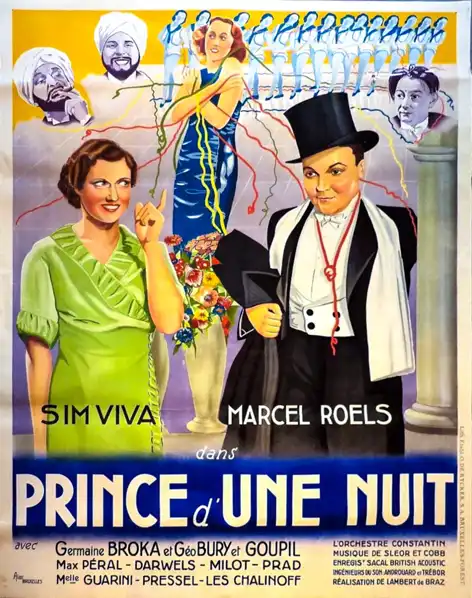
If you stumble onto Prince d'une nuit expecting some lost masterpiece of early European cinema, you are going to be severely disappointed. But if you have a soft spot for crackly, theatrical 1930s nonsense where everyone talks way too loud because they don't trust the microphones yet, this is a weirdly charming time capsule. Anyone looking for modern pacing or clean audio will probably want to pull their hair out within ten minutes. 😅
The whole setup is basically a dusty old stage farce about a regular guy getting to play royalty for a single evening. Max Péral plays our "prince" with this wide-eyed, slightly frantic energy that makes you wonder if he had about four espressos right before the director yelled action.
It has that same goofy, class-clash energy you find in early sound comedies like Just a Gigolo, but with way less polish. There is this one scene in a dining room where the camera just sits there, completely frozen, for like three minutes while three characters argue about a hat. You can practically hear the crew holding their breath behind the lens so they do not ruin the optical audio track.
Sim Viva shows up to do some singing, which is nice, though the copy I watched made her high notes sound like a tea kettle whistling in the next room. Still, she has this incredibly expressive face that almost makes up for the muddy sound quality.
Marcel Roels, who actually wrote this thing, gives himself some of the most ridiculous lines in the script. He has this funny habit of squinting at the other actors like he forgot his glasses on the prop table, which honestly might be what happened.
Also, the set design is wonderfully cheap. Half of the "palace" looks like it was decorated with borrowed bedsheets and some fancy chairs they snatched from a local bank lobby during the weekend.
You don't watch a film like this for deep messages about the human condition. You watch it to see how filmmakers struggled and played around when the technology of "talkies" was still brand new and fighting them every step of the way.
The ending sort of just... happens. The main conflict resolves because everyone seems tired of standing around the same painted backdrop, so they all just smile and the screen fades to black. It is not a great movie by any stretch, but as a piece of forgotten Belgian film history, I am really glad I sat through its creaky run time.