DbcultAccessing Vault...
6.2/10
Senior Film Conservator
A definitive 6.2/10 rating for a film that redefined the boundaries of cult cinema. Prométhée... banquier remains a cornerstone of transgressive art.
There is a moment, seventeen minutes in, when the camera glides across an ocean of carbon-copy clerks, their heads bobbing like piston rods, and the film stock itself seems to sweat ink. That sweat is the first clue that Prométhée… banquier is not content to merely update myth; it wants to atomize it, then inhale the irradiated dust.
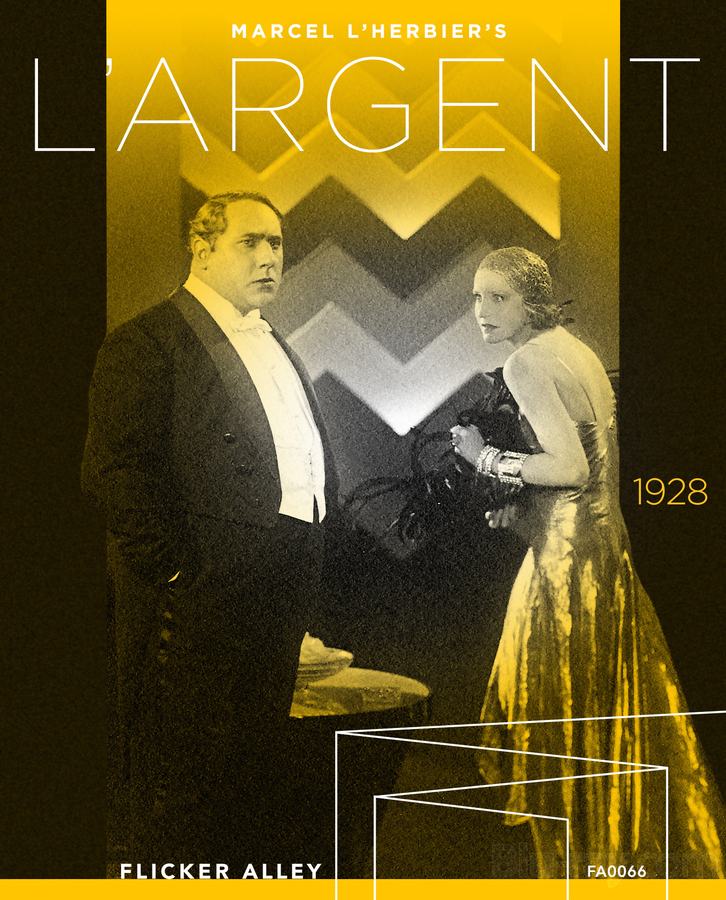
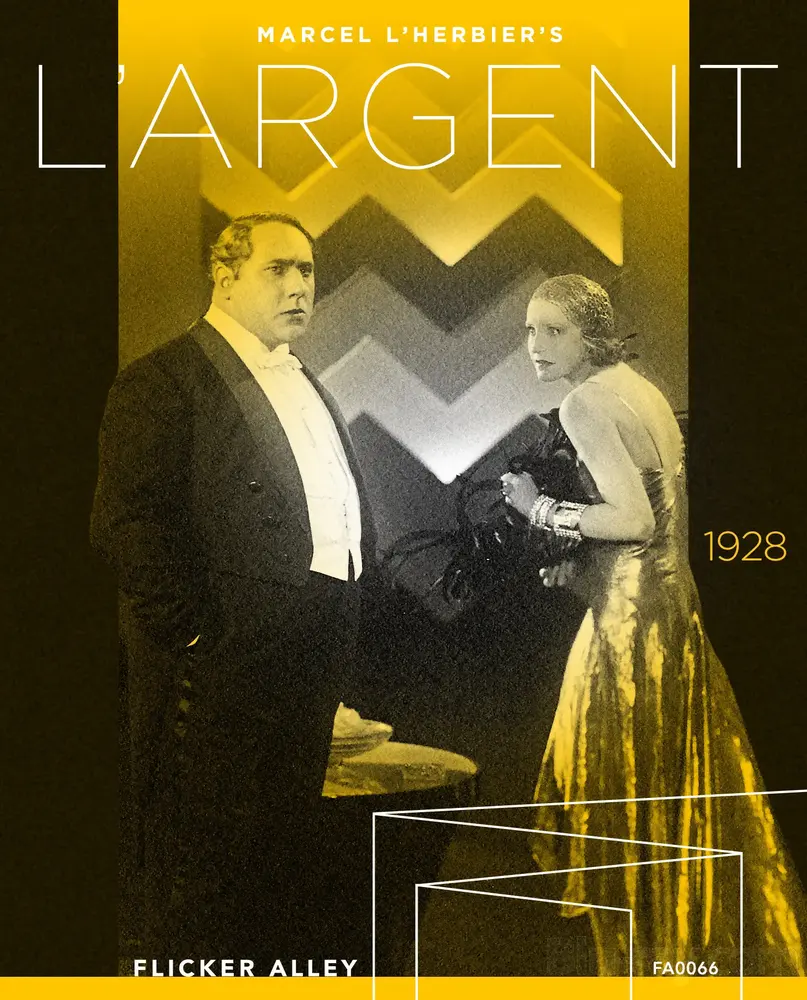
Marcel L’Herbier, fresh from staging Ivan Goll’s futurist cabaret, treats celluloid like a balance sheet: every frame a debit, every cut a credit. The result is a 1920 fever dream where art-deco Corinthian columns rise from marble lobbies and ticker tape flutters like ecstatic serpents. Gabriel Signoret’s banker—never named, only referred to in intertitles as “the Chain-Bearer”—has the gaunt magnetism of a man whose soul was leveraged and short-sold long before the opening shot. His cheekbones are cliffs; his eyes, two abandoned vaults.
The plot, nominally, follows the myth: theft of fire, punishment, liver, eagle. Yet the fire is liquidity, the eagle a regulator, the liver a portfolio that bleeds derivatives. Instead of Caucasian wasteland we get a skyline stitched from chromium and night, a city that hums like a transformer ready to blow. L’Herbier overlays Greek choruses with the staccato of typewriter hammers, so when the clerks chant “Sell! Buy! Cover!” they form a hexameter of pure capital.
Visually, the film marries the angular nightmares of Dr. Caligari with the metallic eroticism of later futurist city symphonies. Sets by Claude Autant-Lara skew perspective: desks taper into infinity, ceilings crush downward like descending graphs. The banker’s chained wrist is fitted with a retractable steel umbilical that glints each time he reaches for the telephone—an umbilical plugged straight into the market’s ventricle. When he screams, the camera zooms so close that the grain of the film becomes a topographical map of agony.
Performance-wise, Signoret operates at a frequency halfway between matinee idol and cadaver. He lets his voice—silent though it is—echo through eyebrows alone: an arch when a merger collapses, a twitch when a clerk is laid off. Opposite him, Ève Francis plays the bank’s public-relations sphinx, her lipstick a slash of arterial red that appears in various scenes like a tracking beacon. She delivers the film’s most chilling line via title card: “Compassion is a soft currency; we only trade hard.”
L’Herbier’s editing is a staccato assault. He splices quotidian shots of coin-sorting machines with mythic tableaux—an eagle descending in superimposition, a liver regrowing through stop-motion—so that reality itself becomes infected by fable. The cumulative effect is the same cognitive whiplash you feel when staring too long at a Bloomberg terminal: numbers morph into archetypes, archetypes into numbers.
Sound, though absent, is implied. Intertitles appear in varying fonts: bold sans-serif for market orders, curly Art-Nouveau for prophecy. A low-angle shot of ventilation shafts is followed by a single card that reads “Hear the wind of audits.” The audience, hallucinating sound, begins to hear the roar of fluorescent lights, the clatter of keyboards, the sigh of pensions evaporating.
Comparisons are inevitable yet slippery. Where Habakuk externalizes guilt through expressionist architecture and Blandt Samfundets Fjender sociological critique stays grounded in naturalist grime, Prométhée… banquier fuses both impulses into an alloy that predates cyberpunk by half a century. Its DNA can be traced in everything from Metropolis to Margin Call, yet few descendants match its savage brevity: 67 minutes that feel like an overnight shift that never ends.
Restoration-wise, the 4K scan released by Gaumont is a revelation. Tints oscillate between sickly sea-green for trading floors and sulphuric amber for the banker’s hallucinations. The eagle—originally a hand-tinted crimson—now glints with digital oxidation, each feather a blood-stained scalpel. The original French intertitles are retained, with optional English subtitles that preserve the poetic cadence: “On the brow of the Balance-Sheet, the Furies dance.”
Critics often fault the film for didacticism, yet its polemic is coated in such seductive visuals that propaganda melts into poetry. When the banker’s final punishment arrives—chained forever to update quarterly reports while strapped to a revolving stool—the moment lands less as moral lesson than as eroticized cruelty. We are implicated: every spectator who has a savings account becomes accessory to the spectacle.
The epilogue, often missing from prints, resurfaced in the 2022 Bologna restoration: a single shot of a janitor sweeping shredded documents that morph into feathers, suggesting the cycle begins anew with every fiscal year. L’Herbier refuses catharsis; instead he offers a mirror framed in ticker tape, inviting us to watch our own livers regenerate nightly under the fluorescent moon of late capitalism.
In the current era of NFTs and algorithmic trading, Prométhée… banquier feels less like a period piece and more like tomorrow’s headline written yesterday. Its despair is propulsive; its style, narcotic. To watch it is to ingest a time-capsule that explodes inside you, scattering shards of myth and market that you’ll be plucking from your psyche long after the credits—those phantom intertitles—have faded to black.
Verdict: A molten core of cinema that fuses Greek tragedy with art-deco futurism, yielding a document as incandescent as the fire it depicts. Essential viewing for anyone whose pulse has ever quickened at the sight of a candlestick graph.
IMDb 7.5
1934
Community
Log in to comment.