DbcultAccessing Vault...
Cult Review
Senior Film Conservator

There are films that gently nudge the boundaries of convention, and then there are those that gleefully smash through them with the force of a runaway locomotive, or in this case, a steamship teeming with apex predators. "Roaring Lions on a Steamship" is precisely such a cinematic marvel, a delightful concoction of slapstick, exotic adventure, and genuine suspense that defies easy categorization. It plunges its unsuspecting protagonists, the fastidious artist Harry Sweet and his perpetually flustered valet Charles Conklin, into a maelstrom of escalating absurdity, first marooning them on a cannibalistic island before subjecting them to a nautical nightmare where the ship's cargo manifest includes a pride of rather ill-tempered, and crucially, uncaged, lions. The film, a product of an era brimming with innovation and daring, stands as a testament to the boundless imagination of early cinema, proving that even without synchronized sound, the roar of a lion, or the scream of a terrified valet, could resonate profoundly with audiences.
At the heart of this rollicking adventure lies the impeccable comedic pairing of Harry Sweet and Chester Conklin. Sweet, embodying the refined, somewhat effete artist, brings a certain aristocratic detachment to even the most perilous situations, a stark contrast to Conklin's portrayal of the long-suffering valet, whose every facial contortion and frantic gesture screams exasperation and burgeoning panic. Their chemistry is a masterclass in silent film performance, relying entirely on physical comedy, exaggerated expressions, and perfectly timed reactions. Sweet's character often maintains an almost absurd composure, even when facing imminent doom, while Conklin's character provides the relatable, everyman terror. This dynamic is not merely a source of laughs; it underscores a subtle commentary on class and decorum. Even when confronting spear-wielding natives or ravenous felines, the artist strives to maintain his dignity, while the valet is afforded the luxury of unbridled hysteria. This dichotomy fuels much of the film's humor, allowing for a broader spectrum of comedic responses to the outlandish scenarios. Unlike the more straightforward heroic arcs seen in adventure serials of the time, or the focused character studies in dramas like Saffo, "Roaring Lions" finds its strength in the interplay of these two distinct personalities grappling with shared, escalating peril.
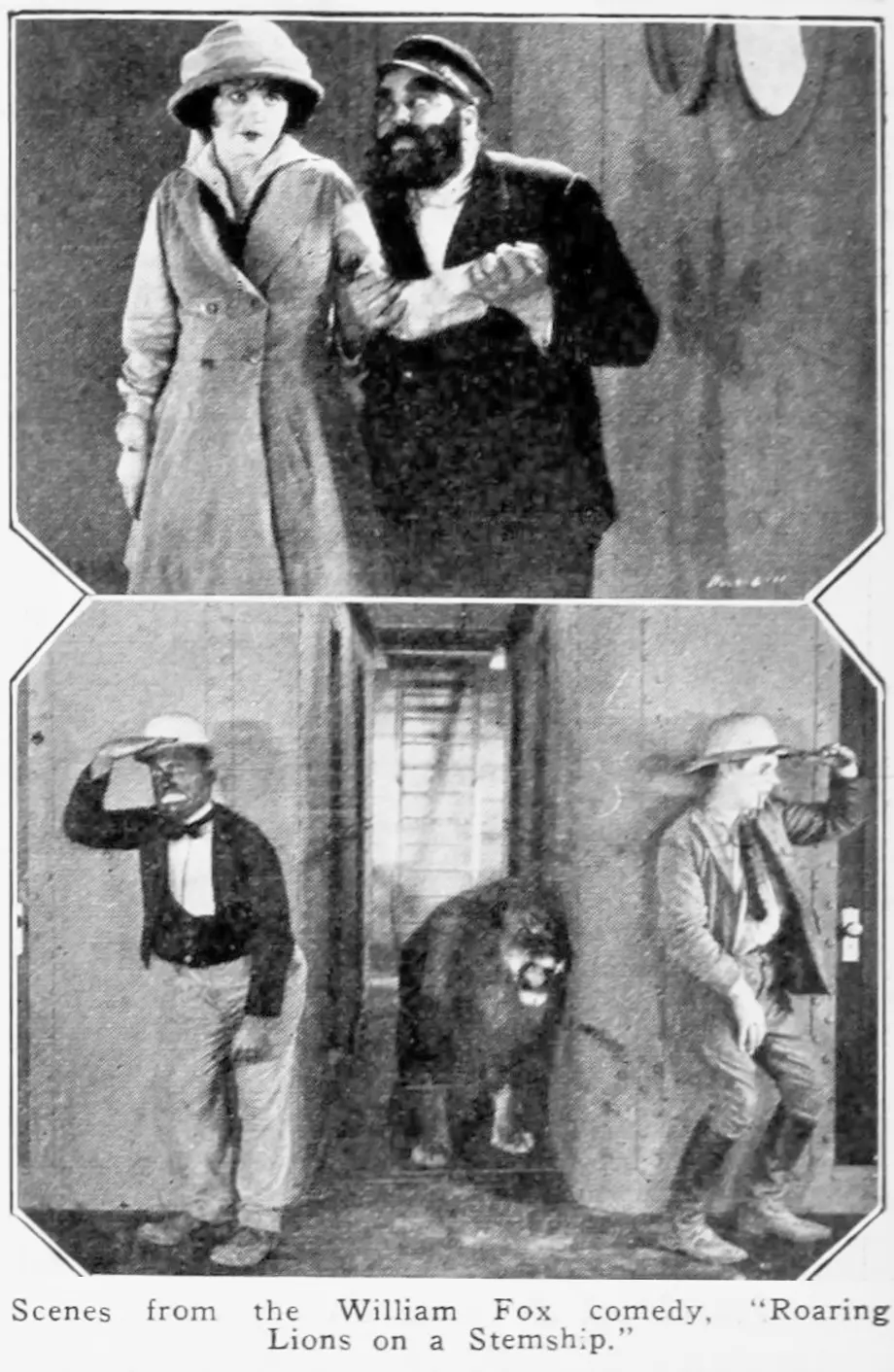
The narrative unfolds in two distinct, yet equally thrilling, acts. The initial segment, set on the aforementioned cannibal isle, establishes the stakes with a potent blend of exoticism and genuine threat. The filmmakers adeptly use visual cues to convey the danger, from the ominous native costumes to the boiling pots that suggest a rather unsavory culinary tradition. Sweet and Conklin's escape from this predicament is a frantic ballet of near-misses and desperate improvisation, setting a rapid pace that rarely slackens. This opening sequence, while played for laughs, doesn't shy away from depicting a very real sense of peril, reminiscent in its adventurous spirit, though vastly different in tone, from the more serious survival narratives one might find in a film like The Trap.
The transition to the steamship marks a shift in environment but an amplification of the danger. The claustrophobic confines of a ship at sea, combined with the sudden, terrifying appearance of escaped lions, transforms what should be a journey to safety into a relentless gauntlet. The film masterfully builds suspense as the lions, majestic and menacing, stalk the decks, creating a palpable sense of dread even within the comedic framework. The sheer audacity of featuring live lions on a film set, let alone on a mock-up of a ship, speaks volumes about the daring nature of early Hollywood. The filmmakers leverage the full visual potential of the steamship setting – its multiple decks, narrow corridors, and bustling human activity – to create a dynamic playground for both the lions and their human prey. The interactions between the actors and the lions are surprisingly convincing, a testament to both the animal wrangling and the performers' commitment. This segment shares a thrilling, if distinct, quality with other films that place characters in immediate, physical danger from animals, such as the metaphorical 'snakes' of Snakes, though "Roaring Lions" elevates the absurdity to an art form.
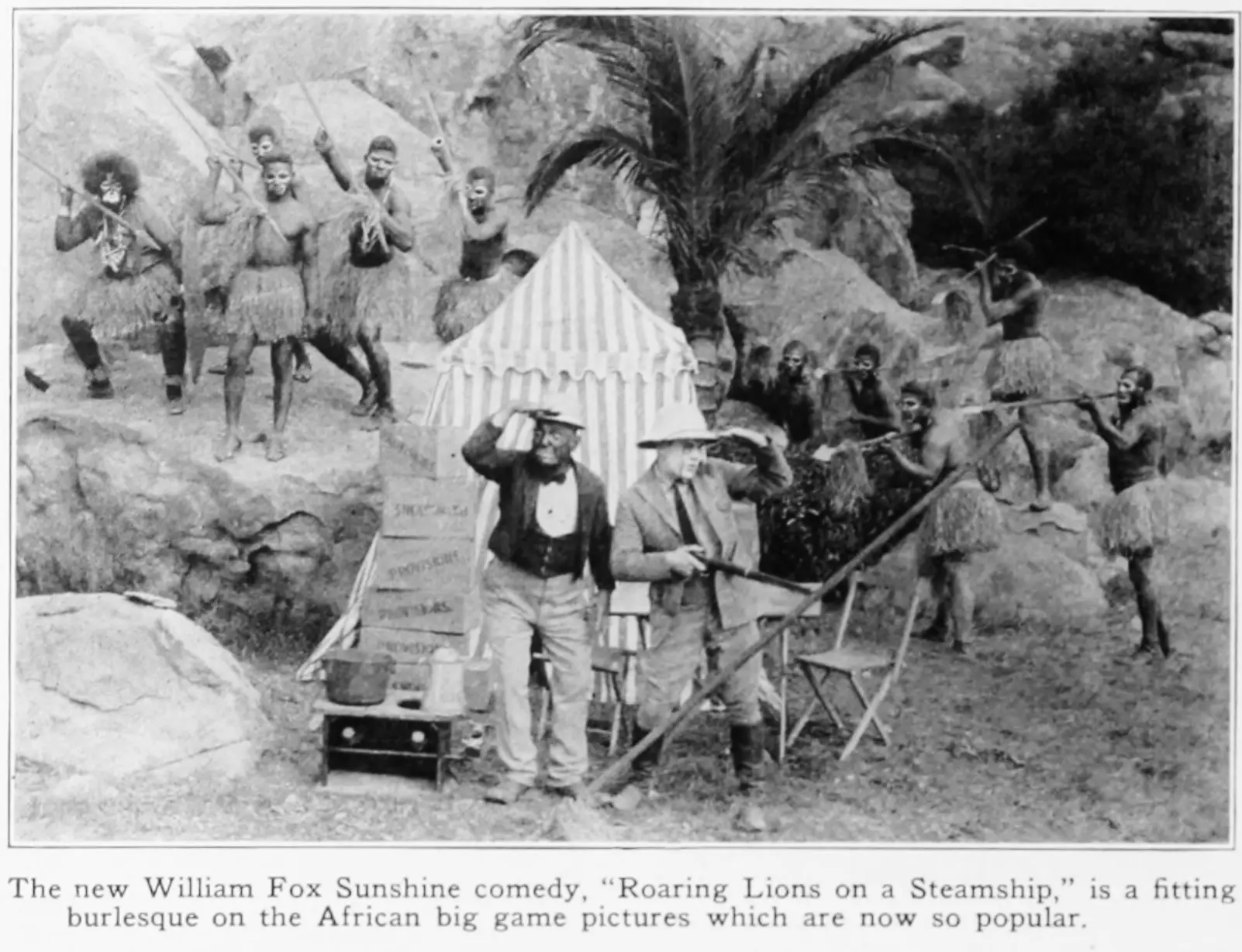
The direction of "Roaring Lions on a Steamship" is remarkably adept at juggling multiple tones, seamlessly transitioning from exotic adventure to slapstick comedy to genuine suspense. The use of intertitles is minimal, relying instead on visual storytelling to convey plot points and character emotions. This visual primacy is a hallmark of silent cinema, and here it is employed with great skill. The camera work, while perhaps not as innovative as some of its contemporaries, effectively captures the chaos and the scale of the threats. Wide shots establish the expansive, dangerous environments – first the open expanse of the island, then the bustling decks of the steamship – while closer shots focus on the expressive faces of Sweet and Conklin, or the menacing presence of the lions. The editing is brisk and purposeful, maintaining a quick tempo that keeps the audience engaged and on the edge of their seats. The film understands the power of visual gags, from the characters' frantic attempts to hide from the lions to the unexpected ways they try to incapacitate or evade them. Each frame is carefully composed to maximize either the comedic impact or the thrill of the chase.
One particularly impressive aspect is the staging of the action sequences involving the lions. The filmmakers manage to create credible interactions without resorting to obvious trickery, a feat that would challenge even modern productions. The sheer logistics of coordinating actors, a film crew, and several large, dangerous animals on a relatively confined set speak volumes about the ambition and resourcefulness of the era's moviemakers. This commitment to practical effects and authentic spectacle often distinguishes early cinema, lending it a raw, visceral quality that can sometimes be lost in more CGI-reliant productions. The film's ability to elicit both laughter and gasps of surprise is a testament to its expertly crafted visual narrative. The meticulous orchestration of chaos is truly commendable, especially when considering the technological limitations of the time.
While ostensibly a comedy, "Roaring Lions on a Steamship" subtly explores several intriguing themes. There's the perennial clash between civilization and the wild, represented by the European gentlemen thrust into primal survival situations. The film playfully satirizes the pretenses of high society when confronted with raw, untamed nature. Sweet's artistic sensibilities and Conklin's valet duties become utterly irrelevant in the face of hungry cannibals or prowling lions, forcing them to revert to more basic instincts. This theme resonates with other adventure narratives of the period, though few imbue it with such a potent comedic twist.
Furthermore, the film touches upon the absurdity of fate and the randomness of danger. What begins as an artistic expedition devolves into a desperate fight for survival, punctuated by ludicrous turns of events. This embrace of the absurd is a hallmark

IMDb —
1920
Community
Log in to comment.