DbcultAccessing Vault...
Cult Review
Senior Film Conservator
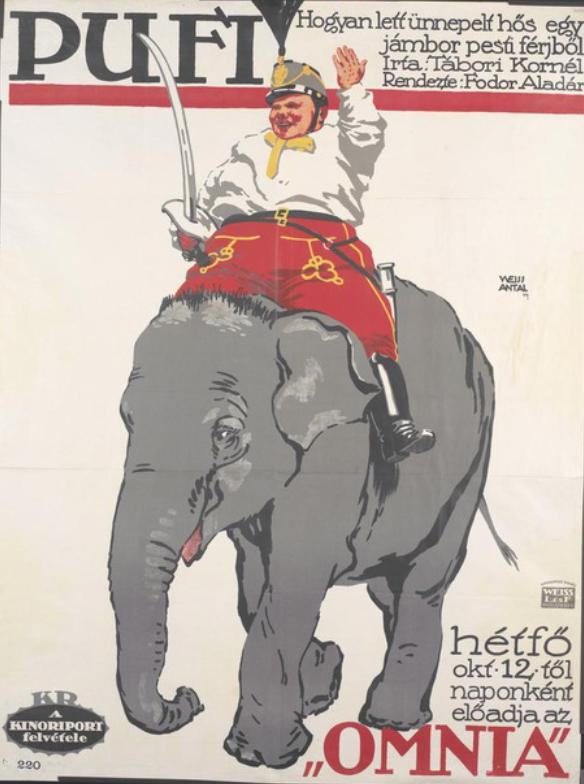
Strip away the slapstick varnish and you’ll find a palimpsestic city symphony: Budapest itself, half Habsburg relic, half Art-Nouveau fever dream, becomes protagonist. Directors rarely allow urban architecture to audition for the role of fate; here, tramlines screech like gossiping fishwives and gaslamps flicker Morse code indictments against every passer-by. The screenplay—penned by journalist-firebrand Kornél Tábori—folds cabaret one-liners into existential dread, anticipating the cafés’ whispers that would curdle into revolution by 1918.
Huszár, later a prime minister but here a rubber-featured chameleon, wields the comedy of hesitation. Watch his pupils oscillate between saccades of fear and fleeting delight; the camera, stationary yet merciless, captures the moment quotidian flesh turns commodity. His gait—part penguin, part marionette—mirrors the capital’s own stagger between empire and modernity. Because sound is absent, the squeak of his gloves and the hush of overcoat velvet become imagined diegetics, louder than any intertitle.
While western Europe chased Caligari’s crooked corridors, Hungarian cinematographer István Eiben tilts mirrors, not sets. Reflections fracture Pufi’s visage into cubist shards inside beer-hall steins, shop windows, even the polished bell of a street saxophone. Crowd scenes evoke The Battle of Shiloh’s documentary fervor, yet the intent is burlesque, not reenactment. Shadow puppets, borrowed from Asian travelling theatres, elongate silhouettes until the city’s rooftops resemble jagged dentures about to devour its own children.
Women here are neither flappers nor martyrs; they are ventriloquists of public opinion. When Pufi’s wife, Juliska (Lenke Szilágyi), disguises herself as a male hack driver to trail her husband, the cross-dressing is not titillating but strategic: she reclaims the narrative from penny-press caricature. Their reconciliation, whispered behind a circus tent’s canvas, feels more transgressive than any revolutionary speech hurled at the parliament stairs.
Swap newsprint for push-notifications and tram conductors for algorithm curators; the mechanisms of virility remain unchanged. The film’s prescience is chilling: a face plucked from obscurity, grafted onto mass desire, then dismembered once novelty wanes. One intertitle reads:
„A név, melyet kiabálnak, nem az enyém többé.”Translated: "The name they shout is no longer mine." Substitute handle, avatar, hashtag; the lament ages like Tokaji wine in a cellar of echo chambers.
Early reels lean on custard-pie mechanics: Pufi’s umbrella invertedly spears a policeman’s helmet, launching a Keystone-esque pursuit. Yet the humour mutates. By midpoint, laughter snags in the throat; a child distributing leaflets sporting Pufi’s face trips under cavalry hooves. The edit—jarring, almost Soviet in montage—forces the spectator to confront the cost of manufactured icons. The tonal whiplash is intentional; Tábori’s journalism background shows in the film’s headline rhythm, alternating between comic strip and obituary.
Archival notes indicate opening night at the Puskin Mozgóóra accompanied by a Gypsy trio instructed to improvise in real time. Contemporary restorations favour atonal piano, yet neither choice eclipses the film’s central conceit: that noise is contextual. When Juliska tears a wanted poster, the audible absence of paper rip is, paradoxically, deafening—a reminder that spectators are complicit amplification chambers.
First screened 23 October 1914, reviews oscillated. The conservative Az Újság sneered at „gyenge komédia” (flaccid comedy); Nyugat, the modernist beacon, hailed it as „a lélek kaleidoszkópja.” War censorship excised two reels deemed defeatist; nitrate deterioration claimed another. What survives—roughly 52 minutes—was pieced together in 1989 by the Hungarian National Film Archive from a Czech distribution print and a Russian archival duplicate with Cyrillic intertitles. The restoration’s flickers and emulsion scars serve as bruises; each scratch testifies to survival, much like Pufi himself.
Because fragments haunt harder than wholes. Pufi’s incompleteness mirrors our digital personas—collaged, filtered, perpetually under revision. The missing reels function like deleted tweets: absence invites projection. Critics who dismiss silent comedy as primitive overlook its algorithmic sophistication; it relies on pattern recognition, anticipation, reward circuitry—the very engine of today’s scroll-addiction.
Wilder’s Some Like It Hot borrows the cross-dressing hustle; Gilliam’s Brazil lifts the tyranny of paper misfiles; even The Secret of the Old Cabinet toys with identity swap, though in gothic register. Yet none commit to the communal bloodletting of icon manufacture quite like Pufi. The film anticipates the self-referential ouroboros of postmodern media: we invent effigies, martyr them, monetize the corpse, then auction relics.
Do not binge. Treat each reel as a stanza—pause, marinate, argue with it on social media, delete your posts, feel the meta echo. Project it on a wall during a house-party and watch guests instinctively supply dialogue, thus reenacting the very mass authorship the film critiques. Or view it on a phone in a crowded metro, allowing peripheral legs and luggage to become your orchestra. The work rewards fragmentation; it was born from it.
Though absent from the frame, colour is textually invoked. Intertitles mention „vörös ákác” (red acacia) signalling danger; „tengerkék csuka” (sea-blue pike) promising escape. Viewers in 1914 mentally painted these hues, much like children splashing pigment onto colouring books. Today, the monochrome compels us to re-project our emotional palette. The sea-blue of hope (#0E7490) and the dark orange of notoriety (#C2410C) swirl in our retinas, synesthetic ghosts.
Imagine a server farm—rows of blinking mausoleums—where one corrupted drive erases a influencer’s decade. That is the vanished reel: a cautionary glitch. Film archives now digitize at 4K, yet cloud decay, format obsolescence, and licensing blackouts threaten Pufi’s second death. Each time we retweet a meme without context, we reenact the carnival’s final shot: the overcoat adrift, identity dissolving into current.
There is no moral, only a mirror. Pufi insists that celebrity is not a destination but a detour where the self is held hostage by spectatorship. Watch it to laugh, rewatch to shudder, revisit to recognize your own avatar in a 1914 clerk’s round spectacles. The river keeps flowing, coats keep drifting, names keep echoing long after lungs have ceased pronouncing them.
Community
Log in to comment.