DbcultAccessing Vault...
Cult Review
Senior Film Conservator
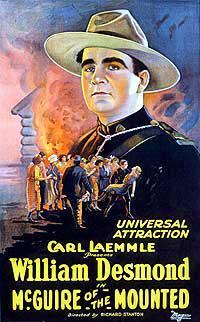
Stepping back into the nascent days of cinematic storytelling, before the advent of synchronized sound irrevocably reshaped the medium, we encounter a compelling artifact from the early 20th century: McGuire of the Mounted. This silent era gem, a testament to the power of visual narrative, plunges viewers into the austere yet dramatic landscapes of the Canadian frontier, where law and order are fiercely upheld by the iconic Royal Northwest Mounted Police. Far from a mere historical curiosity, this film, directed by George Hively and penned by Hively and Raymond L. Schrock, unfurls a intricate tapestry of crime, deception, and unexpected romance, proving that even without spoken dialogue, a narrative could grip, thrill, and deeply resonate with an audience. It stands as a vibrant example of the genre's capacity to deliver potent drama through expressive performances and skillfully constructed scenarios, inviting us to appreciate the foundational artistry that paved the way for modern cinema.
At the heart of McGuire of the Mounted lies a meticulously crafted plot, a veritable cat-and-mouse game set against the backdrop of an illicit opium trade. Our protagonist, Bob McGuire, portrayed with resolute determination by Jack Walters, is a Royal Northwest Mounted officer whose unwavering commitment to justice propels him into a dangerous investigation. He's on the trail of a sophisticated opium smuggling ring, a shadowy enterprise poisoning the very fabric of the frontier. McGuire's instincts, sharp and unyielding, lead him to suspect Big Bill Lusk, a character brought to life with menacing conviction by Willard Louis. Lusk is no ordinary criminal; he's the smooth, seemingly respectable proprietor of a bustling gambling house, a front for his more nefarious activities. This setting, reminiscent of the morally ambiguous worlds explored in films like The Fatal Card, immediately establishes a milieu where vice and danger lurk beneath a veneer of entertainment.
Lusk, a master manipulator, quickly perceives McGuire as a significant threat. Rather than confronting the Mountie head-on, he devises a fiendishly elaborate scheme to discredit and destroy him. This involves drugging McGuire, rendering him vulnerable and unconscious, and then orchestrating a sham marriage to Katie Peck, a dance hall girl played by Louise Lorraine. Katie is not merely an unwitting pawn; she possesses crucial knowledge of Lusk's illicit operations, making her both a potential asset and a dangerous liability. This forced union, a cruel twist of fate, serves Lusk's dual purpose: to compromise McGuire's reputation and to further entangle Katie in his web of deceit. The stakes escalate dramatically when McGuire's superior officer is brutally murdered, and Lusk, with chilling precision, frames McGuire for the heinous crime. This moment of profound injustice plunges our hero into a seemingly inescapable predicament, his badge and honor hanging by a thread, mirroring the kind of desperate situations faced by protagonists in thrillers like The Fighting Chance, where the odds are stacked against the righteous.
However, the narrative takes a pivotal turn, one that injects a powerful element of human connection and moral reckoning into the proceedings. Katie Peck, initially a reluctant participant in Lusk's schemes, begins to witness McGuire's inherent integrity and unwavering spirit, even in the face of overwhelming adversity. Her initial complicity gives way to a burgeoning sense of admiration, and ultimately, a profound love for the framed Mountie. This emotional transformation is the linchpin of the film's second half. Driven by this newfound affection and a burgeoning conscience, Katie makes the courageous decision to betray Lusk. In a climactic disclosure, she not only reveals Lusk as the true murderer of McGuire's superior but also meticulously exposes the intricate details of the smugglers' plot. Her testimony, delivered with a silent intensity that transcends the lack of spoken words, becomes the beacon of truth that shatters Lusk's criminal empire and restores McGuire's honor. This arc of redemption, where a character's moral compass is recalibrated by love and justice, echoes thematic depth found in films exploring complex relationships and societal expectations, perhaps even touching upon the societal pressures and personal choices seen in The Common Law.
In the silent era, the burden of conveying emotion, intent, and character rested almost entirely on the actors' physical expressiveness and the subtlest of facial gestures. The cast of McGuire of the Mounted rises to this challenge with remarkable skill, translating complex internal states into palpable external performances. Jack Walters, as Bob McGuire, embodies the stoicism and unwavering resolve expected of a Mountie. His performance is a study in controlled intensity, his eyes conveying determination and his posture radiating authority, even when his character is at his most vulnerable. He avoids the melodramatic excesses sometimes associated with silent film acting, opting instead for a grounded portrayal that invites empathy and respect.
Louise Lorraine, as Katie Peck, delivers a particularly nuanced performance. Her character's journey from a hardened dance hall girl, implicated in Lusk's schemes, to a woman driven by love and a thirst for justice, is rendered with compelling authenticity. Lorraine skillfully navigates Katie's moral ambiguities, allowing the audience to witness her internal struggle and eventual transformation. Her portrayal of burgeoning affection for McGuire, and her courage in exposing Lusk, is conveyed through a delicate balance of vulnerability and strength. This kind of character evolution, where individuals confront their past and choose a new path, provides a powerful emotional core, not unlike the moral awakening depicted in various dramas of the period, though perhaps less overtly religious than the introspection found in The Sins of St. Anthony.
Willard Louis, as the antagonist Big Bill Lusk, is a formidable presence. He masterfully crafts a villain who is both outwardly charming and inwardly ruthless. Louis's performance is characterized by a sinister charm that makes Lusk's deception all the more insidious. His calculated cruelty and manipulative tactics are conveyed through subtle shifts in expression and gesture, making him a truly memorable antagonist. The supporting cast, including William Lowery, William Desmond, Vera James, Frank Johnson, J.P. Lockney, and Peggy Browne, contribute to the film's rich texture, each playing their part in building the world of the frontier and populating it with believable characters. Their collective efforts ensure that the narrative, despite its silent nature, feels robust and fully realized, a testament to the collaborative art of early filmmaking.
The success of McGuire of the Mounted owes much to the collaborative vision of its writers, George Hively and Raymond L. Schrock, and Hively's direction. Crafting a compelling screenplay for a silent film presented unique challenges, demanding a reliance on strong visual storytelling, clear character motivations, and carefully constructed plot points that could be easily understood through intertitles and action. Hively and Schrock demonstrate a keen understanding of narrative pacing, building suspense gradually, introducing twists at opportune moments, and culminating in a satisfying resolution.
As director, George Hively's task was to translate this intricate script into a visually engaging experience. Without spoken dialogue, the camera became the primary storyteller. Hively likely utilized various cinematic techniques common to the era: expressive close-ups to emphasize emotional states, wide shots to establish the grandeur and isolation of the Canadian wilderness, and dynamic editing to convey action and urgency. While specific directorial choices are often lost to time without detailed records or the film itself being readily available for deep analysis, the effectiveness of the narrative suggests a director who understood how to guide his actors and compose his shots to maximize dramatic impact. The tension of McGuire's pursuit, Lusk's nefarious plotting, and Katie's internal conflict would have been carefully orchestrated through visual cues, body language, and the strategic use of light and shadow, elements that silent filmmakers masterfully employed to create mood and atmosphere. The very structure of the plot, with its elements of false accusation and eventual vindication, requires a precise hand in its execution to maintain audience engagement, a skill that Hively clearly possessed.
To fully appreciate McGuire of the Mounted, it's beneficial to place it within the broader context of early cinema, particularly its genre conventions and thematic preoccupations. The film belongs to a popular subgenre of frontier dramas and Mountie pictures, which capitalized on the romanticized image of the Royal Northwest Mounted Police as symbols of justice in untamed lands. These films often featured heroes battling outlaws, navigating treacherous landscapes, and upholding moral codes, much like the Westerns that were simultaneously captivating audiences. The narrative's focus on an intricate criminal conspiracy and a lawman's relentless pursuit of justice finds echoes in other crime dramas of the period, such as Raffles, the Amateur Cracksman, albeit from a different perspective of law and order.
The theme of false accusation and the hero's struggle to clear his name is a recurring motif in cinematic history, resonating deeply with audiences who champion fairness and truth. McGuire's predicament, framed for murder and facing an unjust conviction, taps into this universal fear of wrongful persecution. This struggle for vindication, often requiring an unexpected ally, provides a potent dramatic engine. Furthermore, the character of Katie Peck, a woman caught between two worlds—the allure of illicit gain and the promise of genuine love and redemption—adds a layer of moral complexity that elevates the film beyond a simple good-versus-evil narrative. Her journey from complicity to courageous truth-teller is a powerful testament to the transformative power of human connection, reminiscent of characters grappling with difficult choices, perhaps even reflecting the individual's fight for self-preservation or justice as seen in En defensa propia.
The setting of the gambling house, a den of iniquity and a hub for Lusk's criminal activities, provides a rich backdrop for the unfolding drama. These establishments were frequently depicted in early films as places where fortunes were lost, characters were corrupted, and illicit deals were struck, much like the shadowy corners of society explored in many contemporary crime stories. The film also touches upon the broader societal anxieties of the time, including the dangers of organized crime and the insidious nature of drug trafficking, issues that remained relevant across decades. While the film is a drama, its elements of chase and confrontation could be compared to the more action-oriented frontier tales like The Bull-Dogger or Riding with Death, though McGuire of the Mounted grounds its action in a more procedural, investigative framework.
The narrative's emphasis on justice prevailing, even against overwhelming odds and cunning adversaries, offers a comforting reassurance to audiences. The Mountie, as an embodiment of law and order, serves as a beacon of hope, his eventual triumph a reaffirmation of societal values. In an era when cinema was still finding its voice, films like McGuire of the Mounted played a crucial role in shaping narrative conventions, establishing character archetypes, and demonstrating the profound emotional impact that could be achieved through purely visual means. It stands as a strong example of how early filmmakers harnessed the nascent power of the moving image to tell compelling, morally resonant stories that continue to captivate and inform our understanding of cinematic history.
In conclusion, McGuire of the Mounted transcends its status as a mere historical curiosity to emerge as a vibrant, engaging piece of early cinematic art. It is a testament to the ingenuity of silent filmmakers who, without the benefit of spoken dialogue, crafted narratives of remarkable depth, suspense, and emotional resonance. The film's enduring appeal lies in its timeless themes: the relentless pursuit of justice, the corrosive power of deceit, and the redemptive force of love and moral courage. Jack Walters' portrayal of the steadfast Mountie, Louise Lorraine's nuanced depiction of a woman caught in a moral quandary, and Willard Louis's chilling performance as the villainous Lusk all contribute to a compelling viewing experience.
The collaborative efforts of writers George Hively and Raymond L. Schrock, coupled with Hively's directorial vision, demonstrate a profound understanding of how to weave a complex story through visual cues and powerful performances. McGuire of the Mounted offers more than just a thrilling plot; it provides a valuable window into the societal values, narrative structures, and acting conventions that defined the silent era. It reminds us that the fundamental principles of good storytelling—compelling characters, high stakes, and a satisfying resolution—are eternal, transcending technological limitations. For enthusiasts of early cinema and anyone interested in the evolution of narrative film, this picture remains a potent example of how powerful stories were told when the silver screen was still finding its voice, cementing its place as an important, albeit often overlooked, contribution to the cinematic canon. Its legacy is not just in its plot, but in its demonstration of silent film's capacity to deliver intricate, human drama with lasting impact.
IMDb —
1917
Community
Log in to comment.