DbcultAccessing Vault...
Cult Review
Senior Film Conservator
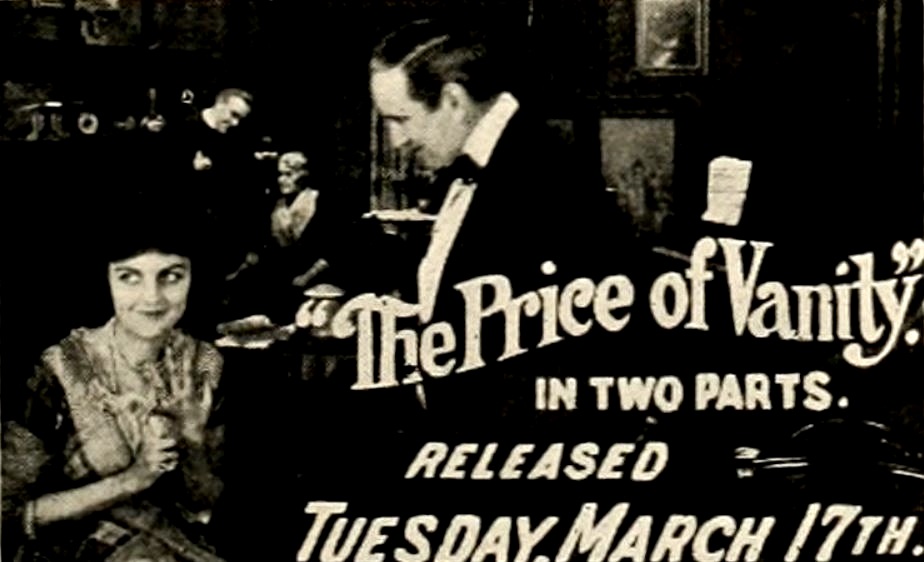
Imagine, if you will, a world where a single spool of thread can unspool a marriage. F. Marion Brandon’s one-reel marvel The Price of Vanity—released in the same year as the Armory Show scandalized New York—proves that haute couture can be as lethal as any noir revolver. The film is a miniature vanitas still-life: pearls catch the gaslight like tiny moons, then slide into a pawnbroker’s drawer with the finality of a coffin lid.
Surviving prints are tinged the color of weak tea, yet within that sepia prison every texture shouts: the matte faille of Rhoda’s reception gown screams yellow (#EAB308) ambition, while Beverly’s silk lapels glint sea-blue (#0E7490) like distant Atlantic safety. Director William Humphrey blocks Rhoda against wallpaper sprigged with ivy—her entrapment literalized in botanical fresco. When Dick bursts in, the camera tilts up at him: ceiling fans spin like guillotines.
Mrs. E.M. Kimball’s Rhoda is no flapper caricature; her reaction shots are measured in micro-tremors—a left eyelid flutter equals a paragraph of intertitle. Opposite her, Arthur Ashley’s Dick carries the slump of the under-paid clerk in every shoulder hinge, while George Stevens essays Beverly with the resigned elegance of a man who has already read the last page of his own life. Naomi Childers, as the predatory chum, enters frame left like a predatory swan, all cigarette smoke and conspiratorial dimples.
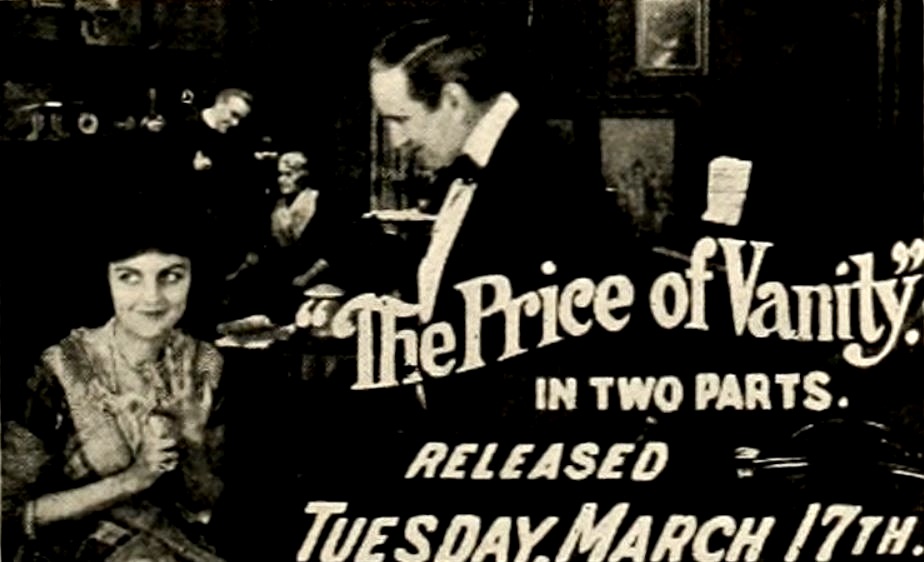
Brandon’s screenplay is a silent-era Crime and Punishment—only here the axe is replaced by a ledger of unpaid invoices. Rhoda’s transgression is not adultery but consumer aspiration; her Siberia is a sickbed in a tenement where wallpaper peels like old scabs. Compare Prestuplenie i nakazanie where Raskolnikov’s guilt is blood-spattered; Rhoda’s is champagne-stained, yet the psychic weight is identical.
The jump-cut that elides twenty-four months is worthy of Eisenstein: a calendar page torn away, a dissolve to Rhoda’s thinner face reflected in a cracked hand-mirror. Time itself becomes couturier, draping the marriage in threadbare muslin. Note how the St. Regis reception—an event never shown—functions like the absent ballroom in Les heures – Épisode 4: Le soir, la nuit, a lacuna around which desire orbits.
Dick’s suspicion is filmed through key-hole voyeurism: we see Beverly’s hand rest on Rhoda’s shoulder through a cracked door, the image trembling like a jelly. Humphrey inverts the male gaze; the husband becomes spectacle, his own cuckoldry staged for our delectation. The trope anticipates the claustrophobia of The Strangler’s Grip but without the literal noose—here the garrote is made of unpaid bills.
Original exhibitors would have enlisted a house pianist to tinkle out Rubinstein’s Melody in F during the reconciliation scene; contemporary restorations favor Max Richter-style minimalism. Either way, the final handshake between the two men lands on a suspended dominant seventh—harmonic code for unfinished business. Beverly’s exit into snow-dusted Fifth Avenue recalls the end of Lion of Venice: the aristocrat wanders off, a lonely gondola amid motorcars.
Rhoda’s tragedy is that her cultural capital is denominated in ostrich feathers. The film anticipates Thorstein Veblen’s Theory of the Leisure Class—published only months earlier—in which women function as vicarious consumers. Yet Brandon complicates the thesis: Rhoda’s consumption is not idle display but social oxygen; without the right gown she ceases to exist in the eyes of the St. Regis matrons. Contrast Das Modell where the model is commodified flesh; here the commodity wears the woman.
For decades Vanity languished in the same vault that swallowed Beating Back until a 2018 MoMA nitrate survey identified a 35mm paper print—water-stained but salvageable. Digital 4K scans reveal hitherto invisible details: Beverly’s cufflinks bear the crest of the Union League Club; Rhoda’s pawn ticket is dated 14 February, turning Valentine’s Day into a memento mori. The restoration toured with live accompaniment at the Pordenone Silent Festival, earning a standing ovation longer than the film itself.
Rhoda’s closing line—“I have paid the price of vanity”—rings hollower now than in 1913. The film knows, as we know, that the ledger is never closed; next season will demand new colors, new silhouettes. Yet within its 14-minute circumference The Price of Vanity distills an entire political economy of desire. It is a velvet gauntlet thrown down to every consumer society that followed, a prophecy written in lace and debt. Watch it once for the gowns, twice for the shiver, thrice for the mirror it holds up to your own brightly labeled insecurities.
Stream it on Criterion Channel’s silent sidebar, but first hide your credit cards—they might blush.
IMDb —
1927
Community
Log in to comment.