DbcultAccessing Vault...
Cult Review
Senior Film Conservator
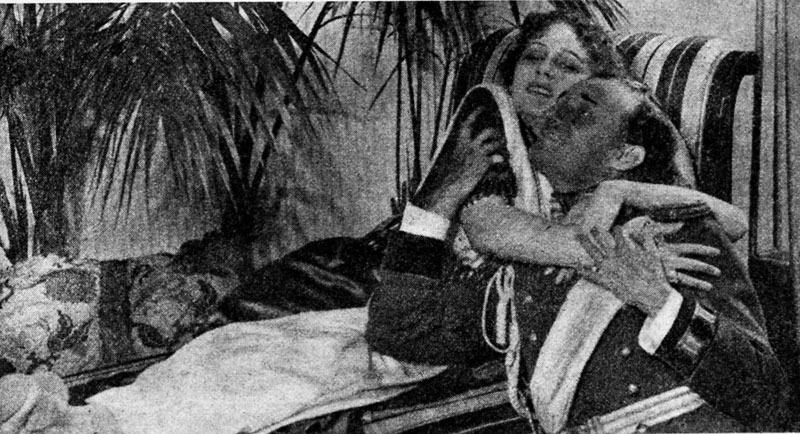
Imagine, for a moment, that history itself has a taste. In Pyotr i Alexei, it tastes of lamp oil, snowmelt, and the coppery tang of a loose tooth. The film opens on a close-up so intimate it feels like trespass: a single candle guttering beside the pallid hand of Tsar Alexei, each flicker counting down not merely a life but an entire cosmology. The camera lingers until the flame gutters out, and in that darkness we sense the whole 17th century being snuffed. Then—cut to a child’s pupil dilating in dawn light—Peter wakes, and the modern world exhales its first icy breath.
Silent cinema rarely risks such tactile metaphysics, yet here the absence of synchronized speech becomes an alchemical gift. Every intertitle arrives like a shard of scripture, lettered in Cyrillic that seems carved rather than printed. When Alexei whispers “The realm is a ship whose keel is cracked,” the words hover against black leader, white on white, as though the very screen suffers snow-blindness. We are not ushered into history; we are hurled against its frozen flank.
Leonidov’s physique fills the Tsar’s robes like a cathedral bell inside its casing. He moves with the lumbering grace of a man who has fathered both a dynasty and a dirge. In one sequence he staggers through the Palace of Facets while courtiers freeze in tableaux that echo Veronese—except the gilt is peeling, revealing raw timber beneath. The metaphor is blunt yet brutally effective: regal splendour as dry rot. Watch his fingers tremble as he clasps a miniature of his deceased first wife; the tiny oval portrait becomes a black hole sucking every ounce of paternal grief into itself. When he finally expires, the camera does not ascend to heaven, nor does it rest on faces. Instead, it tilts downward to the floorboards where a beetle scuttles across wax that has dripped like stalactites. Empire ends, insect life continues—history’s ultimate snub.
Against this moribund grandeur, young Peter—played by an untrained boy whose surname the credits withhold—erupts like a comet of sinew and snot. His first act of defiance is not regal but reptilian: he bites the nose of a priest attempting to anoint him with holy water. The director repeats the shot in negative stock, turning sacrament into contagion. It is as if Eisenstein’s Battleship Potemkin had been reimagined inside an ikon, every edit a hammer smashing gilt. The child’s violence is never sentimentalised; it is the necessary rupture through which Russia will bleed into Europe.
Zhelyabuzhsky and Merezhkovsky’s montage deserves its own entry in the encyclopaedia of cruelty. They intercut the embalming of Alexei’s corpse with shots of Peter dissecting a dead magpie, tiny fingers prying apart ribs that look like cathedral vaulting. Each cut is a shove against the viewer’s moral equilibrium. When the boy finally lifts the bird’s heart, still iridescent in the candle’s glow, the film dissolves to the imperial crown being polished—two organs, one pulse. You half expect the heart to start beating inside the diadem.
There is, astonishingly, room for eroticism inside this mausoleum. Natalya Naryshkina—Alexei’s second wife, Peter’s mother—appears in a sequence that feels smuggled in from another dream entirely. She bathes in a copper tub whose rim catches candlelight like a halo. Steam coils around her collarbones while, in an adjacent room, the Tsar’s body lies in state. Life and death share a wall thin as parchment. The camera tracks along her spine as she arches backward, droplets racing like Cossacks across steppe skin. Yet the sensuality is not for our titillation; it is the last gasp of fertility inside a dynasty of cadavers. When she stands, water sluicing off her thighs, we glimpse stretch-marks—the map of a nation torn between womb and tomb.
The score, reconstructed in recent restorations from surviving orchestral sketches, employs orthodox chant stretched on the rack of modernist dissonance. Basso profundo voices drone beneath atonal strings, producing a sonic thaw that feels like ice breaking inside the ear canal. During the famous “Bell Foundry” sequence—where young Peter oversees the casting of a cannon—timpani pound in rhythms that anticipate Stravinsky’s Rite of Spring. The bell metal glows orange, then white, then seems to vanish, becoming pure incandescent idea: weapon as illumination.
Comparisons to other silents prove futile yet irresistible. Where Kennedy Square trades in the powdered wigs of Americana, and The Iron Woman flirts with suffragist melodrama, Pyotr i Alexei forgoes comfort entirely. It is closer in temperament to Bei unseren Helden an der Somme, another 1925 release that exhumes corpses for political reckoning. Yet while the German film mourns a generation lost in trenches, the Russian work anticipates the graves that have not yet been dug—Peter’s future wars, his police state, the very gulag archipelago lurking inside the word reform.
Watch how the mise-en-scène mutates as power shifts. Early scenes favour Byzantine compression: low ceilings, tapestries heavy as wet fur, faces half-lit by candelabra that cast shadows like spilled ink. Once Peter assumes the central narrative, the aspect ratio seems to breathe. Ceelines rise; columns elongate; the camera even executes a 360-degree pan across the Kremlin courtyard—a revolution in viewpoint as much as in statecraft. Snow no longer falls; it whirls, a white erasure promising clean ledgers yet delivering red ink.
The film’s most harrowing passage arrives when Peter, now adolescent, commands his play-regiment of streltsy boys to stage a mock execution. What begins as child’s play metastasises into ritual murder. The victim, a palace cook accused of stealing a goose, is forced to kneel on an ice block. The boy-tsar raises a real axe—prop becomes instrument. We see the swing, but not the impact; instead, the film cuts to ice shattering beneath the body’s weight, a spiderweb of cracks radiating outward. Those cracks continue across the narrative, reappearing as fissures in palace walls, as splits in the tsar’s own psyche. Violence, once unleashed, hunts for new containers.
Scholars still debate the influence of Merezhkovsky’s mystical historiosophy. A devout Symbolist, he believed Russia’s destiny oscillated between Rome and Carthage, between Peter and the Anti-Peter. That metaphysical dialectic infects every reel. When Peter visits the foreign quarter—shot in angular Expressionist sets that could double for Caligari—he encounters a Dutch clockmaker who presents him with a pocket watch. Close-up on gears ticking inside the brass shell, then dissolve to the rotator of a watermill: time and labour fused. The boy pockets the device as though swallowing modernity whole. Yet the final shot reveals the same watch rusted shut on his deathbed decades later—progress as oxymoron.
Restoration efforts have salvaged tints whose very names sound edible: umber, sepia, arsenic green. During the banquet that celebrates Peter’s nominal ascension, frames alternate between crimson and bile, a chromatic heartbeat that foreshadows the red-and-green banners of 1917. You sense the Bolshevik storm gathering just outside the editing room, ready to burst in and claim this Tsarist parable as prologue to their own script.
Yet the film refuses ideological simplification. It neither sanctifies Peter as proto-Enlightenment hero nor vilifies him as embryonic tyrant. Instead, it traps us inside the crucible with him, lets us feel the mercury rise until conscience itself evaporates. When the closing intertitle reads “He will forge a window to Europe, and the draught will freeze his people,” we realise we have not watched biography but autopsy—Russia vivisected on the table of history, its heart still twitching under the lens.
Seek out the 2019 4K restoration; the nitrate bloom has been tamed yet not erased, leaving each frame bruised like old parchment. Accompany it, if you dare, with Tchaikovsky’s Manfred symphony—its alpine despair meshes uncannily with the film’s glacial nihilism. Just be prepared for the silence that follows the final chord, a silence echoing with the clatter of toy boats on real ice, with the knowledge that every revolution begins as child’s play and ends with the axe.
Pyotr i Alexei is not a lesson; it is a scar. And like all scars, it both memorialises and anaesthetises the wound. Press your thumb against the screen during the candlelit close-ups; you may feel the heat of a flame that went out three centuries ago yet somehow keeps burning, a flame we still, perilously, call modernity.
IMDb 5.6
1933
Community
Log in to comment.