DbcultAccessing Vault...
Cult Review
Senior Film Conservator
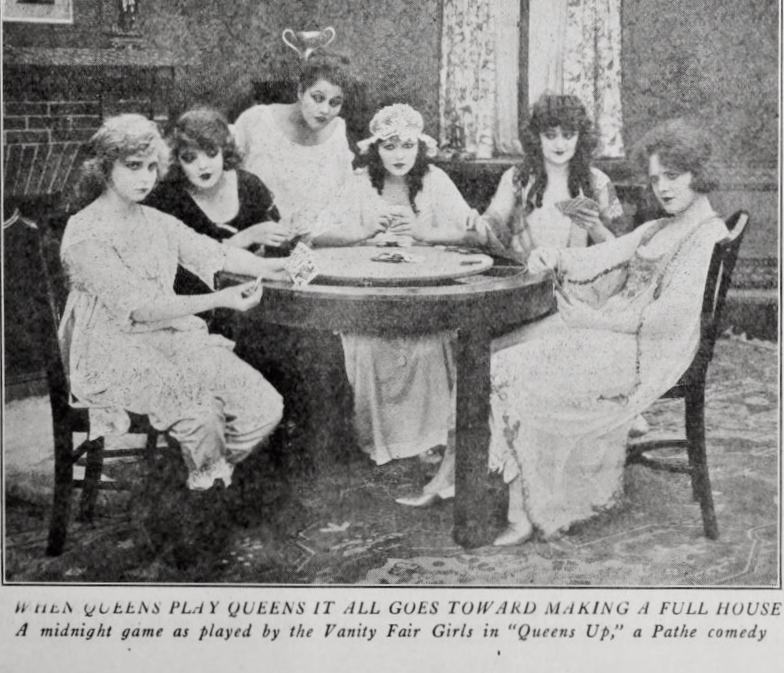
A froth of lace curtains, a haze of cigar smoke, and the syncopated clatter of a Model T axle snapping—thus begins the celluloid carnival that is Queens Up!, a 1928 one-reel rocket that feels like someone slipped bootleg gin into the communion chalice.
The film’s engine is misdirection: Eddie (Carl Hanson) believes domestic order is tethered to his wife’s absence; the seminary matron believes decorum can survive a flat tire; the Vanity Fair Girls believe every parlor is a cabaret. Their collective delusion combusts inside a Craftsman bungalow, turning parquet floors into trampolines and moral compasses into spinning roulette wheels.
Director Ray Thompson—never hailed in the same breath as Lubitsch yet deserving a footnote at minimum—orchestrates this chaos with a clockmaker’s eye for overlapping gags. Note the poker tableau: Eddie’s buddies, all waxed moustaches and armband sleeves, bet matchsticks as if they were blood diamonds. Outside, the girls’ hijinks seep through keyholes—bobby pins become lock-picks, bloomers become semaphore flags—until interior and exterior slam together in a third-act crescendo that leaves no lampshade unfringed.
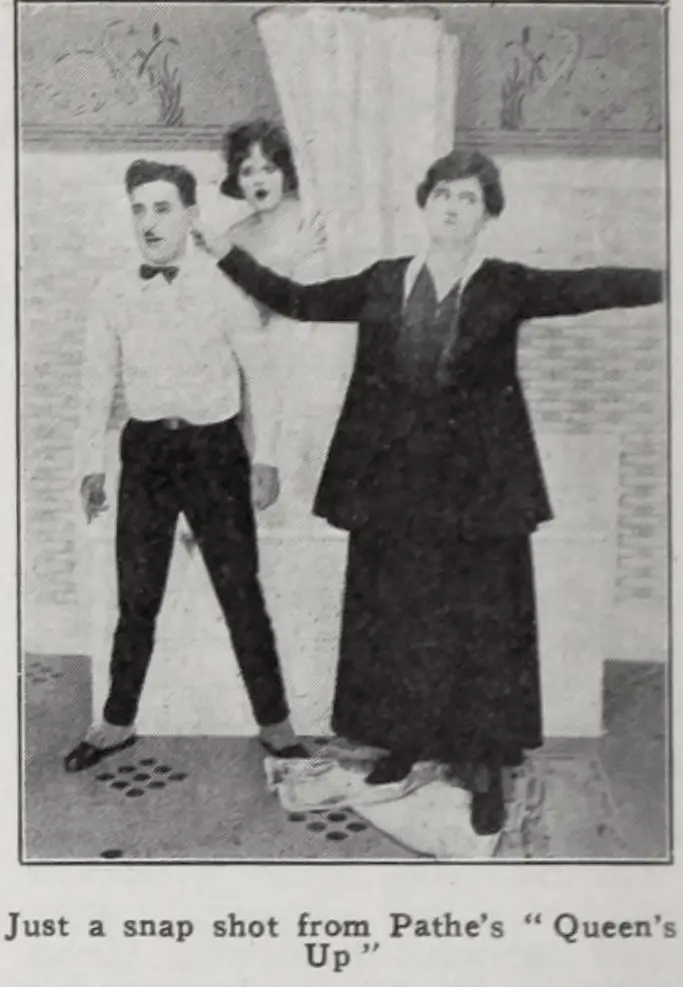
Norma Nichols, leading the Vanity Fair sorority, has the kinetic glee of a flapper Persephone. Watch her glide across a ottoman as though gravity were optional; her eyes flicker with the calculated innocence of a card-counter. Opposite her, Carl Hanson’s Eddie is a marvel of slow-burn bewilderment—his double-takes deserve their own metronome. When he finally discovers the sorority sprawled across his fainting couch, his jaw drops in a iris-fade that feels like the silent era’s answer to a record-scratch.
John M. O’Brien, playing the matron, wields a fan the way a samurai wields steel: one snap for indignation, two snaps for surrender. In a film where everyone is hustling, his slow dissolve from sentinel to conspirator is the moral barometer cracking under pressure.
Cinematographer Wally Howe bathes nocturnal scenes in aquamarine nitrate, then flares tangerine whenever a garter is snapped. The palette is a silent-era Instagram filter—sea-foam for innocence, ochre for temptation. Intertitles arrive in canary-yellow, their lettering jitterbugging across the frame: "She said she’d only stay five minutes—she forgot to specify which century."
The editing rhythm mimics a Charleston: two quick cuts for every punchline, a lingering iris-in for the aftermath. One match-cut—Eddie’s queen of spades slamming onto green felt dissolving into a silk stocking sliding down a bannister—deserves enshrinement in comedy textbooks.
Beneath the frippery, Queens Up! is a sly treatise on property rights—who owns the parlor, who owns the gaze, who owns the night. The girls squat Eddie’s domain not merely for shelter but for sport, turning domestic space into a pop-up speakeasy. Their seminary uniforms become costumes, discarded like Prohibition warnings. In 1928, such imagery skirts the Hays Office yet lands a palpable hit: women staking territory without male sanction.
Compare it to Untamed Ladies (1921) where rebellion is punished, or to The Business of Life (1922) where marriage is brokerage. Queens Up! refuses both verdicts; its finale is a negotiated treaty rather than a sermon, a collective shrug that says tomorrow will bring fresh hubbub anyway.
Surviving prints are silent, but the intended score—likely a medley of foxtrots and ukulele frails—can be reconstructed in the imagination. Each pratfall begs for a woodblock; each eyelash-bat deserves a muted trumpet. Modern audiences often project a jazzy Spotify playlist atop it, yet the film’s physical comedy is percussive enough to resonate sans audio.
Queens Up! languished for decades in a Missouri barn, rediscovered in 1997 next to reels of butter advertisements. Restored by the University of Georgia, it now circulates on 35 mm in repertory houses and on archival streaming platforms (subscription required). A Blu-ray pairing with The Avalanche (1919) offers a piano score by Ethan Uslan, though purists may prefer the ghostly hush of pure silence.
Film scholars cite it as a proto-screwball cornerstone; TikTok creators mine its GIF-ready gestures for meme fodder. Both readings are valid—the hallmark of a work that refuses to ossify into museum dust.
Queens Up! plays its cards with a wink, a shuffle, and a bottom-deck swap. It’s a pocket-sized bacchanal, a celluloid champagne bubble that fizzes for twenty minutes then vanishes, leaving only the grin. The film doesn’t ask you to contemplate eternity; it dares you to chase the next giggle, the next gasp, the next unscripted moment when propriety topples and the queens—sorority sirens every last one—ascend the deck.
Rating: 8.5/10 — a jubilant jack-in-the-box of Jazz-Age joie de vivre.
IMDb —
1921
Community
Log in to comment.