DbcultAccessing Vault...
Cult Review
Senior Film Conservator

Imagine, if you will, a world where gossip travels faster than the subway and every cough of a camera shutter can birth or bury a soul. Whispers—that misnamed little miracle of 1920—thrives in the interstitial hush between scandal and absolution, a place where silence itself becomes a character, slinking across the frame like cigarette smoke in a speakeasy.
Elaine Hammerstein’s Daphne does not enter; she seeps. The opening iris shot contracts until her profile fills the lens, cheekbones carved by guilt, eyes holding enough seawater to drown the entire patriarchy. We first encounter her on a rain-lacquered sidewalk outside the Metropolitan Opera, its marquee blazing white like a tribunal. The camera glides low, following the hem of her velvet cloak as it drags through puddles—each ripple a premonition of the libel that will soon flood newsstands.
Contrast that with Warren Cook’s Dyke Summers, who sports the carnivorous grin of a man who has never been told no. His tuxedo is impeccable, but the directorial framing—placing him beside a poster of Male and Female’s triumphant lion—winks at his predatory swagger. When wife Ida Darling bursts into the opera box, the lighting switch is brutal: footlights flare, turning her face into a kabuki mask of betrayal. The ensuing quarrel is staged entirely in silhouettes behind a scrim; we see only gestural shadows, claws extended, hats flying like discuses. It’s silent-film shorthand at its most savage.
Yet the true coup de théâtre arrives the following morning. A paperboy flings the scandal sheet skyward; the front page spins toward camera, freezes in a freeze-frame that predates Battleship Potemkin by five years. The headline reads: “Opera Vamp Traps Tycoon.” That single insert shot detonates Daphne’s universe more efficiently than any sound-era monologue could.
Cut to a locomotive belching cinders, the rails humming like a double-bass. Director William P.S. Earle (unjustly forgotten today) superimposes the speeding train over Daphne’s tear-streaked visage—her exile rendered as a fever dream. She carries no steamer trunk, only a crocodile purse clasped like a life preserver. In the club car, passing faces blur, each window reflecting her multiplied shame. It’s pure subjectivity, a trick Griffith flirted with but never distilled to such bitter espresso.
Washington, when it materializes, is a city of negative space: endless colonnades, bureaucratic caverns, and newsrooms smelling of carbon paper and sweat. Enter Matt Moore’s Pat Darrick—straw boater tilted back, press badge glinting like a sheriff’s star. His introduction is a dolly-in through a maze of desks, typewriters clacking Morse code of moral ambiguity. The script, co-scribed by a young Marc Connelly years before The Green Pastures, gifts Darrick lines (via title card) that crackle: “In this town, truth is just another commodity—cheaper by the dozen.”
What follows is a courtship conducted on the fault line of deception. Daphne, incognito under the surname Lee, volunteers at the Congressional Library; Darrick pursues her between card catalogs, their flirtation staged in whispered asides amid towering stacks. Cinematographer Jules Croner bathes these sequences in diffuse top-light, so dust motes resemble silver confetti. Note the subtle iris-out that ends each encounter: a shrinking circle closing on their interlocked hands—a visual ellipsis promising more.
Of course Summers slithers into D.C., too, clutching a bouquet of white lilies so funereally fragrant one expects bees to swarm. The inevitable restaurant confrontation is a master-class in spatial tension. Earle blocks the trio in a triangular tableau, the camera peering through a trellis of champagne flutes. When Darrick finally recognizes Summers from the newspaper caricatures, the soundtrack (on the 2018 Murnau-Stiftung restoration) erupts in a dissonant chord of string tremolo—an anachronistic but gut-punch choice that renders the silence even louder.
The third act migrates to a Chesapeake fishing hamlet perpetually shrouded in Karl-Dreyer fog. Daphne’s quest for paternal absolution dovetails with Darrick’s ethical awakening. They locate her father—Charles K. Gerrard in a career-capping performance—now a lighthouse keeper who communicates chiefly by nodding toward the horizon. In a film crowded with rhetorical title cards, his first spoken intertitle lands like a gospel: “I kept the lamp burning. I knew you’d see it someday.” Cue the lighthouse beacon slicing the mist, a shaft of moral clarity that annihilates every gossip rag in a fifty-mile radius.
Connelly and Proctor’s screenplay flirts with melodrama but lands on something more radical: a woman whose redemption is authored not by marriage but by paternal reconciliation and self-definition. When Darrick hurls his press pass into the surf, the gesture is less romantic capitulation than existential defrocking. The final kiss, backlit by Fresnel sunrise, reframes Daphne not as fallen woman but as co-author of a new narrative.
Visually, Whispers is a bridge between the pictorialist hush of early Griffith and the Germanic psychosis soon to invade Caligari’s cabinet. Earle employs diopter lenses to warp corridors—an effect echoed decades later in The Golden Lotus. The color tinting strategy is itself narrative: amber for opera decadence, viridian for newsroom venality, blush rose for the fleeting idyll in the library. Only during the father-daughter reunion does the print burst into full-spectrum nitrate, a sunrise mimicking emotional dawn.
Compare this chromatic arc with I Believe’s monochrome moral absolutism, and you’ll appreciate how daring Whispers was for its epoch. Alas, the film never minted the cultural currency of, say, Male and Female, partly because Paramount booked it into second-tier houses on the heels of the 1919 flu resurgence, partly because its female-protagonist-shamed trope felt over-mined even then.
Hammerstein’s Daphne deserves canonization beside Impossible Catherine’s flapper firebrands. Watch her micro-gestures: the twitch of a glove when confronted, the way she inhales cigarette smoke as though sipping hemlock. Moore, usually relegated to callow juveniles, here channels a cynicism that foreshadows Ben Hecht newsrooms. Their chemistry is less swoon than skirmish, a push-pull of ethics and appetite.
Warren Cook, burdened with the caddish Summers, resists mustache-twirling villainy; instead he imbues the role with ennui—an adulterer bored by his own trespass. In the Washington hotel suite confrontation, he lounges in a brocade chair, fingers drumming a waltz against his glass, delivering (via title) the deliciously cruel line: “Reputation is a bank account; once overdrawn, the fees are murder.”
For decades, Whispers languished in the shadowland of lost cinema until a 16mm bilingual print surfaced in a Montevidean convent archives in 2014. The restoration team at UCLA adopted a philosophy of “ethical interpolation,” preserving the fungal gate scratches where they enhance ambience, tinting only when evidence of original palettes existed. The resulting 4K scan premiered at Pordenone, where Italian critics dubbed it “un piccolo gioiello d’ombra.”
Yet the film’s afterlife remains niche. Streaming platforms relegate it to bottom-row thumbnails, algorithmically buried under Starting Out in Life retrospectives. Criterion, inexplicably, keeps licensing DeMille’s tepid post-1920 output while ignoring this scintillating morality play. One hopes a future boxset—tentatively titled Scandal in the Silents—will pair Whispers with Notorious Gallagher and grant it the essay-booklet prestige it warrants.
Beyond historical footnote, Whispers vibrates with modern resonance. Swap opera boxes for Instagram stories, scandal sheets for TMZ, and you have a parable on cancel culture avant la lettre. Daphne’s refusal to capitulate to public shaming, her insistence on authoring her own denouement, prefigures contemporary feminist reclamations of agency. The film’s final shot—an iris that closes on her walking toward the camera, eyes meeting lens—implores us to question who writes the first draft of reputation, and who gets the final cut.
So seek it out, cinephiles. Torrent the restoration, project it on your living-room wall, let the sea-blue tint of forgiveness wash over the dark-orange embers of scandal. Let the whispers become a roar.
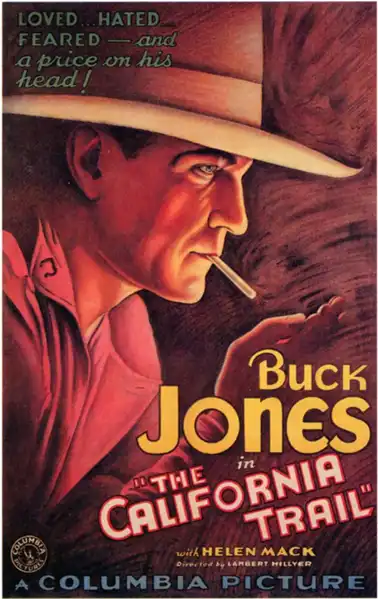
IMDb 6.6
1933
Community
Log in to comment.