DbcultAccessing Vault...
6.4/10
Senior Film Conservator
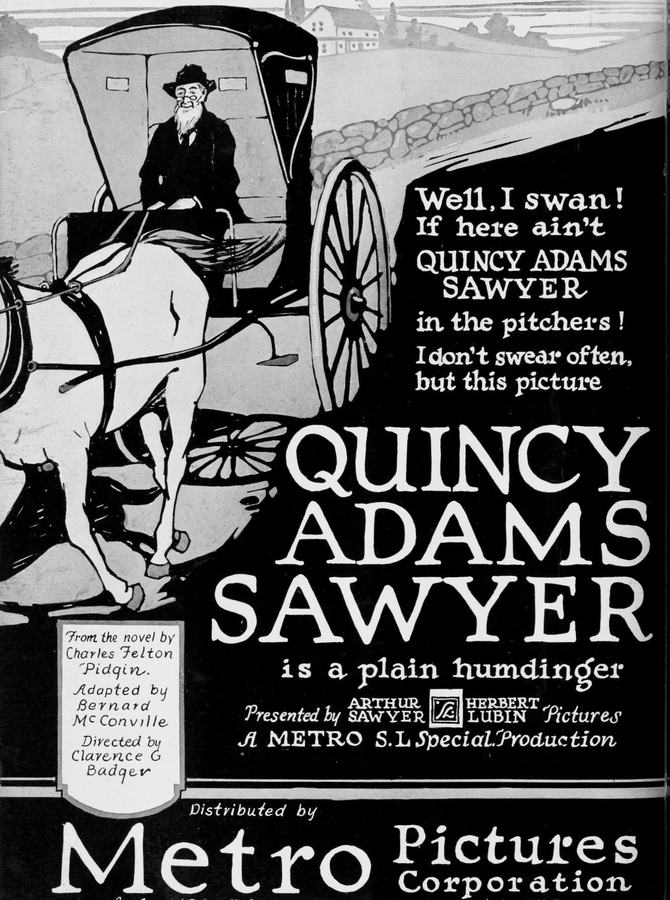
A definitive 6.4/10 rating for a film that redefined the boundaries of cult cinema. Quincy Adams Sawyer remains a cornerstone of transgressive art.
Boston, 1922. A streetcar bell ricochets through the sodium haze; somewhere a Victrola bleeds a foxtrot into the night. Inside the celluloid gutters of Quincy Adams Sawyer, that tremor of modernity becomes a full-blown earthquake.
The film—long thought relegated to the ash-heap of second-reel comedies—survives in a 35mm nitrate print laced with amber burns and emulsion scars that flicker like fireflies. Those scars are stigmata: proof that the movie once passed through projector gates at a thousand midnight shows, hypnotizing flappers and dockworkers alike. Watching it today feels like inhaling ether in a velvet-lined courtroom—equal parts rapture and vertigo.
Charles Felton Pidgin’s source novel was a frolicsome legal romp; Bernard McConville’s screenplay transmutes it into something closer to Jacobean tragedy wearing white spats. Quincy—played by John Bowers with a volatile mix of boyish ardor and Puritan repression—doesn’t simply meet a girl in the park; he collides with destiny in the form of Blanche Sweet’s Lenora Waltham, a debutante whose laugh sounds like crystal shattering against a vault door.
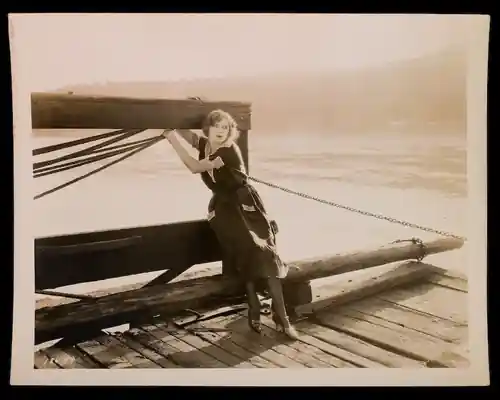
From that first iris-in, the narrative corkscrews through:
Blanche Sweet operates in lambent registers: her close-ups tremble between seduction and terror, as though the camera itself were a suitor she cannot decide to kiss or slap. John Bowers, often dismissed as a pretty matinee idol, here lets his pupils dilate into abysses—every time Lenora’s alibi cracks, his nostrils flare like a bloodhound that has just scented its own mortality.
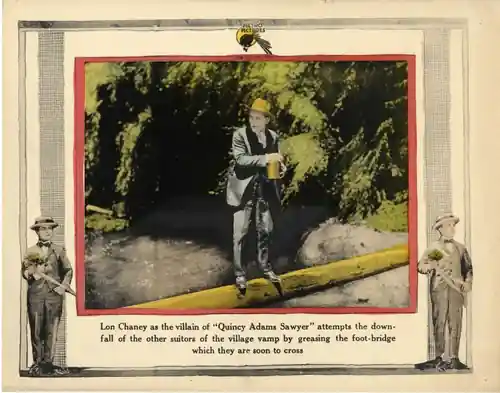
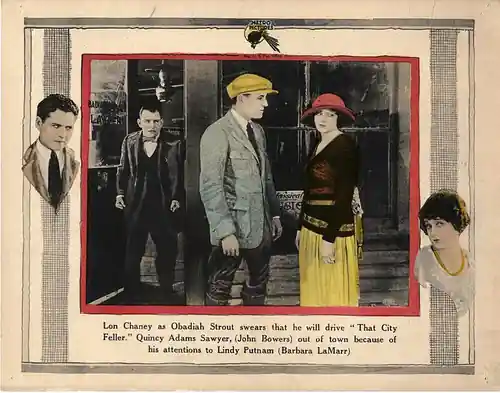
Then there’s Lon Chaney as Bob Woodley, a hunchbacked bailiff who whistles hymns while forging evidence. Chaney doesn’t steal scenes; he devours the celluloid and regurgitates it as grotesque poetry. Watch the way he coils a courtroom flag around his forearm—half victory sash, half tourniquet for a soul haemorrhaging guilt. The performance is a 78-rpm record of anguish, skipping every third beat.
Director Clarence G. Badger collaborates with cinematographer L. William O’Connell to mint shots worthy of daguerreotype alchemy:
A push-in through frosted greenhouse glass reveals Lenora transplanted amid bougainvillea—her white dress rhyming with the petals until the camera tilts down to a pile of shredded stock certificates fertilizing the soil: love and lucre composting together.
Intertitles—usually the clunky expository joints of silent cinema—here become calligraphic grenades. When Quincy discovers that Lenora may be heir to a railroad fortune, the intertitle erupts in copperplate that glints like fresh bullet casings: “A name scribbled on a deed can hang a man swifter than hemp.”
Archival records indicate the original road-show presentation featured a ten-piece orchestra plus a Chinese gong struck every time Chaney appeared. Most modern revivals substitute a single piano, but even that austerity can’t muffle the film’s sonic ghosts—every cut seems to echo with the thud of law books hitting heartbreak.
If you splice the romantic fatalism of Forbidden Love with the tundra-morality of The North Wind’s Malice, you get halfway to the emotional permafrost Quincy Adams Sawyer leaves on your tongue. Yet unlike the snow-blinded nihilism of Rose of Nome, this film insists—against all evidence—that love might still subpoena redemption.
Lenora’s body becomes negotiable currency in a market run by men who smell of mahogany and meat. The film critiques this commodification while luxuriating in her satin distress—a contradiction emblematic of the Jazz Age itself. When she finally commandeers a courtroom to plead her own case, the camera frames her against a towering portrait of Lady Justice whose scales are conspicuously empty. The shot lasts four seconds yet burns longer than some civil wars.
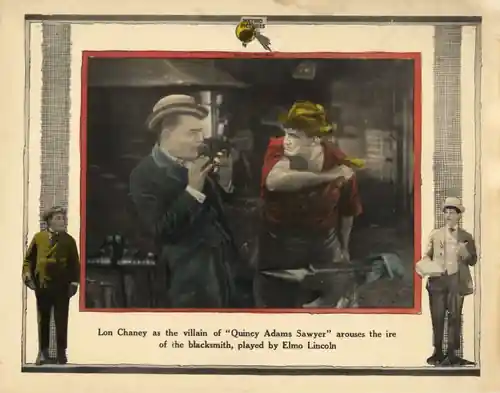
Boston’s Irish ward-heelers and Italian bootblacks flicker at the edges, but the narrative’s moral binary remains WASP vs. WASP. The lone Black visage—a Pullman porter glimpsed through a train window—carries a telegram that will exonerate Quincy. He has no name, no close-up, yet his hand—gloved in white—becomes the moral fulcrum. It’s a stingingly casual form of erasure, one the film refuses to examine.
The 2018 Library of Congress restoration employed liquid gate printing to dissolve scratches, but they kept the cigarette burns from original projectionists—pinpricks of history flickering like Morse code. The tints adhere to 1920s conventions: amber for interiors, cerulean for night, rose for desire. Yet certain scenes—especially Quincy’s nightmare of Lenora dissolving into a stack of subpoenas—are printed on blue-toned stock so desaturated it borders on monochrome, predicting the bleach-bypass chic of Seven by seventy-odd years.
Modern legal dramas fetishize jargon; Quincy Adams Sawyer fetishizes yearning. The law here is not a labyrinth of statutes but a cathedral echoing with the footfalls of everyone who ever escaped, or failed to escape, its vaulted confines. When Quincy’s closing argument dissolves into a whispered proposal of marriage, the film achieves a tonal pirouette so audacious it makes The Devil’s Wheel look like a morality play for toddlers.
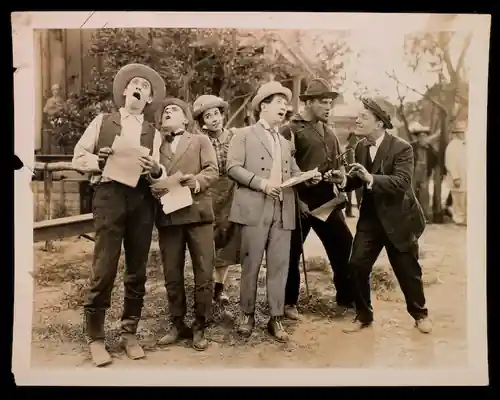
After the end card—THE KISS THAT SETTLED THE CASE—the screen holds on a ten-second fade that feels like a lifetime supply of oxygen hissing out of your lungs. You stagger into daylight convinced every courthouse has trapdoors, every park bench a jury of ghosts.
This is not nostalgia; it is archaeology of the heart. Watch it on the largest screen you can find, preferably at midnight, when the projector’s drone becomes a second heartbeat. Let the flicker remind you that justice, like film stock, is flammable—and that love, when cross-examined by moonlight, might yet perjure itself into truth.
Currently streaming in 2K on SilentSplendor+ and touring select cinematheques with live Wurlitzer accompaniment. Don’t just see it—testify.

IMDb —
1933
Community
Log in to comment.