DbcultAccessing Vault...
5.5/10
Senior Film Conservator
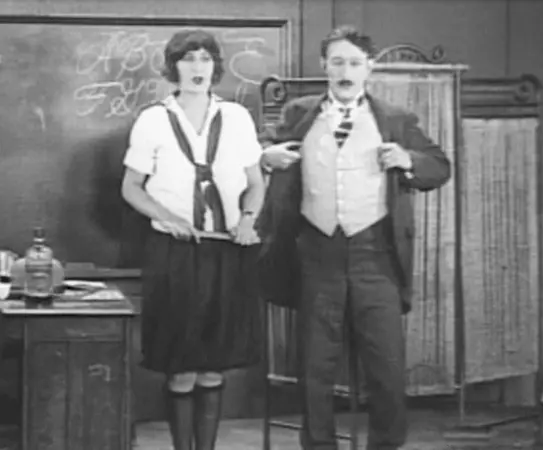
A definitive 5.5/10 rating for a film that redefined the boundaries of cult cinema. In the Grease remains a cornerstone of transgressive art.
The early 1920s represented a fever dream of celluloid experimentation, a period where the syntax of visual storytelling was being written in real-time through the sweat and pratfalls of performers like James Finlayson. In the 1922 short In the Grease, we are treated to a masterclass in the 'slow burn'—a comedic technique Finlayson would eventually immortalize alongside Laurel and Hardy. This film, however, stands as a singular testament to the anxieties of the post-war American father, a figure caught between the rigidity of Victorian discipline and the burgeoning chaos of a modernizing educational system.
The premise is deceptively pedestrian: a father, driven by a cocktail of genuine concern and overweening pride, decides that the local schoolmaster is unfit for the task of shaping his progeny. It is a narrative beat we see echoed in other contemporary works like Kids and Kidlets, where the world of childhood is viewed through the distorted lens of adult expectation. In In the Grease, the friction arises not from the child’s rebellion, but from the father’s inability to recognize the specialized labor of teaching. Finlayson’s character doesn't just want a better education for his son; he wants to prove that his own life experience is a universal solvent for any professional challenge.
The cinematic language employed here is remarkably sophisticated for its time. The use of space within the classroom becomes a metaphor for the father’s encroaching ego. As he replaces the teacher, the frame tightens, emphasizing his isolation amidst a sea of youthful indifference. The 'grease' of the title serves as a double entendre—both a literal reference to the mechanical or domestic messiness of the era and a figurative nod to the slippery slope of unearned authority. Much like the tonal shifts found in Look Out Below!, the comedy is derived from the precariousness of one’s social standing when venturing outside their innate sphere of influence.
One cannot discuss this film without dissecting the physical vocabulary of James Finlayson. His performance is a kinetic marvel, utilizing his trademark double-take and the legendary 'Finlayson squint' to convey a spectrum of emotion that dialogue would only dilute. When he enters the classroom, his posture is one of imperial certainty; by the second act, his frame has buckled under the weight of pedagogical reality. This transformation is supported by a stellar ensemble, including Bartine Burkett and Anita Garvin, who provide the necessary rhythmic counterpoints to Finlayson’s explosive energy.
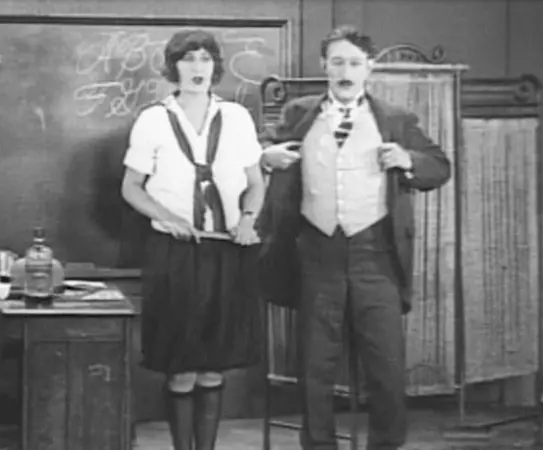
Comparing this to the more somber or exotic fare of the period, such as Eine weisse unter Kannibalen or the atmospheric Minaret Smerti, underscores the unique cultural utility of the American slapstick short. While international cinema was often grappling with grand historical tragedies or colonial fantasies, the Hal Roach and Mack Sennett schools were perfecting the art of the 'small tragedy'—the man who trips on his own dignity. In the Grease is a prime example of this, focusing the camera on the domestic micro-aggressions that define the human condition.
The core conflict—the father’s attempt to 'fix' the school—functions as a fascinating critique of the amateur spirit. In an era where the 'self-made man' was a dominant cultural myth (see Builders of Castles), In the Grease offers a cautionary counter-narrative. It suggests that some castles are not meant to be built by every man. The teacher, initially portrayed as incompetent through the father's biased perspective, is eventually vindicated not through a grand speech, but through the father’s spectacular failure. It is a humbling realization that 'to each his own' is not merely a platitude, but a necessary social contract.
The film’s pacing is relentless. Unlike the more languid development seen in John Heriot's Wife or the poetic pacing of Der verlorene Schuh, In the Grease operates with a percussive urgency. Every scene is a setup for a visual payoff, yet the writers (though uncredited in many archives, their influence is palpable) ensure that the gags are rooted in character. The father isn't just falling; he is falling from the height of his own arrogance.
Technically, the film utilizes the limited depth of field of the early 20s to create a claustrophobic classroom environment. The lighting, though rudimentary by modern standards, effectively highlights the sweat on Finlayson’s brow, emphasizing the physical toll of his misguided endeavor. There is a grit to the production that differentiates it from the polished melodramas like Bella Donna. This is a film about the 'grease' of life—the dirt under the fingernails, the chalk dust on the coat, the messy intersection of theory and practice.
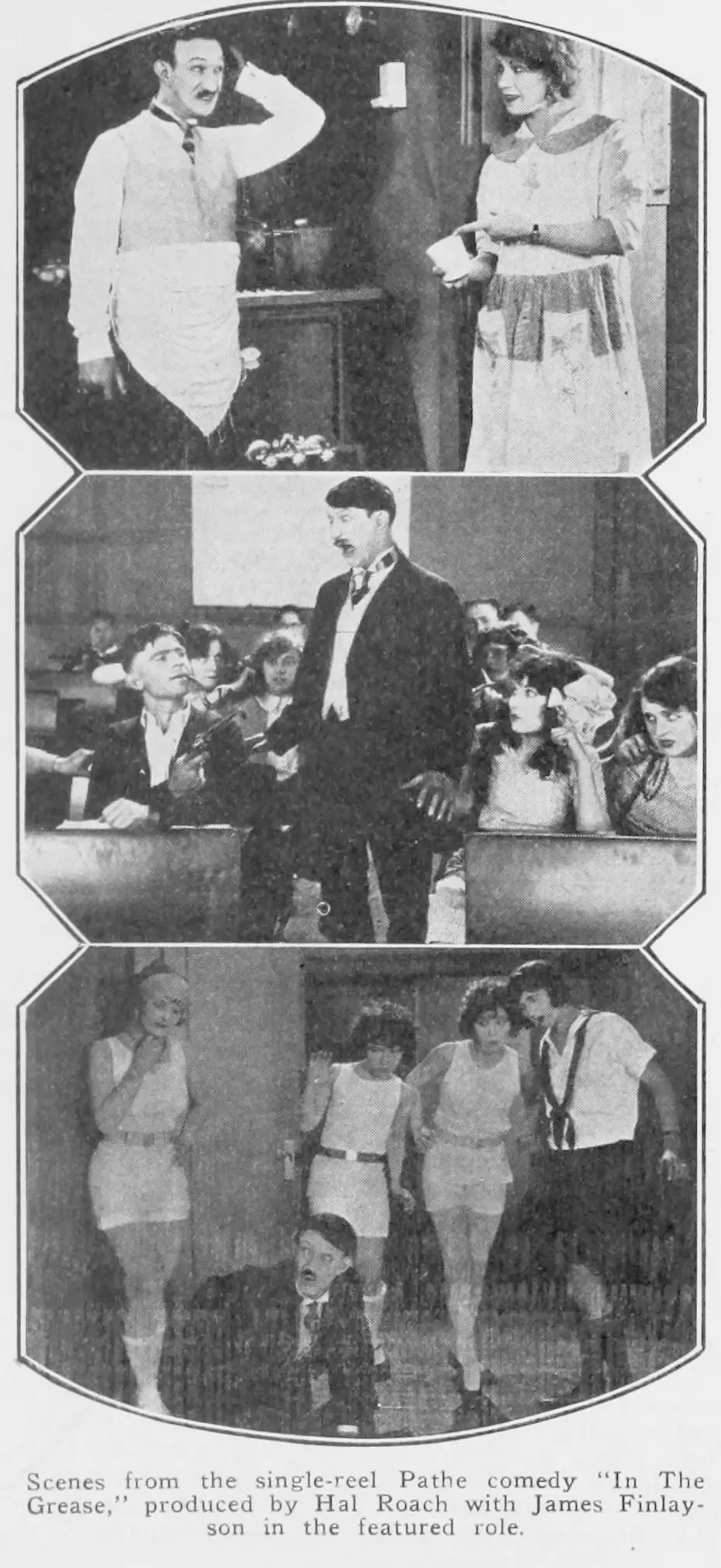
Furthermore, the film’s treatment of the youth is remarkably unsentimental. These are not the angelic figures of A kölcsönkért csecsemök; they are a chaotic force of nature, a collective entity that tests the father’s resolve and eventually breaks it. This portrayal aligns more with the gritty realism of Hick Manhattan or the rugged survivalism of Wild, albeit played for laughs.
As the film hurtles toward its conclusion, the resolution is both satisfying and slightly melancholic. The father returns to his own domain, a man chastened by the discovery of his own limitations. This theme of 'returning to one's place' was a common trope in silent cinema, often used to reinforce social hierarchies, but here it feels more personal, almost psychological. It lacks the moralistic heavy-handedness of Everyman's Price or the romanticized duty of Willy Reilly and His Colleen Bawn. Instead, it offers a pragmatic acceptance of the self.
In the broader context of 1922 cinema, In the Grease serves as a vital bridge between the primitive 'chase' films of the previous decade and the sophisticated character comedies of the late 20s. It shares the adventurous spirit of Up and Going and the rugged individualism of Singer Jim McKee, yet it applies those traits to the mundane setting of a schoolhouse. The result is a film that is as intellectually stimulating as it is physically hilarious.
Ultimately, In the Grease is a triumph of silent comedy that deserves a prominent place in the archives of the genre. It captures a specific moment in time when the world was questioning the old ways of doing things, only to realize that the 'new' ways required a level of expertise that couldn't be faked. Through the lens of James Finlayson's comedic genius, we are reminded that while we might all be 'in the grease' from time to time, knowing how to navigate the slip is the true mark of a master.
Critic's Note: For those tracing the evolution of the pedagogical satire, this film provides a fascinating precursor to the more cynical school-based comedies of the sound era. The chemistry between Finlayson and the child actors creates a friction that is both uncomfortable and undeniably funny, a delicate balance that few films of the era managed to strike with such precision.
IMDb 6.9
1929
Community
Log in to comment.