DbcultAccessing Vault...
6.2/10
Senior Film Conservator
A definitive 6.2/10 rating for a film that redefined the boundaries of cult cinema. Finances of the Grand Duke remains a cornerstone of transgressive art.
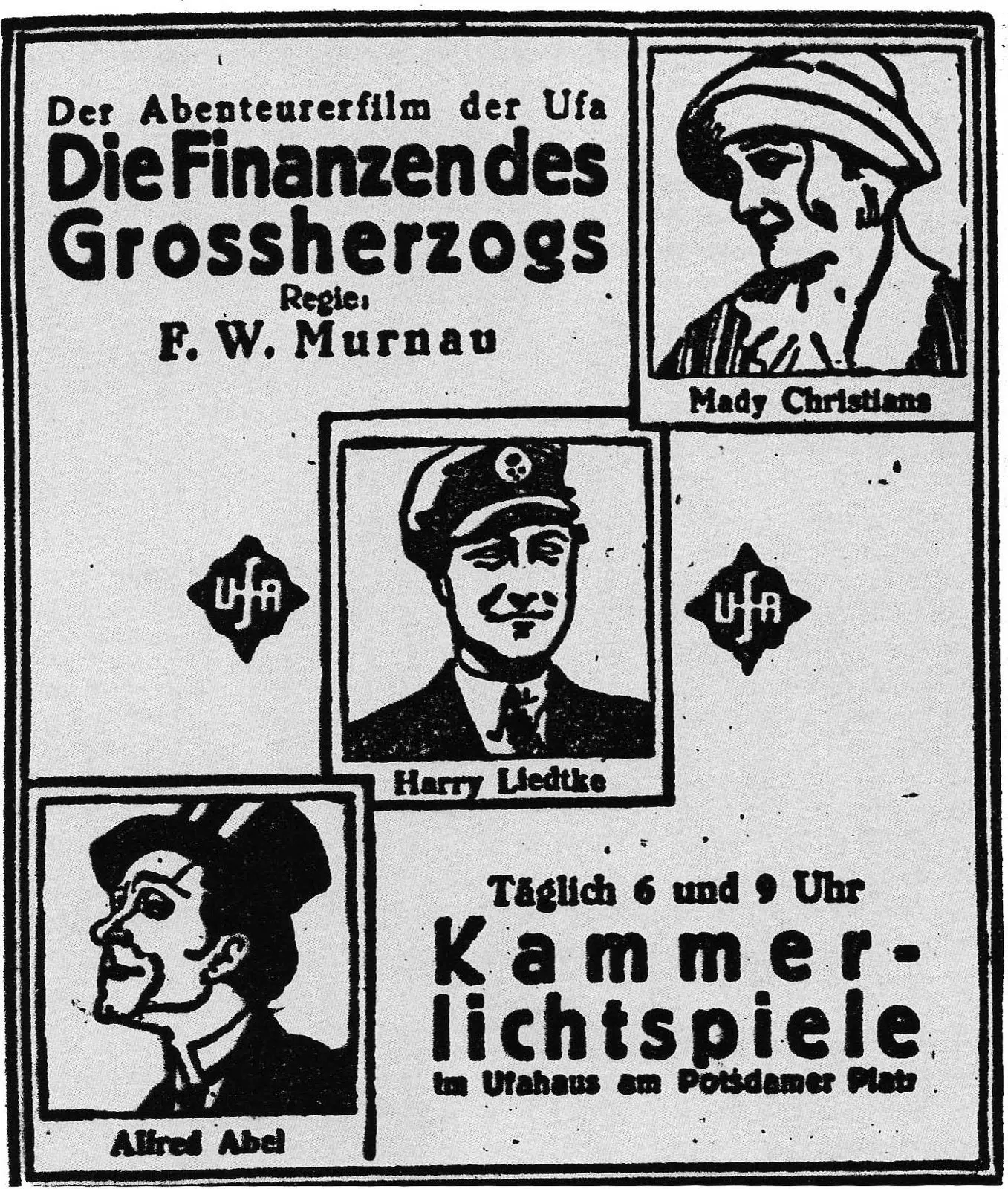
When one contemplates the cinematic legacy of Friedrich Wilhelm Murnau, the mind instinctively drifts toward the chiaroscuro nightmares of Nosferatu or the heartbreaking urban isolation of The Last Laugh. However, tucked within the interstices of his legendary filmography lies Finances of the Grand Duke (Die Finanzen des Großherzogs), a 1924 caper that defies the somber expectations of German Expressionism. This film represents a fascinating pivot, an excursion into the sun-drenched levity of the Mediterranean that serves as a counterpoint to the brooding shadows typically associated with the UFA studios of the era. It is a work of immense technical sophistication, masquerading as a mere trifle, and its restoration invites a rigorous reappraisal of Murnau’s versatility as a visual storyteller.
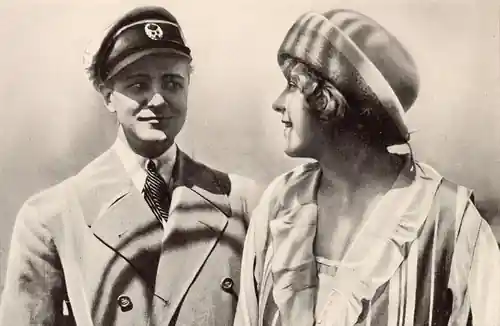
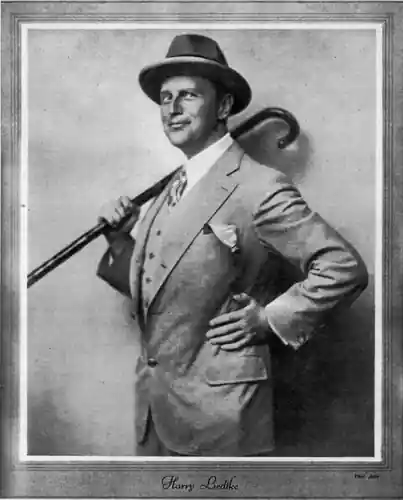
The fictional Mediterranean duchy of Abacco serves as more than just a setting; it is a character in its own right, rendered with a luminous clarity by the legendary cinematographers Karl Freund and Franz Planer. Unlike the claustrophobic, distorted sets of The Cabinet of Dr. Caligari, Murnau utilizes the natural splendor of the Adriatic coast to create a sense of expansive, albeit decaying, grandeur. The Duke, portrayed with a delightful nonchalance by Harry Liedtke, embodies the anachronistic charm of a nobility that has outlived its economic utility. His palace is a site of elegant penury, where the furniture is being inventoried by creditors while he maintains the poise of a man without a care in the world. This juxtaposition of aristocratic grace and fiscal ruin provides the film's comedic engine, a theme that resonates with other contemporary social satires like A Pair of Sixes, though Murnau’s lens imbues the material with a much more profound sense of spatial awareness.
The script, penned by the formidable Thea von Harbou and Fritz Wendhausen, operates with the precision of a Swiss watch. It is a narrative of layers—a stolen letter, a revolutionary plot, a capitalist takeover, and a romantic pursuit—all swirling around the central figure of the Duke. The complexity of the machinations reminds one of the serialized intrigue found in Fantomas - On the Stroke of Nine, yet Murnau strips away the pulp brutality in favor of a lighthearted, almost balletic pacing. The film’s rhythmic editing and the fluidity of the camera movements anticipate the "unchained camera" technique that Murnau would later perfect, proving that even in a comedic context, his formal innovations were tireless.
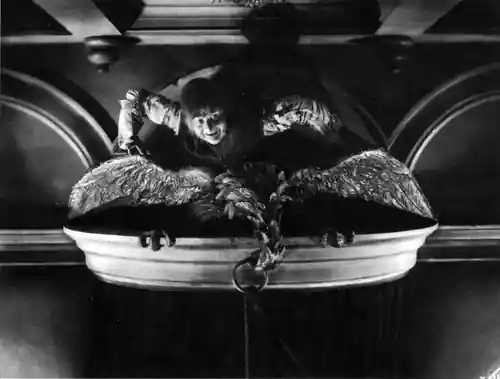
Perhaps the most startling element for modern viewers is the presence of Max Schreck. Known globally as the terrifying Count Orlok, here he appears as a somewhat bumbling revolutionary. Seeing Schreck sans the talons and prosthetic ears, engaging in the physical comedy of a failed insurrection, is a jarring but joyous experience. It underscores the repertory nature of early German cinema, where actors moved seamlessly between the grotesque and the mundane. Beside him, Alfred Abel delivers a performance of calculated intensity as Philipp Collins, the adventurer who becomes the Duke’s unlikely savior. Abel, who would later achieve immortality in Metropolis, possesses a screen presence that is simultaneously enigmatic and commanding, providing the necessary anchor for the film’s more flighty sequences.
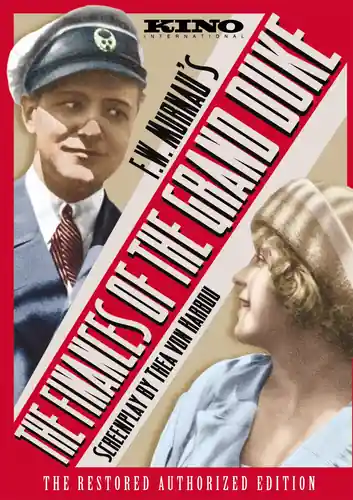
The female lead, Mady Christians as the Grand Duchess Olga, brings a regal yet spirited energy to the proceedings. Her chemistry with Liedtke is palpable, even across the silent medium, and her role transcends the typical "damsel in distress" trope. She is a woman of agency, whose stolen letter is the catalyst for the entire drama. This focus on strong, albeit classically framed, female characters is a hallmark of von Harbou’s writing, which often sought to balance traditional romance with a sense of modern independence, a trait also visible in films like Don't Call Me Little Girl.
While Finances of the Grand Duke is ostensibly a comedy, it is impossible to ignore the socio-political anxieties bubbling beneath its surface. Produced in 1924, during the height of the Weimar Republic’s hyperinflation and political instability, the film’s obsession with debt and the threat of foreign capital reflects a very real German collective trauma. The character of Bekker, the sulfur magnate, represents the predatory nature of modern industrialism, ready to pave over history and beauty for the sake of resource extraction. In this sense, the film is a conservative fantasy—a wish-fulfillment where a charismatic leader and a clever outsider can thwart the soulless march of progress and restore a more "innocent" order.
This tension between the old world and the new is a recurring motif in silent cinema. We see echoes of this struggle in the epic scale of Michael Strogoff, where the defense of an empire is framed through individual heroism. However, Murnau chooses a more intimate, satirical lens. The revolutionaries in Abacco are depicted as somewhat incompetent dreamers, more interested in the aesthetics of rebellion than the actual mechanics of governance. This trivialization of revolution might be seen as a critique of the fractured political landscape of 1920s Europe, where ideology often felt like a performance rather than a solution.
The visual palette of the film is a radical departure from the "Haunted Screen" of German cinema. Murnau embraces the high-key lighting of the seaside, using the white stone of the coastal architecture to reflect a sense of clarity and openness. There is a specific sequence involving a chase through the narrow, winding streets of a Mediterranean town that showcases Murnau’s innate understanding of geometry and movement. The way characters appear and disappear behind corners, the use of verticality in the frame, and the interplay of shadows cast by the midday sun all demonstrate a mastery of the medium that transcends genre. It is as if Murnau is attempting to paint with light, not to obscure (as in his horror films), but to reveal the beauty of the physical world.
This aesthetic choice also serves a narrative purpose. The brightness of the setting contrasts with the "dark" intentions of the conspirators, creating a sense of irony. The most nefarious plots are hatched in the most beautiful locations. This subversion of visual expectations is a sophisticated touch that elevates the film above standard slapstick or melodrama. It shares a certain kinship with the ethnographic beauty found in Armenia, the Cradle of Humanity under the Shadow of Mount Ararat, where the landscape is treated with a reverence that borders on the spiritual, even if the primary goal of Murnau's film remains entertainment.
Critically, Finances of the Grand Duke has often been dismissed as a minor work, a "vacation film" for a director who was destined for greater, darker things. Yet, such a dismissal ignores the film's intrinsic merits. It is a testament to Murnau’s ability to handle tone with extreme delicacy. To maintain a sense of stakes while keeping the atmosphere buoyant is a difficult feat, one that many contemporary directors fail to achieve. The film’s influence can be seen in the later "sophisticated comedies" of Ernst Lubitsch, who would take this DNA of European charm and political satire and refine it into a specific Hollywood subgenre.
Furthermore, the film serves as a vital link in the evolution of the adventure-comedy. Its DNA can be traced through the decades, from the breathless escapades of the 1930s to the modern-day capers of Wes Anderson, who shares Murnau’s love for fictional European states and meticulously composed frames. When we look at the film through the lens of The Fortune Teller or other early character-driven narratives, we see Murnau pushing the boundaries of what a "commercial" film could be, infusing it with a level of artistry that was rare for the time.
In conclusion, Finances of the Grand Duke is a vibrant, witty, and visually stunning piece of cinema that deserves a place in the pantheon of great Weimar-era films. It showcases a director at the height of his powers, experimenting with a different mode of expression and succeeding brilliantly. Whether you are a scholar of silent film or a casual viewer looking for a sophisticated comedy, this film offers a wealth of riches. It is a reminder that even the masters of shadow need to step into the light occasionally, and when they do, the results can be truly illuminating. The Duke may be broke, but the film is an absolute treasure of cinematographic wealth, proving that style and substance can coexist in the most delightful of ways.
IMDb 4.5
1935
Community
Log in to comment.