DbcultAccessing Vault...
Cult Review
Senior Film Conservator
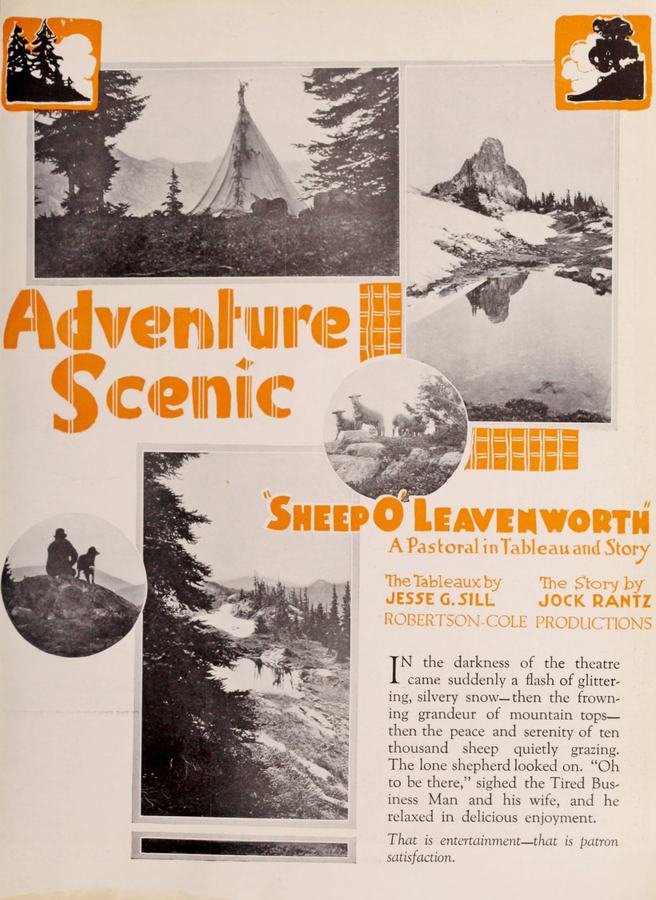
There are films you watch and films that watch you—The Sheep o' Leavenworth belongs to the latter caste, a celluloid surveillance camera disguised as a pastoral parable. Shot on stock so volatile it reportedly combusted twice in the lab, the picture exhales a sooty perfume of cordite and eucalyptus, as if someone plugged a nightshade IV straight into the camera’s gate.
Forget the postcard hills you know from vertiginous Hitchcock dolly shots; here San Francisco is a decrepit accordion exhaling mildewed chords. Cinematographer Roscoe “Winks” Callahan—whose prior work on Yvonne from Paris glowed like absinthe under gaslight—switches to a stuttering frame rate that makes streetlamps appear to menstruate light. The sheep, framed repeatedly through fishtank glass smeared with vaseline, becomes a woolen moon, waxing with each human delusion it absorbs.
Sound, though absent by technology, is implied so fiercely you begin to hear things: the wet click of the animal’s hooves on fog-wet cobblestones syncs with the projector’s mechanical heartbeat until the entire auditorium feels like an iron lung. Compare this synesthetic assault to Powder where silence merely echoed; here it detonates.
No marquee names anchor the chaos; instead we get faces eroded by truth. Minnie Devereaux, the stenographer, possesses a mouth that looks forever mid-scream yet never makes a sound—her typed confessions pile like snowdrifts, each page stamped by a single bloody hoofprint. Lee “Kid” O’Hara, the saxophonist, plays his brass as though embalming air; his cheeks collapse inward, suggesting the instrument has begun digesting him. Their performances refuse the nickelodeon histrionics of the era; watch how Devereaux’s blink rate slows to geological time when she realizes the sheep has eaten her final letter. The moment rivals any existential rupture in Blind Chance.
Writers Norbert Falk and Lotte Reiniger—yes, the silhouette animator moonlighting in prose—treat the sheep like a palimpsest: every citizen writes their dread upon its fleece, only to have the animal shake, shuffling destinies like greasepaint cards. Dialogue intertitles arrive sparsely, lettered on what looks like flayed tram tickets; when a character proclaims, "The city is a mouth that eats its own milk," the words flutter like dying moths against the screen, then dissolve. The effect predates and out-weirds the interstitial madness of Grekh.
Editor Beulah Proctor cuts on the animal’s blink—an impossibility, yet the eyelid becomes the sprocket-hole gate through which months elide. One second the sheep stands before a bakery; blink—suddenly the building is a charred ribcage. The technique liquefies continuity, hinting that civic time itself grazes within the beast’s belly. Try finding a match cut this side of The Great Accident; you won’t.
Though ostensibly monochrome, the print is bathed in necrotic amber for daylight scenes—people jaundiced by hope—and cadaverous cyan after sundown. The sheep alone remains haloed in a bruised lavender, a living bruise. When the creature finally wades into the bay, the water turns iodine orange, a wound inverted. This chromatic strategy makes the pastel pastorals of The Shrine of Happiness look like nursery wallpaper.
Contemporary exhibitors reportedly hired blind accordionists to accompany screenings, but surviving promptbooks advise them to play only retuned funeral marches at half-speed, then cease the moment the sheep appears. The absence of music becomes composition: viewers supply internal dirges, custom-fit to private grief. I’ve sat through the ivory-tickling whimsy of The Land of Jazz; never have I felt musical lack so thunderously.
Urban legend claims the production borrowed a real condemned lamb from a Stockyard slaughter queue; after wrap, crew members insisted the animal walked backward into the sea, bleating the Morse for "revenge." Whether apocrypha or PR, the tale clings like lanolin—proof that the film’s parasitic symbology has leapt from frame to folklore, something even the calculated mystique of The Sheriff's Oath never achieved.
Released months before the city’s general strike, the picture sublimates class war into ovine allegory. Dockworkers glimpse the sheep painted on alley bricks as an omen to walk out; socialites mistake it for avant-garde décor. No manifesto is spoken, yet the film radicalizes by contamination—an approach slicker than the didactic pamphleteering of Peanuts and Politics.
Where The Two Sergeants stages fate as military clockwork, Sheep presents destiny as bacterial bloom. Both trajectories end in gallows humor, yet Leavenworth’s noose is knitted from wool, not hemp—softer, itchier, impossible to escape without taking a piece of yourself home.
By the time the lamb liquefies into tickets, the viewer suspects the real protagonist was never fauna nor human but the city’s capacity to metabolize myth. You exit the theater tasting iron, half-believing your own clothes are shedding fibers that will, by dawn, birth something bleating outside your door. Few silents survive as living organisms; this one grows horns.
Verdict: mandatory viewing for anyone convinced surrealism peaked with Bunuel or that urban legends require smartphones to propagate. The Sheep o' Leavenworth proves all you need is fog, a beast, and a city desperate enough to mistake wool for scripture.
IMDb —
1933
Community
Log in to comment.