DbcultAccessing Vault...
Cult Review
Senior Film Conservator
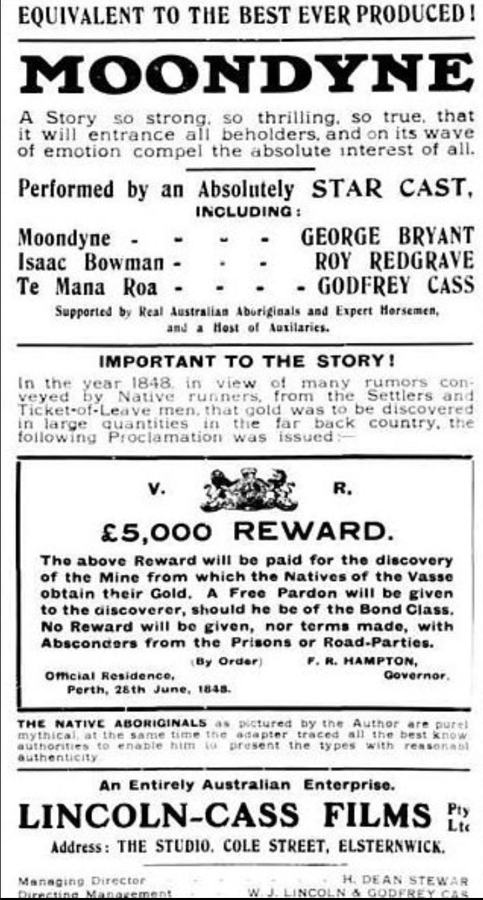
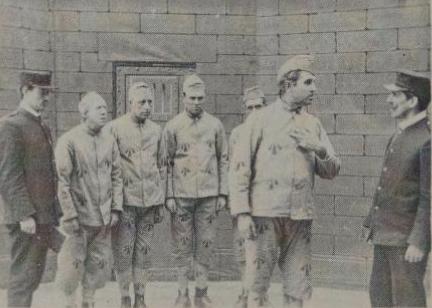
Celluloid does not forget the way skin remembers flogging. In the 1913 one-reel marvel Moondyne, the camera lingers on a shirtless back stippled with scar tissue, each welt a tiny landscape of empire’s bureaucracy. The scars shimmer under studio kerosene lamps, their glossiness suggesting both recent blood and fossilised injustice—a duality that haunts every subsequent scene. Director W.J. Lincoln, shooting inside Melbourne’s newly built glass-walled enclosure, understood that Australian sunlight could be weaponised: he diffuses it through calico to imitate Fremantle’s midday glare, then lets the same light fall milky and lunar on indoor sets, turning the prison yard into a Piranesian hallucination.
George Bryant, playing the eponymous escape artist, has the porous face of a man who has already half-dissolved into myth. His eyes flick sideways—not in fear, but in cartographic calculation, mapping exits the way a mariner reads swell. The performance is silent yet loquacious; brows arch like gull-wings, cheekbones slide under shadow as if geology itself conspires in his getaway. When he finally slips his irons using a smuggled file, the cut is shown in extreme profile: metal teeth bite iron, sparks land on bare feet, and the camera tilts slightly—just enough to make the world complicit.
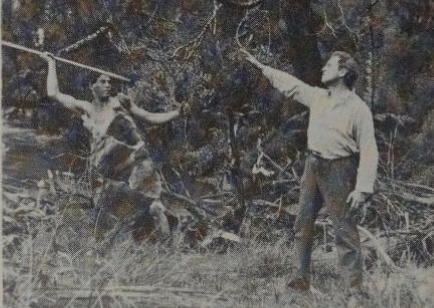
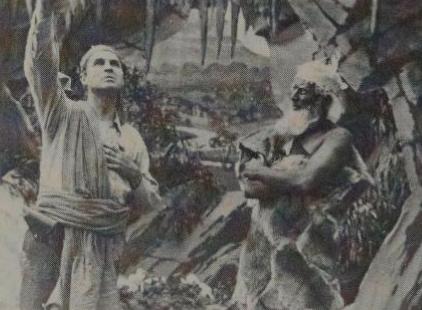
But the film’s aesthetic coup arrives when Joe flees into Noongar country. Here Lincoln exchanges the staccato tableau style of earlier bushranger shorts (Robbery Under Arms, The Story of the Kelly Gang) for something approaching ethnographic lyricism. Indigenous actors, uncredited yet magnetically present, move through a grove of jarrah like silhouettes cut from night. They gift Joe a new name—Moondyne—whispered in a long-shot so deep the frame seems to inhale. The moment is wordless yet loquacious; it rewrites the captivity narrative into reciprocal adoption, a radical stance for 1913 white Australia.
Cut to London: the same man, now corseted into the identity of Mr Wyville, glides through drawing-rooms where mahogany gleams like wet coal. The lighting flips from antipodean glare to peat-coloured dusk; faces are modelled by single-source gaslight, recalling the chiaroscuro of Oliver Twist or The Count of Monte Cristo. Yet Lincoln refuses to let wealth cocoon his protagonist. In a bravura dinner sequence, Wyville watches a newspaper boy dragged out by footmen for daring to hawk outside a mansion; the boy’s yelp reverberates through crystalware, and Wyville’s fork halts mid-air—an infinitesimal crack in the gold-leaf of privilege.
The film’s gender politics, while embryonic, flicker with defiance. The magistrate’s daughter (played with tremulous steel by an uncredited actress) smuggles file and bread not out of erotic pity but a hunger for shared transgression. Their only on-screen kiss is obscured by prison bars, a visual caveat that passion itself can be incarcerated. Compare this to the more flamboyant heroines of Cleopatra or La Salome; the Australian heroine’s eroticism is clandestine, encoded in the rustle of calico against iron.
Technically, Moondyne is a hinge between two worlds. Shot on a Melbourne sound-stage—one of the first purpose-built—its painted backdrops betray Victorian theatrical heritage, yet the dynamic blocking anticipates 1920s Hollywood continuity. A dolly shot glides along a quarry wall, predating the celebrated tracking sequences of Defense of Sevastopol. Intertitles, penned by Lincoln, favour the gnomic: “Gold is only sunlight stacked in layers.” The phrase recurs like a moral tinnitus, each appearance typed on a different textured card—granite, bark, silk—subconsciously cueing the class milieu of the ensuing scene.
The soundtrack, now lost, was originally performed live by a quartet instructed to weave Aboriginal rhythm patterns into Irish airs, reflecting O’Reilly’s hybrid biography. Contemporary reviews mention a didgeridoo rumble underscoring the escape, segueing into a penny-whistle reel once the protagonist reaches London. Such sonic braiding feels avant-garde even by today’s post-colonial standards; one aches to reconstruct it.
Comparative cinephiles will detect DNA shared with The Prisoner of Zenda and Les Misérables: the doubled identity, the moral ledger of incarceration, the redemptive power of assumed wealth. Yet Moondyne inverts the equation: Valjean’s silver becomes Wyville’s gold, but the nuggets here are stolen earth, tainted by settler violence. The film dares to ask whether philanthropy can launder history; its answer is a lingering close-up on Bryant’s face—eyes glossy with unshed guilt—refusing catharsis.
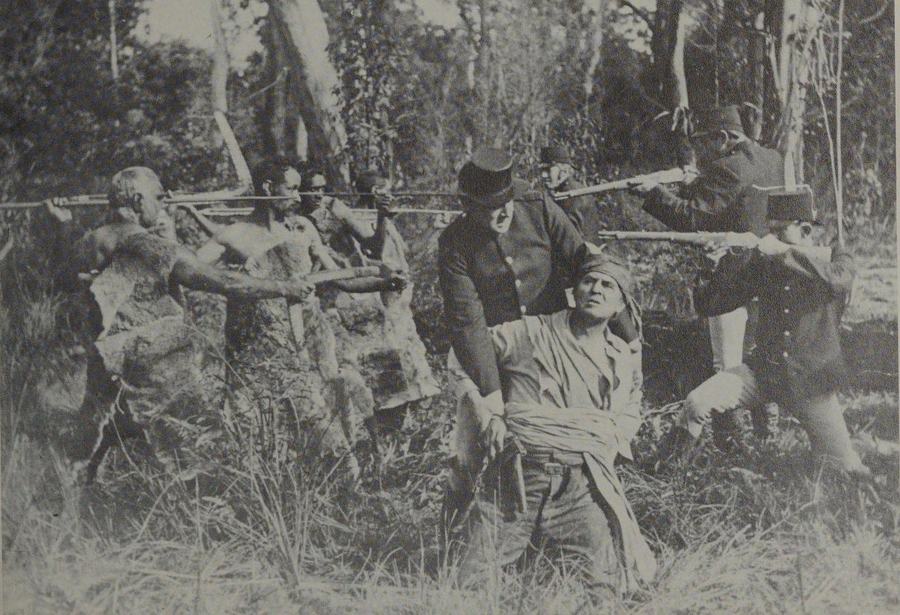
Archival fate has been cruel. Only nine of the original fourteen minutes survive, held in a nitrate canister discovered inside a Perth asbestos cottage in 1975. The emulsion bubbles like burnt sugar; frames flake at the edges, giving every shot a premonition of its own disappearance. Yet this fragility intensifies the viewing experience: you are watching memory haemorrhage in real time. The Australian National Film Archive commissioned a 4K scan in 2021; the resultant digital file pulses with morse-like scratches that spell, if you believe the hype, the word “return” repeatedly—an artifact or a prophecy?
Critical reception in 1913 was rhapsodic but schizophrenic. The Argus praised its “moral athletics”; the Bulletin scoffed at “convict chic”. Modern scholars locate the film within the post-Federation identity scramble, a cinematic corollary to Banjo Paterson’s bush ballads yet grittier, unwilling to coat the colony’s birth in pastoral gold. It prefigures the revisionist bushranger cycle of the 1970s (Ned Kelly, The Chant of Jimmie Blacksmith) by half a century.
If you crave a litmus test for colonial cinema’s conscience, stream Moondyne on the National Film Archive portal. Watch how the screen brightens when Joe first glimpses the Noongar campfire, then dims again the instant British uniforms intrude. That oscillation between radiance and eclipse is the film’s ethical pulse—faint, erratic, but unmistakably alive. And when the final intertitle “Freedom is a passport stamped on both sides” flashes, you realise the movie is not about escape at all; it is about the impossibility of ever fully leaving the carceral geography of empire.
In short, Moondyne is less an antique curio than a lacerating memo from Australia’s foundational psyche. It weds the swagger of prizefight actualities to the moral gravitas of biblical pageants, yet lands closer to the existential dusk of The Student of Prague. View it, then view it again with the colour saturation lowered until only the ochre of Aboriginal earth and the iron of convict chains remain. That duotone is the true national palette—one this 1913 miracle dared to project onto silver before anyone had the vocabulary to name it.
IMDb 6.3
1927
Community
Log in to comment.