DbcultAccessing Vault...
5.9/10
Senior Film Conservator
A definitive 5.9/10 rating for a film that redefined the boundaries of cult cinema. Real Adventure remains a cornerstone of transgressive art.
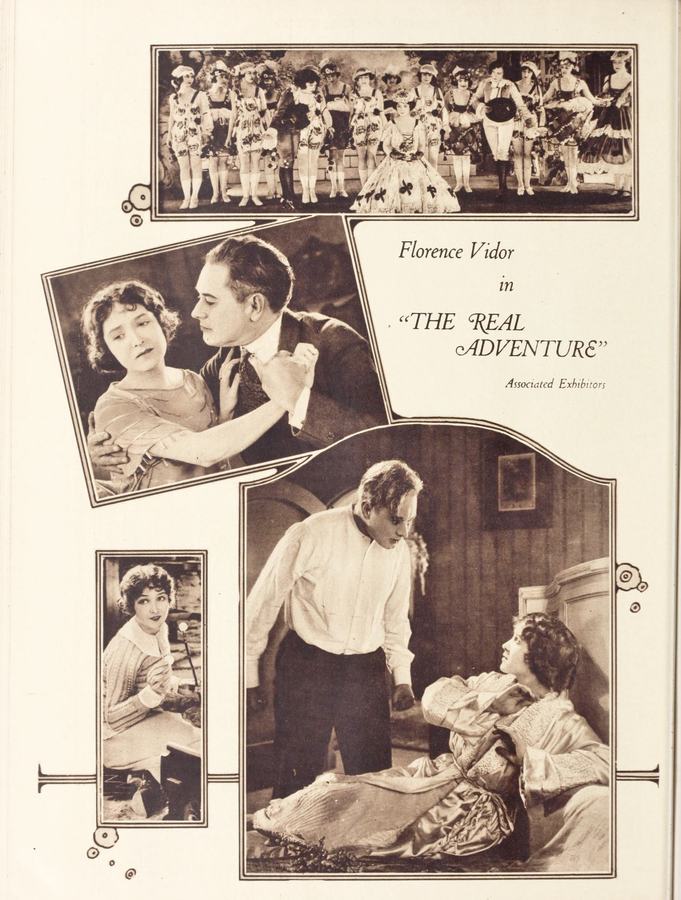
Imagine a drawing room so hushed that the rustle of a page feels like sedition. That is the opening tableau of Real Adventure, a film that luxuriates in the oppressive textures of affluence—pearl-buttoned gloves, Persian rugs thick as verdicts, and a husband whose affections arrive pre-annotated. Florence Vidor plays Rose with the languid poise of a woman testing the tensile strength of invisible bars. Watch her eyes during the wedding-breakfast scene: they scan the silverware as though counting possible weapons.
Rodney, essayed by Clyde Fillmore, embodies a particular genus of early-twentieth-century masculinity: the progressive until provoked. His legal lectures to Rose drip with the paternalism of a man who has memorized every statute except the one titled Her Right to Be Bored. Their breakfast conversations are filmed in cavernous two-shots that make Rose appear physically smaller each time she ventures an opinion. Director William C. deMille—never shy of symbolism—lets a grandfather clock dominate the negative space, ticking like a metronome for diminishing returns.
When Rose finally bolts, the camera abandons its stateliness. A hurtling train montage—intercut with legal tomes flapping like wounded birds—ushers us into Manhattan’s carnival. The city is rendered in superimpositions: elevated tracks, neon scribbles, chorus lines high-kicking against a skyline that promises vertical liberation. Yet even here, the film refuses triumphalism. Rose’s first job is not in a courtroom but on a burlesque stage where her intellect is politely ignored in favor of her gams.
Her ascent from hoofing anonymity to couture visionary is condensed into a delirious couture montage. Swatches of chiffon swirl like paint on a futurist canvas; mannequins pirouette in stop-motion ecstasy. The film locates artistry in the very act of tailoring—needles flash like dueling rapiers, each stitch a manifesto. Rose’s salon becomes a micro-salon of New Women who smoke while balancing ledgers, a sorority of ambition.
But the higher the hemline, the clearer the truism: visibility is not synonymous with credibility. When a cigar-chomping impresario offers to bankroll her line, he leers, “Brains on a dame are like sequins—nice accent, but the dress is what we’re buying.” The line lands like a slap because the film refuses to undercut it with a heroic retort. Instead, Rose’s face registers a flicker of capitulation, a recognition that perhaps every room is wired with the same patriarchal thermostat.
The color of reckoning arrives in the form of a contract—sea-blue ink, flamboyant loops, a future signed away. Cinematographer L. Guy Wilky bathes the scene in aquamarine gel, turning the paperwork into a tidal pool that threatens to drown her resolve. Just as her pen hovers, Rodney re-enters, contrite, clutching a briefcase packed with apologies. The film stages this confrontation in a cavernous theatre auditorium where rows of empty seats witness an allegorical trial: ambition versus affection, with no jury but the ghosts of every woman told to choose.
What makes Real Adventure feel modern is its refusal to grant catharsis. Rose does not unleash a thunderous monologue; instead, she offers a small, sad smile that admits complicity. Her return to domesticity is filmed in a single prolonged fade: the camera tracks backward as she walks into Rodney’s embrace, the distance widening until the couple becomes a frieze on a Grecian urn—beautiful, immobile, and slightly chilling.
Lilyan McCarthy, as Rose’s confidante, steals scenes with the economy of a pickpocket—a raised eyebrow here, a half-swallowed laugh there. Philip Ryder’s Broadway director is all restless hands and cigarette semaphore, the very avatar of transactional charm. Nellie Peck Saunders plays a rival couturier whose whispered malice feels like ivy slowly choking a statue.
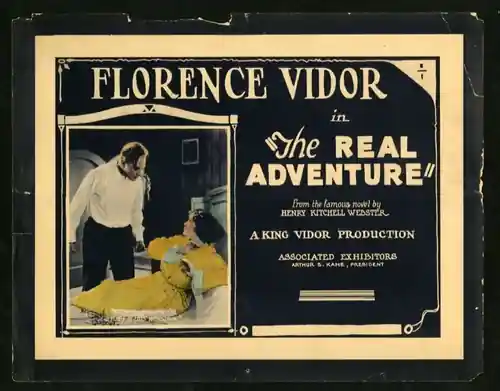
Adapted from Henry Kitchell Webster’s serialized novel, the script by Webster and Mildred Considine condenses 400 pages of interior monologue into visual epigrams. Intertitles are sparse, aphoristic, sometimes maddeningly elliptical. “Success is a staircase built from the bricks they throw” reads one card, flashed just before Rose’s first runway show—a line so pithy it feels laser-etched into feminist lore.
Released in 1922, the film sits at the historical hinge between Victorian melodrama and jazz-age insurgence. The orchestral accompaniment—at least in the restored Kino print—leans on xylophone chatter and violin tremolo to suggest the neurotic syncopation of urban ambition. Cues rise and crash like elevators, a sonic cityscape that compensates for the absence of spoken word.
Place this alongside Love or Justice (1921) and you’ll notice both films staging courtrooms as masculine amphitheaters, yet Real Adventure refuses the vindication fantasy its predecessor indulges. Conversely, What Every Woman Wants (1923) answers Rose’s dilemma with consumerist magic: the right hat equals the right husband. Real Adventure knows hats are just hats.
Notice the recurring motif of mirrors: cracked in the boardinghouse, ornate in the salon, hand-held in the marital boudoir. Each reflection is fractionally delayed, a visual stutter that destabilizes identity. When Rose finally regards herself in Rodney’s pocket mirror, the image doubles and blurs, suggesting a self partitioned beyond repair.
Contemporary critics, notably Harriette Underhill of the New York Tribune, praised the film’s “maturity,” yet recoiled from its finale as “a capitulation unworthy of its heroine.” Modern readings are kinder: Rose’s return home can be interpreted as a strategic occupation, a Trojan horse wheeled back into the fortress. The film declines to show us the domestic sequel; perhaps the real adventure begins after the credits, at the breakfast table where she now keeps the clock wound to her own tempo.
For decades the picture languished in incomplete form until a 16mm dupe surfaced in a Romanian monastery archive in 1997. The restoration—4K scan from the original camera negative—reveals textures previously smothered: the moire of Rose’s lamé gown, the candlelit sepia of Rodney’s study, the sooty charcoal of tenement rooftops. Viewers can now trace the trajectory of a single sequin as it detaches during a dance number and drifts, comet-like, into the gutter—a microcosm of ambition’s glitter and disposal.
Whether you arrived here via “silent film feminism,” “Florence Vidor career peak,” or “1922 Broadway backstage drama,” Real Adventure rewards the algorithmic detour. It is that rare artifact whose politics refuse to ossify into period kitsch. Every frame asks the same inconvenient question: how loudly must a woman succeed before the world stops asking her to apologize for the noise?
IMDb —
1917
Community
Log in to comment.