DbcultAccessing Vault...
Cult Review
Senior Film Conservator
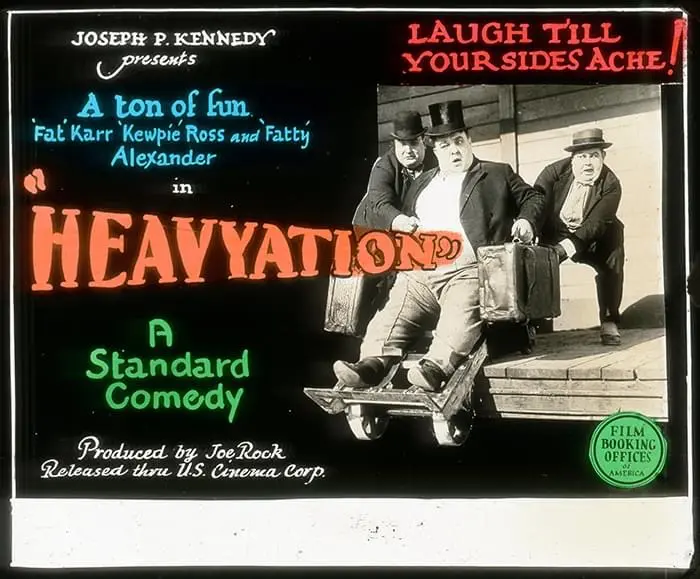
Is 1926's Heavyation a forgotten treasure of the silent era? Short answer: No, it is a chaotic, messy curiosity that serves better as a historical document of stunt-work than as a cohesive comedy. While it offers a fascinating look at the 'Three Fat Men' comedy troupe, its reliance on outdated tropes and repetitive gags makes it a tough sit for anyone but the most dedicated cinephile.
This film is for historians of early physical comedy and those who find genuine thrill in the dangerous, unregulated stunt-work of the 1920s. It is definitely NOT for viewers who require a sensitive portrayal of mental health or those who prefer the refined, character-driven slapstick of Buster Keaton or Charlie Chaplin.
1) This film works because the physical commitment of Frank Alexander, 'Kewpie' Ross, and Hilliard Karr is undeniable, particularly during the grueling 'trick Ford' sequence.
2) This film fails because the narrative structure is virtually non-existent, serving only as a flimsy clothesline for increasingly disconnected stunts.
3) You should watch it if you want to see how early cinema utilized high-risk aviation for cheap laughs.
If you are looking for a laugh-out-loud experience that rivals modern comedy, you will be disappointed. However, if you are interested in the evolution of the 'comedy team' dynamic, Heavyation is a vital, if flawed, piece of the puzzle. It captures a specific moment in the mid-20s where 'bigger was better,' both in terms of the actors' physiques and the scale of the destruction on screen.
The film relies entirely on the presence of the 'Three Fat Men.' Frank Alexander, as the Governor, brings a surprisingly dignified pomposity to the role, which makes his eventual descent into a bouncing car all the more effective. Unlike the nuanced pathos of Bubbles, there is no emotional core here. It is pure, unadulterated slapstick.
The chemistry between Alexander, Ross, and Karr is functional but lacks the rhythmic perfection of the Marx Brothers. In the opening scenes at the Governor's mansion, the timing feels a bit sluggish. It’s only when they hit the road that the film finds its pulse. The 'trick Ford' is the real star of the first act. It doesn't just bounce; it seems to have a malicious soul of its own, tossing the three leads around like ragdolls. This is a recurring theme in films of the era, such as His Jonah Day, where mechanical objects often served as the primary antagonist.
We have to address the elephant in the room: the depiction of the 'Insane Asylum.' By modern standards, it is uncomfortable. The film treats mental illness as a punchline for physical eccentricity. The inmates are portrayed as hyperactive children with a death wish. One specific moment involves a 'fake aeroplane stunt' from the roof. It’s meant to be funny because the plane falls straight down, but there’s a dark, almost nihilistic undertone to the sequence that the director doesn't seem to realize is there.
Comparing this to Nerve Tonic, which also deals with medical 'cures' and hysteria, Heavyation feels much more primitive. It doesn't satirize the institution so much as it uses the setting as an excuse for logic-free behavior. It works. But it’s flawed. The lack of empathy for the characters makes the humor feel distant and occasionally mean-spirited.
The final third of the film is where the title 'Heavyation' (a play on 'heavy' and 'aviation') finally makes sense. The shift from the asylum to the airfield is jarring—one of many editing choices that suggest the film was pieced together from whatever footage they could get. But once they are in the air, the film becomes a different beast entirely.
The stunts are genuinely terrifying. We see these three large men being flown by 'insane' pilots in biplanes that perform gut-wrenching loops and dives. There is a shot where a plane explodes mid-air that looks far too real for a 1920s comedy. This is the kind of 'danger-comedy' that Harold Lloyd mastered, but here it feels less controlled. It feels like the production was one bad gust of wind away from a tragedy.
The ending, featuring a three-plane mid-air collision, is a masterclass in 'how did they do that?' for the era. The fact that the characters walk away uninjured is the film's final joke, but the real punchline is the audacity of the filmmakers to attempt such a feat. It’s a spectacle that echoes the high-stakes maritime drama of The Ship of Doom, though obviously played for laughs rather than thrills.
The direction is serviceable but uninspired. The camera mostly stays at a medium distance, capturing the physical comedy in wide shots to ensure we see the full scale of the 'Three Fat Men.' However, the pacing is lopsided. The first ten minutes feel like an eternity, while the final five minutes of aerial chaos move so fast you might miss the joke.
The cinematography by the uncredited cameraman is surprisingly crisp during the outdoor sequences. The contrast between the bright, sun-drenched airfield and the dusty, confined interiors of the asylum creates a visual divide that helps the film feel larger than its budget probably allowed. If you look at A Hickory Hick, you see a similar reliance on rural, open-air locations to maximize the visual impact of physical gags.
"Heavyation is less a movie and more a series of escalating dares caught on celluloid."
One surprising element of Heavyation is how it treats the Governor. Usually, in silent comedy, authority figures are the straight men or the villains. Here, the Governor is just as prone to the chaos as his butler. He isn't a victim of the 'insane' inmates; he is a willing participant in the madness. This creates a strange, egalitarian sense of stupidity that is actually quite progressive for the time, even if it wasn't intentional.
Heavyation is a loud, rattling, and occasionally dangerous piece of silent cinema. It lacks the polish of the greats, and its middle act is bogged down by a setting that has aged like milk. However, the sheer audacity of its final aviation sequence and the undeniable physical presence of its lead trio make it a worthy watch for those who want to see the 'wild west' of comedy filmmaking. It’s not a masterpiece, but it is a spectacle. It’s a film that asks you to turn off your brain and simply watch three large men fall out of the sky. Sometimes, that’s enough.

IMDb 5.3
1916
Community
Log in to comment.