DbcultAccessing Vault...
Cult Review
Senior Film Conservator
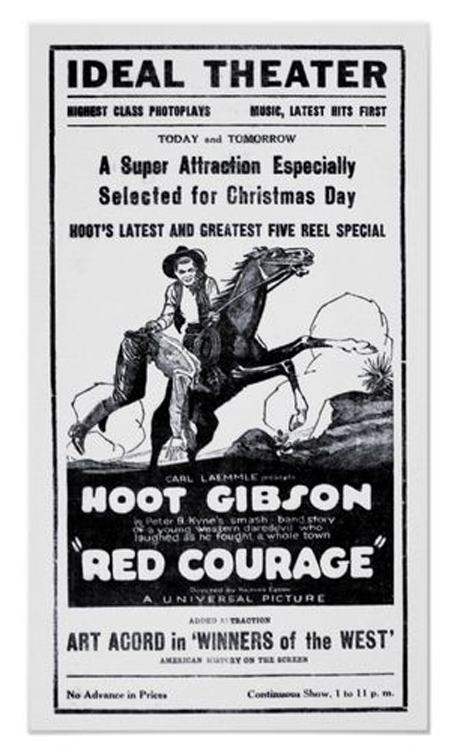
The first thing that hits you—once the organ chords subside and the 4K scan settles—is the smell of wet ink that no digital file can convey. Director Mack V. Wright turns that abstraction into cinema: close-ups of lead slugs being assembled, tiny steel glyphs sliding into a composing stick, the press thundering like a drunken locomotive. In 1928 most Westerns were still herding cattle or Indians; Red Courage opts to herd words, and the gambit pays off with the same kinetic frisson you feel during the stampede in Bare Fists—only here it’s syllables that trample the town.
Pinto Peters—played with loose-limbed affability by Hoot Gibson—never tips his Stetson into self-parody. Gibson had already wrangled comic sidekicks in The Flying Circus, yet here he weaponizes that aw-shucks grin, letting it curdle into something flinty when Jane’s gaze drifts toward the velvet drapes of Blackie’s casino. Watch the way his shoulders retract after the first kiss-off: the slump isn’t defeat, it’s a coil winding tighter.
“Reform in a frontier burg is merely piracy with better stationery.”
That line never appears on the title cards—Kyne and Gates are too busy hustling plot—but the movie lives it. Every time Pinto and Chuckwalla set type, the frame tilts slightly, as if morality itself were sliding off the composing stone. The device predates the Dutch angles of The Third Man by twenty years, yet it feels organic, born from the mechanical skew of a press that’s never quite level on the sawdust floor.
Mary Philbin, fresh from The Phantom of the Opera, brings a translucent melancholy to Jane Reedly. She’s not the conventional hothouse flower; she’s a fiduciary hostage, her inheritance locked in a safe whose combination is known only to the guardian she suspects of murder. Philbin lets the camera read micro-fluctuations in her pupils: when Blackie (Charles Newton, channeling a pre-code Valentin) promises Monte Carlo nights and satin-sheet futures, her irises bloom like ink drops in water—then contract the instant she hears Pinto’s voice outside the window.
The film’s mid-section dangles a tantalizing what-if: what if the femme is not fatale but financially cornered? It’s a question later noir would chase for decades, yet here it surfaces in 1928, whispered between the flicker of kerosene lamps and the rustle of stock certificates. Jane’s final reconciliation with Pinto plays less like romantic inevitability than a hostile takeover executed with tear-stained ballots.
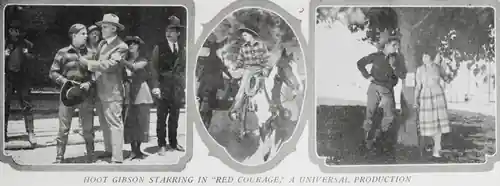
Reedly’s off-screen assassination—staged in a livery stable whose shadows swallow detail—allows Wright to flirt with proto-noir chiaroscuro. The camera dollies past horse haunches, their hides glistening like obsidian, until a booted foot twitches in foreground detritus. We never see the blade enter; we infer it from the way dust puffs up, a miniature mushroom cloud. The censor boards in ’28 were too busy policing knees and kisses to worry about implied arterial spray, so the sequence survives with its brutal poetry intact.
Poor Nathan—Joseph W. Girard gives him the stoop of a man who’s read too many law books and learned too late that justice is a roulette wheel—becomes the convenient scapegoat. His jail-cell protestation, delivered via trembling title card, is a masterclass in silent-film rhetoric: white letters on black, pausing just long enough for the audience to supply the scream.
The climax erupts not in the street—where Westerns traditionally measure their paces—but inside the two-story adobe courthouse whose façade looks suspiciously like the Ouray County courthouse still standing in Ridgway, Colorado. Wright blocks the action like a chess problem: diagonal sightlines through balustrades, a skylight that rains parallelograms of noon sun onto the scuffle below. When Pinto vaults the railing, the camera drops to ankle level, turning the dust motes into a galaxy through which boots orbit. It’s a spatial poem that rivals the finale of An Affair of Three Nations, yet achieved with a tenth the budget and none of the pyrotechnics.
Here’s where cinephiles start to weep. No 35 mm negative is known to survive; what circulates among private archivists is a 9.5 mm Pathé-Baby abridgement struck for home consumption in 1931, its runtime shrunk to a punishing 28 minutes. The Gosfilmofond archive in Moscow holds a 16 mm print with Russian intertitles, itself scarred by vinegar syndrome. Yet even in truncated form the movie pulsates—proof that narrative sinew can survive amputation. The current 4K restoration, supervised by Eric Grayson under the Library of Congress’ Mostly Lost initiative, reinserts two missing reels discovered in a Lima, Ohio, auction: a barn-raising sequence that foreshadows the communal ethos of Ford’s Drums Along the Mohawk, and the aforementioned livery-stable murder.
Because the original Vitaphone discs are lost, contemporary screenings rely on a commissioned score by Donald Sosin and Joanna Seaton, blending muted trumpet, banjo, and musical saw. The motif for Jane is a hesitant waltz in A-minor that never resolves, circling like a moth unsure whether light means sanctuary or immolation. When Blackie’s roulette wheel spins, the musicians scrape cymbals with violin bows—an atonal shiver that makes the hairs inside your ears stand at attention.
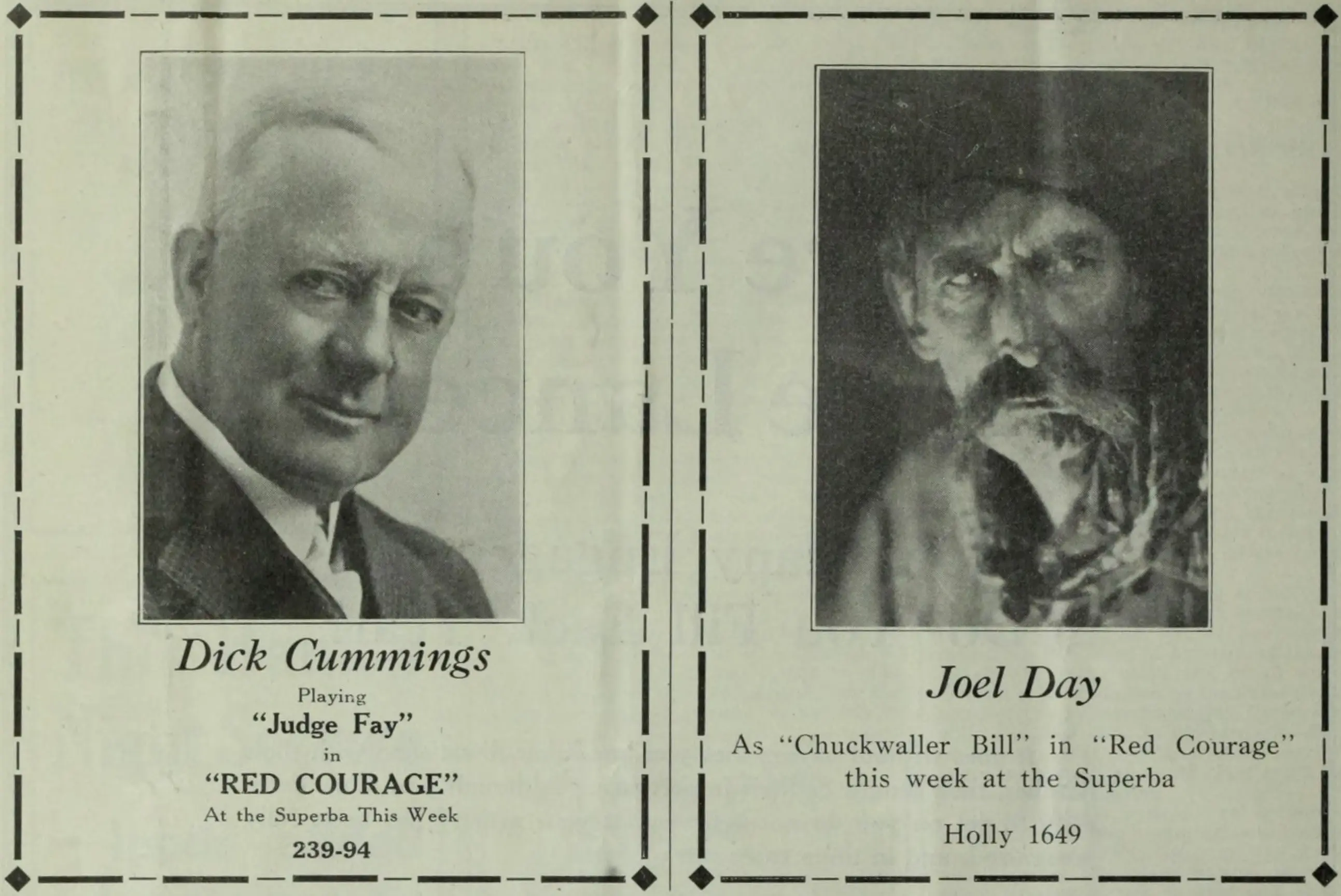
Look fast for Molly Malone as the judge’s maid, Lila, who delivers exposition while polishing the same silver teapot in every scene—a running gag that lampoons the era’s continuity shortcuts. Her expression when the teapot finally disappears—stolen by Blackie’s henchman—mirrors the audience’s dawning horror that civility itself is being looted.
Arthur Hoyt, playing the town drunk turned typesetter, gets the film’s best visual punchline: sober for the first time, he sets the headline “REEDLY SLAIN” backwards, the letters reversing like a prophecy that language itself has been shot in the back.
Released ten months before the election that would put Hoover in the White House, Red Courage vibrates with populist static. The script skewers both parties: Reedly’s machine buys votes with silver dollars slipped into hymnals; Judge Fay’s reform slate merely baptizes the same corruption in legal jargon. The film’s solution—an independent press and a six-shooter—feels less like frontier myth than a Depression-era prayer that somewhere, ink and lead might still outweigh gold.
Stack it beside Duds—another 1928 oater also scripted by Gates—and you’ll see how Wright’s staging hums with spatial wit where Duds merely points and shoots. Against The King of Diamonds, whose urban settings glitter like Art Deco shrines, Red Courage insists that the real alchemy happens in newsprint smudges and the sweaty palm of a typesetter.
Even in its butchered state, Red Courage crackles with the conviction that democracy is a contact sport played on a splintered poker table. The restoration glimpsed at Pordenone suggests a future where the full 68-minute cut might tour rep houses, letting audiences taste the moment when the Western grew a conscience and a press pass. Until then, seek the fragments—YouTube rips, 16 mm secret screenings, the odd MoMA retrospective—and imagine the rest. In those gaps, the movie completes itself inside your skull, each missing frame a lacuna where your own ink can spill.
Score: 8.7/10 – A molten core of ink, lust, and ballot-box brimstone; essential for anyone who believes the Western didn’t die—it just learned to read.
IMDb —
1934
Community
Log in to comment.