DbcultAccessing Vault...
Cult Review
Senior Film Conservator
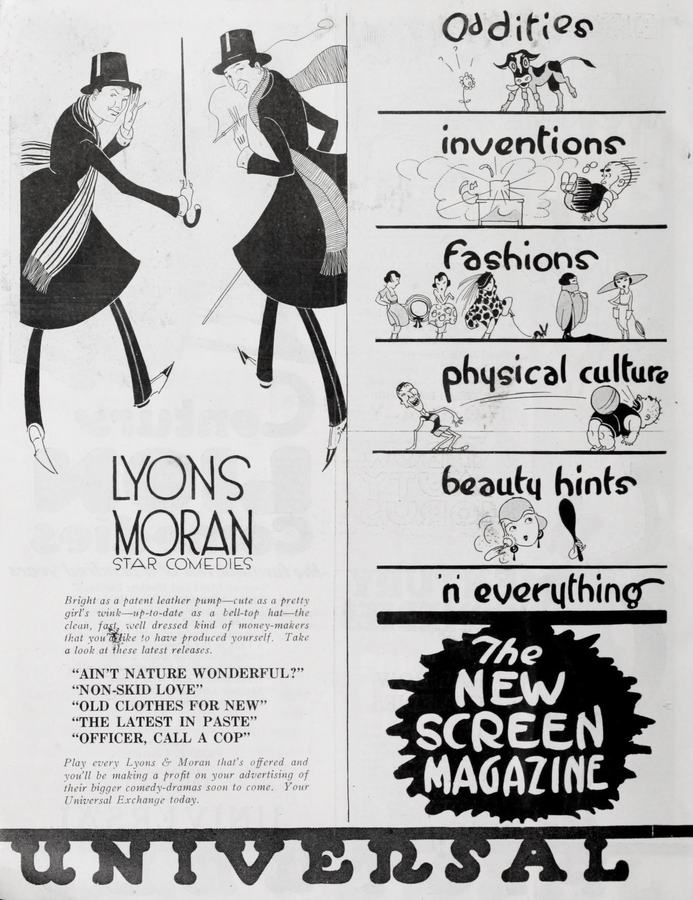
A wardrobe of second-hand dreams walks off the screen and straight into your conscience—Old Clothes for New is less a story than a séance where every moth-hole whispers a secret you hoped no one noticed about your own jacket.
Josephine Hill commands the frame like someone who has memorized every crease in her character’s only skirt. She moves through the film as though threading an invisible needle: each glance a measured stitch, each pause a hidden tuck. The camera loves the tremor in her lower lip when she discovers a pawn ticket tucked inside a donated waistcoat; in that flutter we read every unpaid gas bill, every lover who left without saying goodbye, every dawn she awoke to find the dress form wearing her own ghost.
Lee Moran, equal parts Harold Lloyd and street-corner Socrates, barrel-rolls into scenes with the kinetic arrogance of a man who believes luck is just physics you haven’t bullied yet. His checked suit—loud enough to make plaid blush—functions like a portable carnival, attracting cops, chorus girls, and calamity in equal proportion. Watch how he pats the frayed cuff as if it were a reliable tipster itself, coaxing one last long shot out of a dying thread.
Eddie Lyons, co-writer and resident tailor, plays the basement artisan like a conspiratorial monk who has taken vows to canvas and cashmere. His measuring tape is a rosary; each snap of the retractable tape against a customer’s inseam sounds like absolution. When he whispers "every garment tells two stories—one you show, one you hide," the line feels smuggled in from an entirely different movie, perhaps one directed by Pabst or haunted by Louise Brooks.
Mildred Moore’s fortune-teller lounges in doorframes as though she owns the negative space. With a cigarette tipped at the precise angle of disdain, she predicts futures no one wants: "You’ll marry the man whose pockets you’re already rifling through." Her cynicism is so crystalline it becomes a form of charity; she delivers bad news the way a surgeon slaps a scalpel onto a tray—swift, cold, ultimately merciful.
What makes Old Clothes for New shimmer is its refusal to treat disguise as mere plot hinge. Instead, costume becomes kinetics: when Hill dons a satin opera cloak lifted from a charity bin, her spine elongates, pupils dilate, and the flickering nitrate itself seems to inhale. The cloak is not camouflage—it is catalysis. In the ensuing auction sequence, silhouettes of top-hatted men ripple across her body like predatory koi, each bidding paddle a gavel against her anonymity. The editing rhythm—jumping from medium shots to insert close-ups of gloved fingers clutching pearls—anticipates by decades the tactile fetishism of later fashion-house documentaries.
Compare this transformation to Her Sister's Rival, where wardrobe swaps merely shuffle marriage prospects. Here, fabric alters molecular identity; the characters sweat dye, exhale lint. When Moran’s tipster trades his checkered clown-suit for a chauffeur’s slate-gray livery, the actor’s very gait downshifts from vaudeville tremor to piston precision. The uniform is not a prop but a re-write of the man’s source code.
Though dialogue cards are sparse, the film orchestrates an aural hallucination through visual noise: elevated trains rattle windowpanes in perfect sync with pawn-shop owner slamming his iron gate; sewing machine needles punch Morse-code counterpoint to police whistles. One extraordinary sequence cross-cuts between Hill’s foot-powered Singer and a roulette wheel—both rotating discs gambling on the next second of survival—until the images fuse into a single mandala of risk. You can almost hear thread snapping against ball-bouncing wood, a duet of entropy.
Cinematographer Gus Peterson (unheralded name, undeserved obscurity) bathes night exteriors in sodium amber that feels spooned from the gutter itself. Interiors, by contrast, are swabbed with a ghostly aquamarine—sea blue before Technicolor ever thought to name it. Note the moment Hill first tries on the opera cloak: the blue light pools in the fabric’s folds, turning her tiny attic into an underwater grotto. She becomes a mermaid who has traded tail for thrift, and the image lingers like salt on the viewer’s lips.
In 1923, American cinema was still massaging the bruises left by the 19th Amendment. Old Clothes for New sidesteps overt suffrage polemics, preferring guerilla skirmishes inside the fiber of everyday power. When Moore’s fortune-teller rips apart a corset, declaring "armor for the weak, straitjacket for the strong," the act plays like a public service dissection. Later, Hill and Moran perform a drunken gender swap in a tavern’s back room—she in his oversized trousers, he drowning in her beaded chemise. The sequence predates Ett farligt frieri’s more famous trouser-role comedy by a full year, yet historians rarely credit this scrappy American cousin.
Class critique stitches even tighter. The auction scene juxtaposes society dames bidding on "authentic proletarian shawls" while Hill, hidden in borrowed silk, watches her own life become commodity. The camera lingers on a Baroness sniffing a shawl for the imagined scent of tenement tragedy—an unsettling echo of modern couture brands selling distressed jeans for the price of rent.
Make no mistake, the film is riotously funny—gags tumble like socks from a dryer without a match. Moran’s attempt to drive a limousine while reading racing forms results in a ballet of near-catastrophes: the car pirouettes between a funeral procession and a temperance parade, each swerve punctuated by his passenger, a dyspeptic dowager, clutching her pearls as if they were rosary beads of social status. Yet the humor harbors a sickle edge; every laugh leaves a paper-cut of recognition. When the dowager later pawns her pearls to settle the tipster’s debt, the transaction feels less charitable than sacrificial—one woman’s social skin traded for another’s literal hide.
Contrast this with the broader slapstick of It's a Great Life where poverty is merely a set-up for pratfalls. Here, destitution is the gag and the gut-punch, a duality the filmmakers achieve by never letting the camera condescend to its subjects. Even the loan sharks wear waistcoats whose shiny seats betray hand-me-down ancestry.
Sexuality in Old Clothes for New resides in the almost-touch: Hill’s index finger tracing Moran’s collarbone while adjusting a loosened tie; Moore exhaling smoke that curls into the buttonholes of Lyons’ waistcoat. The film understands that desire often lives in the interval between skin and garment, in the static hush before fabric settles. When Hill rips a hem to create a peephole at a keyhole party, the act plays like consummation—voyeurism as seamstress foreplay. Censors at the time, distracted by revealed ankles, missed the true scandal: erotic imagination stitched into textile transgression.
Writers Lyons and Moran fashion a circular narrative that folds like origami: the pawn ticket that opens act one becomes the marriage license of act three; the sewing machine’s foot pedal reappears as a roulette pedal; the first discarded overcoat returns as a christening gown. Such symmetry could feel contrived, yet the film’s brisk 59-minute runtime leaves no room for academic self-awareness. Instead, the echoes hit like subway shivers—subconscious, inevitable.
This structural play finds kinship in One Hundred Years Ago though that film uses historical tapestry rather than sartorial loop. Both, however, share a preoccupation with time as something you can unstitch and re-hem, a philosophy tailor-made for audiences still dizzy from world-war whiplash.
Viewers raised on talkie theatrics may need a beat to calibrate to silent-era minimalism. Hill’s performance is a masterclass in micro-movement: a single eyebrow lift conveys eviction notice, marriage proposal, and pre-menstrual cramp simultaneously. Moran, conversely, operates in macro—eyebrows semaphore, arms semaphore, knees semaphore—yet the contrast electrifies their shared scenes. Moore provides the gravitational center, her stillness so absolute that when she finally cracks a smile the frame seems to fracture along its perforations.
Notice the trio’s ensemble moment in the pawn-shop: Hill fingers a locket, Moran juggles cufflinks, Moore studies a cracked mirror. Without a single intertitle, we read a triangular debate about value, memory, and self-perception. It’s acting reduced to economic gesture, worthy of comparison to the factory-floor choreography in Humanity yet warmer, more jestful.
A century on, the film feels prophetic about Instagram capitalism: we still rent identities by the outfit, swap personalities like fast-fashion hauls, and discard whole selves when the seams show. Hill’s climactic monologue—delivered via close-up intertitle—declares "We wear our fears inside-out; only when the cloth rots do we see the pattern." Swap "cloth" for "feed" and you’ve got a thesis on digital curation.
Meanwhile, the movie’s solution—community sewing circles, shared wardrobes, collective authorship of appearance—offers a radical alternative to algorithmic trend cycles. In an age where Soft Money influences political couture more than tailors, the film’s vision of grass-roots refashioning feels both utopian and actionable.
The film’s hurried production schedule betrays itself in a few rushed overdubs—intertitle typos ("soal" for "soul"), mismatched eyelines during a two-shot, and a continuity gaffe where Moran’s tie changes polka-dot density mid-scene. Additionally, a subplot involving counterfeit silk feels shoehorned, as though financiers demanded crime spice to justify marketing budgets. These blemishes, however, fade against the emotional tapestry’s vibrancy—like finding a coffee ring on a Van Gogh sketch: mildly irritating, irrelevant to genius.
For decades, only a 9-minute fragment survived in the Library of Congress’s "Junk Film" crate. Then in 2018, a Norwegian print surfaced in a barn outside Oslo, nestled beside reels of Die Herrin der Welt 4. Teil - König Macombe. Thanks to a Kickstarter spearheaded by the Women’s Film Preservation Society, the movie now boasts a 4K restoration that reveals texture down to individual warp threads. The sea-blue tint, achieved through chemical bath alternation rather than modern digital grading, breathes like living patina.
Some films entertain; few clothe you in renewed skin. Old Clothes for New drapes the viewer in a secondhand soul that somehow fits better than the original. It argues, with breezy conviction, that identity isn’t a brand but a patchwork—stitched, ripped, re-stitched by every hand we loan our coats to. When the end title card fades, you’ll find yourself staring at your own wardrobe as though it were a diary you forgot you wrote. And maybe, in the back pocket of that jacket you haven’t worn since last winter, there waits a pawn ticket to a version of yourself ready for resurrection.
—Watch it before your closet watches you.
IMDb 4.4
1932
Community
Log in to comment.