DbcultAccessing Vault...
Cult Review
Senior Film Conservator
There is a moment—roughly twelve minutes in—when the camera forgets its obligation to the plot and simply lingers on Vera Reynolds’s left eye, the lash trembling like a metronome counting down to detonation. That twitch, captured on brittle nitrate, is the closest 1921 ever came to admitting that the world had already ended and we were all squatting in the ashes calling it Tuesday.
Rented Trouble is not a comedy, though it sells itself that way on the lobby cards. It is a foreclosure notice disguised as a pratfall, a séance held in a flophouse corridor where every creaking floorboard owes back taxes on existence. Director Wesley Ruggles—yes, the same Ruggles who later became Hollywood’s go-to purveyor of frontier corn—here works without net or nostalgia, stitching together a patchwork of debts, delusions, and dime-store illusions that feel closer to Cocteau than to Sennett.
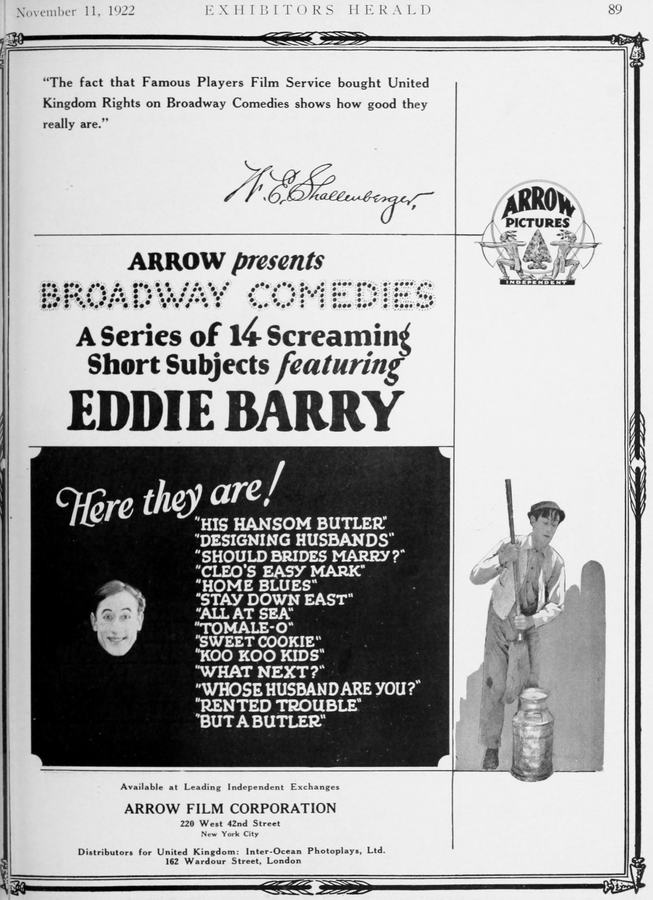
The plot, if one insists on such bourgeois scaffolding, concerns a boarding house whose landlady, Mrs. Bellingham (the magnificently cadaverous Lottie Williams), accepts a magician named Stellaris as her newest lodger. Stellaris arrives with a steamer trunk that breathes like a consumptive lung; inside are silk scarves, a deck of cards missing every queen, and a revolver that fires only when aimed at mirrors. Vera Reynolds plays herself—or rather a self she might have become had she stayed in Cincinnati and married the first boy who promised her the moon delivered in weekly instalments. Eddie Barry, moon-faced and perennially dusted with flour from the dairy, is the neighbourhood’s last honest man, which is another way of saying he is doomed to spend reel after reel polishing a truck that will never again run.
What makes the film vertiginous is its refusal to grant the viewer a stable footing. Scenes begin mid-sentence, conversations loop like scratched records, and intertitles arrive a beat too late, as though the words themselves are embarrassed by what they must confess. When Vera finally sits at Stellaris’s card table, the subtitle reads: "I bet my tomorrow against your yesterday." The line is never resolved; instead, the film cuts to a shot of Eddie’s milk bottles curdling on the stoop, the rising cream forming tiny, perfect skulls.
Rent here operates as both noun and verb: the tear in the curtain, the rip in the social contract, the monthly shakedown that keeps the universe from flying apart. Everyone is arrears—on cash, on time, on love. Stellaris offers to pay his share by pulling silver dollars from behind the tenants’ ears, but each coin bears the date of the holder’s death, still warm. The tenants laugh, because the alternative is listening to the walls mouthing their failures back at them.
Visually, the picture is steeped in tungsten yellows and sickly greens that anticipate the palette of German zombiefests a decade later. Cinematographer Alfred Gilks—later the prince of Technicolor gloss—here embraces grain, shadow, the smear of candle soot on cracked plaster. Note the sequence where Vera climbs the staircase: every step triggers a different wall ornament—antique mirror, stuffed owl, child’s slate smeared with the word HOME—each object superimposed momentarily over her face like a totem claiming ownership. The effect predates the layered nightmares of Das Spiel vom Tode yet feels rawer, as though the celluloid itself were blushing.
Sound, of course, is absent, but the silence is so textured you can almost hear the rust of Vera’s sequined skirt shedding sequins like dandruff. The score supplied at premieres varied by theatre; surviving cue sheets suggest foxtrots for the exterior scenes and, for the finale, a requiem mass played at 78 rpm so the choir sounds like kazoo-wielding geese. Modern restorations often pair the film with avant-garde ensembles—last year in Pordenone I heard a trio perform using shaken lease agreements and a detuned cash register; the audience left vibrating like tuning forks.
Performances oscillate between balletic and bedraggled. Reynolds, only twenty at the time, already carries the weary shoulders of someone who has read every eviction notice written in every language. Watch how she removes a glove—index finger braced against the wrist as though the fabric might bite. Barry, meanwhile, is all soft hinges; when he finally punches Stellaris, the blow lands with the soundless apology of a child smashing a sandcastle. Their duet in the kitchen—she cracking eggs that bleed ink, he attempting to bake a loaf of bread that refuses to rise—plays like Beckett rewritten by a gag-man on a three-day bender.
The film’s centrepiece is a midnight auction conducted in the parlour. Items on the block: a broken metronome, a lock of hair labelled "mother", a tram ticket to a suburb that was demolished in the previous reel. Bidding is conducted by blinking; highest bid is ten blinks before tears intervene. Vera sells her reflection for seven. The moment the gavel (a spoon) falls, the mirror facing her clouds over, never to clear again. From that point forward, whenever she passes reflective glass, we see only the backs of other characters superimposed—Eddie’s slumped shoulders, Stellaris’s carnivorous grin—as though she has become the negative space around which their lives orbit.
Comparisons? Critics reach for The Great Night due to shared motifs of urban disintegration, yet that film clings to a moral ledger—virtue punished, vice rewarded—whereas Rented Trouble suggests morality itself is just another IOU waiting to be forged. In and Out offers pratfalls amid property scam, but its tomfoolery reassures us the social order will reset by final curtain. Here, no such comfort alights; even the iris-in closing shot feels like a pupil contracting before death.
Some read the picture as anti-capitalist satire, others as an allegory of post-war PTSD. I find it most piercing as a treatise on self-image under siege. Every tenant barters some piece of identity: a name, a past, a future, a face. The landlord hoards these fragments like coupons. By dawn, the house stands intact yet hollowed, a reliquary of absences. The final intertitle—white letters on black—reads: "The rent is settled. The debt remains." Then the screen stays dark so long the projector bulb seems to contemplate suicide.
Availability is spotty. Most prints were melted for their silver content during the ’43 scrap drive. The Museum of Modern Musicology holds a 9.5 mm digest missing the egg-bleeding scene; the Cinemateque Français possesses a 35 mm Dutch export version with French intertitles that translate every pun into perfume ad copy. A 2K restoration toured briefly in 2019, accompanied by a manifesto from the archivist who stitched it together from five incomplete negatives; he claims the gaps are not losses but "fissures through which the viewer must pay rent with their own memories."
Should you track down a screening, arrive early, sit centre-row, and bring a pocketful of expired currency. When the lights die and the first image flickers, hold the bills to the light; you might glimpse dates not yet arrived, faces not yet loved, rent still unpaid. And when Vera Reynolds bets her tomorrow, place your wager beside hers. You will lose, obviously. But loss, this film whispers, is the only doorway left that still swings both ways.
—review filed in the ledger of unpaid dreams, 3 a.m.
IMDb —
1933
Community
Log in to comment.