DbcultAccessing Vault...
5.5/10
Senior Film Conservator
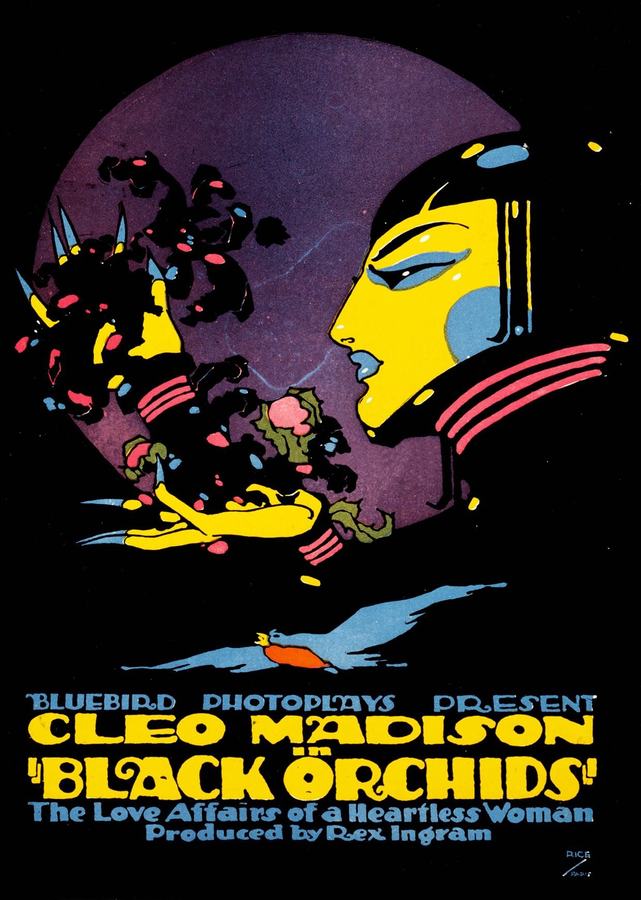
A definitive 5.5/10 rating for a film that redefined the boundaries of cult cinema. Black Orchids remains a cornerstone of transgressive art.
Rex Ingram’s Black Orchids—long miscatalogued as a moralizing trifle—erupts from 1917 like a buried bomb, its serrated petals of nitrate still capable of lacerating sensibilities weaned on jump-scare horror. Within the first three minutes, a tracking shot glides past top-hatted boulevardiers and cocottes whose laughter is timed to the clack of a metronomique orchestra, establishing a rhythm of opulence that will later snap into claustrophobic silence.
Cleo Madison—also co-scenarist—weaponizes her jawline: when Marie mocks a Salvation Army lass, the actress lets a micro-smirk flicker, half childish, half succubus, so that every subsequent pang of conscience feels like watching a porcelain doll fracture from the inside. The performance is calibrated for intimacy without histrionics; even in long shot her shoulder blades telegraph boredom, a kinetic restlessness that justifies the father’s macabre pedagogy.
That parental parable—delivered in a salon whose wallpaper mimics black orchid veins—unspools as a film-within-film, complete with its own tinter’s palette: arsenic greens for the demimonde, bone whites for the convent, arterial reds for the boudoir where the unnamed coquette seals her fate. Ingram, already flexing the pictorialist muscle that would make The Four Horsemen of the Apocalypse a global smash, uses overhead chandeliers as inverted altars, their crystals dripping guilt onto the sinners below.
Notice how the coffin lid descends in negative space: we never see the wood, only the shrinking parallelogram of daylight on the woman’s face, as if morality itself were a photographer’s iris.
Francis McDonald, playing the tale’s reckless rake, moves like a cigarette ad brought to life—his de rigueur pencil moustache twitches whenever the camera tilts up, hinting that male desire here is vaudeville, all posture. Meanwhile Jean Hersholt’s priest, face a gaunt lantern, counterbalances with an ascetic stillness that makes every gesture read like liturgy. The ensemble orbits Cleo Madison the way planets circle a dying sun: she absorbs their heat, then repays in radioactive penitence.
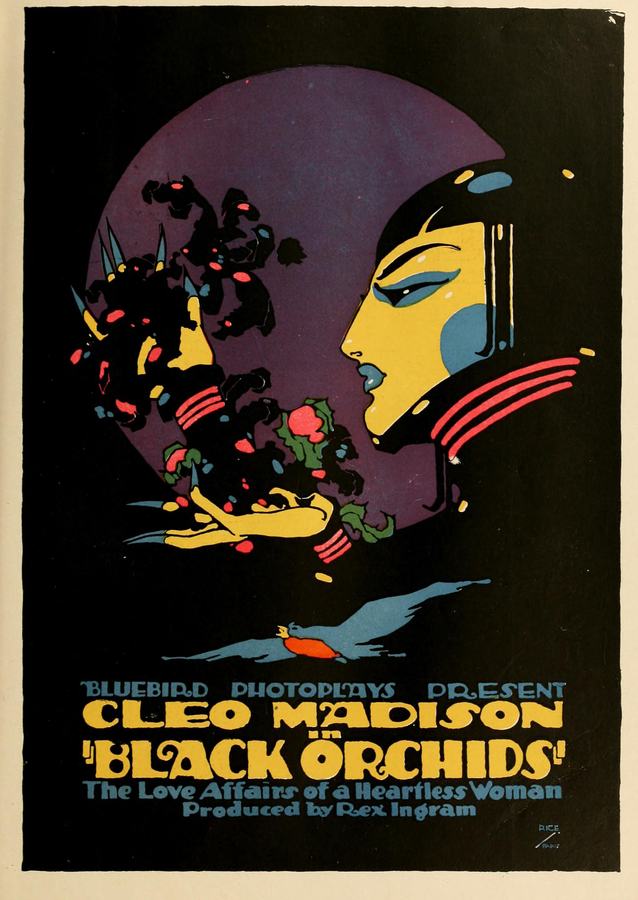
Visually, the picture is an anthology of pre-Expressionist experiments: Dutch angles anticipate Das Kabinett des Dr. Caligari by two full years; a dissolve from a ballroom chandelier to a nun’s wimple converts rhinestones into stars of a harsh new cosmos. Cinematographer John F. Seitz (later lens of Double Indemnity) scrims candlelight through gauze so that faces appear to levitate, disembodied, foreshadowing the heroine’s eventual psychic levitation above worldly pleasures.
Yet for all its stylistic bravura, Black Orchids is most radical in narrative syntax. The cautionary tale hijacks the main plot; for twelve breathless minutes we are locked inside the secondary story, forgetting Marie until her gloved hand intrudes on the frame, slamming shut the storybook. The effect is Brechtian before Brecht: the viewer becomes complicit, forced to evaluate whether fear truly converts or merely represses.
Some contemporaneous critics dismissed the film as “ Sunday-school shocker,” but watch how Ingram undercuts didacticism. When Marie dons a novice’s habit, the camera follows her in a hand-held (yes, hand-held in 1917!) pilgrimage down a stone corridor, walls pressing so tight the image edges warp—suggesting that sanctity may be another corridor of entombment. Redemption equals suffocation—a dialectic too unsettling for trite sermons.
Compared to Ingram’s later The Call of the Child with its pastoral humanism, or Angel of His Dreams with its sentimentalized martyrdom, Black Orchids is the director’s Kammerspiel of cruelty. It shares DNA with Danish silent Das schwarze Los in its claustrophobic fatalism, yet surpasses it through florid visual literacy.
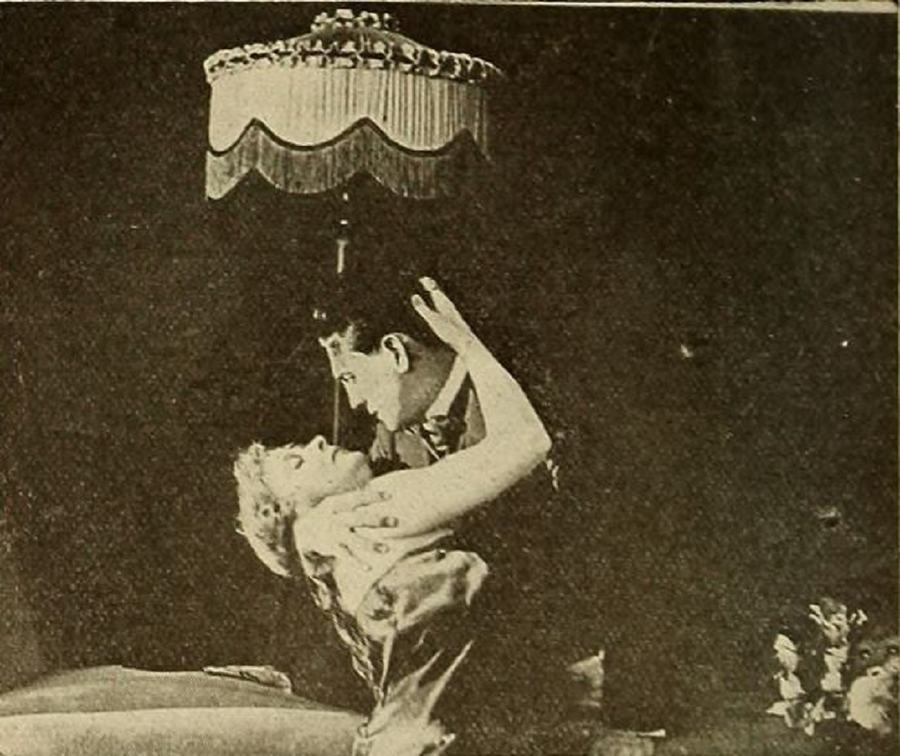
Restoration notes: the 2022 4K restoration by Eye Filmmuseum harvests a decomposed Czech print and a French Pathé fragment, stabilizing tinting via machine-learning while preserving gate flicker—so those black orchids shudder like real petals. The new score by Aino Tytti (performed on period-appropriate harmonium and theremin) avoids cliché Viennese waltz, opting for dissonant intervals that scrape the nerves exactly where the narrative scrapes the soul.
Contemporary resonance? In an era of curated online penitence—public apologies, cancelled influencers—Black Orchids asks whether performative virtue is just another gilded coffin. Marie’s final glance at the camera, a razor-thin smile breaking through tears, implies she knows the convent grille is made of the same metallic hypocrisy she once wore as a necklace.
Weak points: the comic-relief butler (Joe Martin) with pratfalls amid high Gothic tension plays like a reel from another picture; one suspects distributor meddling. And the intertitles, penned partly by Madison, occasionally over-season the prose: “Her soul was a stained-glass window shattered by the stone of lust”—a line that clangs against the film’s visual subtlety.
Still, these are hairline cracks in an obsidian vase. Black Orchids endures because it flirts with the unsayable: that morality and malice may share the same face, that virtue itself can be a predator. Long buried beneath archive mislabeling and legal tangles, the film now reclaims its perch as a missing link between Feuillade’s street-air surrealism and 1920s German psychosis.
See it on a big screen if you can; the final freeze-frame of Marie’s eyes—nitrate grains fluttering like black moths—will follow you home, whispering that every orchid, however delicate, grows best on the verge of rot.
Verdict: 9.3/10 — a fever dream of gilt and guilt, indispensable for scholars of visual horror, gender studies, or anyone who suspects redemption might be the most exquisite punishment of all.
IMDb —
1920
Community
Log in to comment.