DbcultAccessing Vault...
5.9/10
Senior Film Conservator
A definitive 5.9/10 rating for a film that redefined the boundaries of cult cinema. Revelj remains a cornerstone of transgressive art.
Stepping back into the nascent days of Swedish cinema, one encounters Revelj, a film from 1917 that, despite its age, resonates with a timeless struggle: the clash between a vibrant inner world and an unyielding external reality. This isn't just a historical artifact; it's a poignant exploration of youthful spirit, imagination, and the often-harsh realities of societal expectation. In an era dominated by grand narratives, Revelj offers a more intimate, yet equally compelling, drama centered on the life of Marianne, a foster child whose very essence seems to defy the rigid confines of her aunt's home.
The film, a fascinating glimpse into the human condition as captured through the lens of early 20th-century filmmaking, immediately establishes Marianne's predicament. She is a foster child, a status that often implies a certain vulnerability, a dependence on the benevolence of others. Her aunt's household, rather than providing a nurturing sanctuary, appears to be an environment where emotional expression is viewed with suspicion, and individuality is, if not actively stifled, certainly not encouraged. Marianne, however, is not one to be easily subdued. Her spirit is described as lively, a characteristic that, in itself, can be a source of friction in a household valuing decorum and quiet submission.
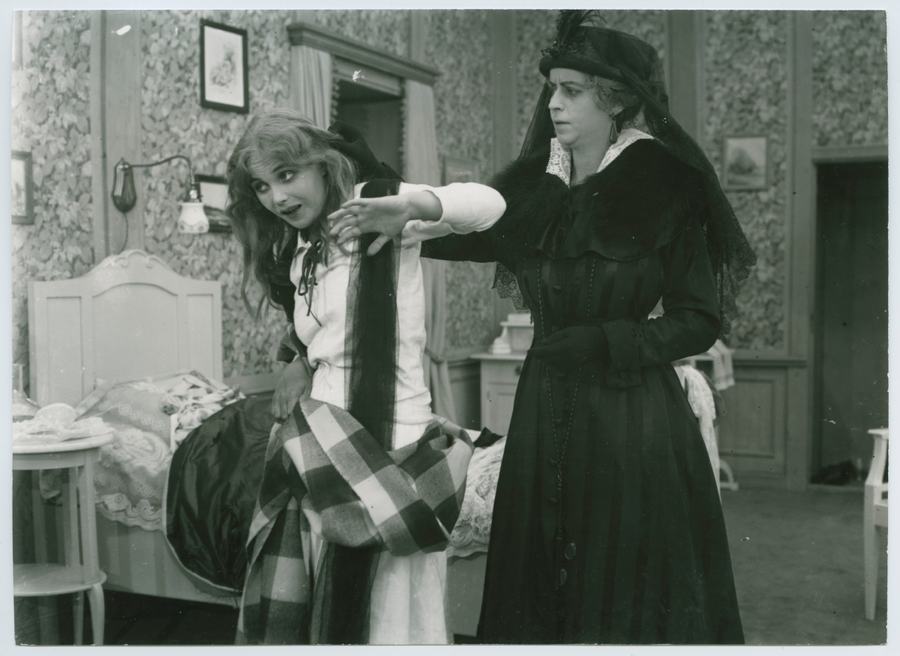
What truly sets Marianne apart, and forms the core dramatic tension of Revelj, are her 'dramatic dreams.' This isn't merely a passing fancy or a childish indulgence; it's the very fabric of her being, a testament to a rich, imaginative inner life. These dreams, vivid and perhaps theatrical in their scope, are not appreciated. This lack of appreciation isn't a passive oversight; it’s an active dismissal, a fundamental disagreement with who Marianne is at her core. The film, through its silent narrative and visual storytelling, masterfully conveys the weight of this disapproval, painting a picture of a sensitive soul yearning for expression in a world determined to silence her.
At the heart of Revelj's emotional impact lies Gertie Löweström's portrayal of Marianne. In silent cinema, the actor’s face, body language, and expressive gestures are paramount, becoming the sole conduits for character emotion and narrative progression. Löweström, with what one can imagine as a nuanced performance, must have brought Marianne's internal world vividly to life. How does one convey 'lively' without dialogue? Through sparkling eyes, an energetic gait, perhaps a defiant tilt of the head. How does one express 'dramatic dreams' and their subsequent 'non-appreciation'? Through fleeting expressions of joy and wonder, swiftly followed by a crestfallen gaze or a subtle retreat into oneself upon encountering her aunt’s stern disapproval. This demands a mastery of pantomime and a deep understanding of human psychology, allowing the audience to intuit Marianne’s vibrant inner life even as it is outwardly suppressed.
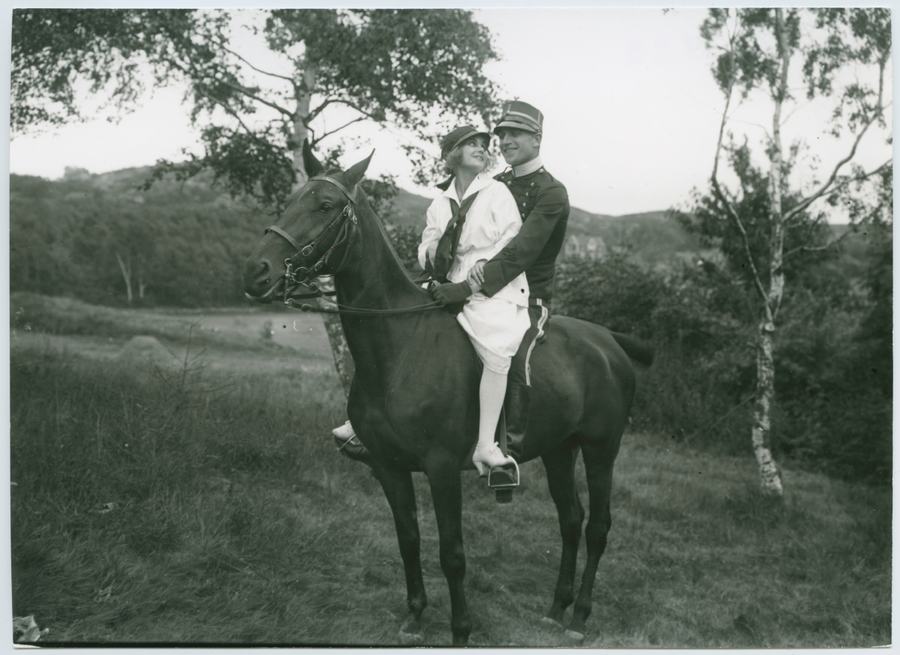
The supporting cast, including Nils Olaf Chrisander, Carl Johannesson, Helge Kihlberg, Sture Baude, Gerda Björne, Carl Barcklind, Agda Helin, Johnny Björkman, Bertil Brusewitz, Mary Johnson, Lilly Cronwin, and John Botvid, would have played crucial roles in shaping the world around Marianne. Each actor's presence, their demeanor, their interactions with Löweström's Marianne, contribute to the oppressive atmosphere or, perhaps, offer fleeting moments of understanding or conflict. The aunt, likely portrayed by an actress capable of conveying sternness without becoming a caricature, would have been the primary antagonist, not necessarily through malice, but through a rigid adherence to societal norms that leaves no room for the extraordinary. The collective performances would have been instrumental in building a credible backdrop for Marianne’s internal drama.
Revelj, even from its concise plot outline, emerges as a powerful allegory for the struggle between individual expression and societal conformity. Marianne's 'dramatic dreams' are not merely childish fantasies; they represent the creative impulse, the desire to transcend the mundane, to imbue life with meaning and spectacle. Her aunt's disapproval, then, symbolizes the forces that seek to quash this impulse – perhaps fear of the unconventional, a belief in practicality over poetry, or simply an inability to comprehend a spirit so different from her own. This conflict is universal, transcending the specific setting of early 20th-century Sweden. How many individuals, particularly in their formative years, have felt their unique passions and perspectives met with incomprehension or outright rejection?
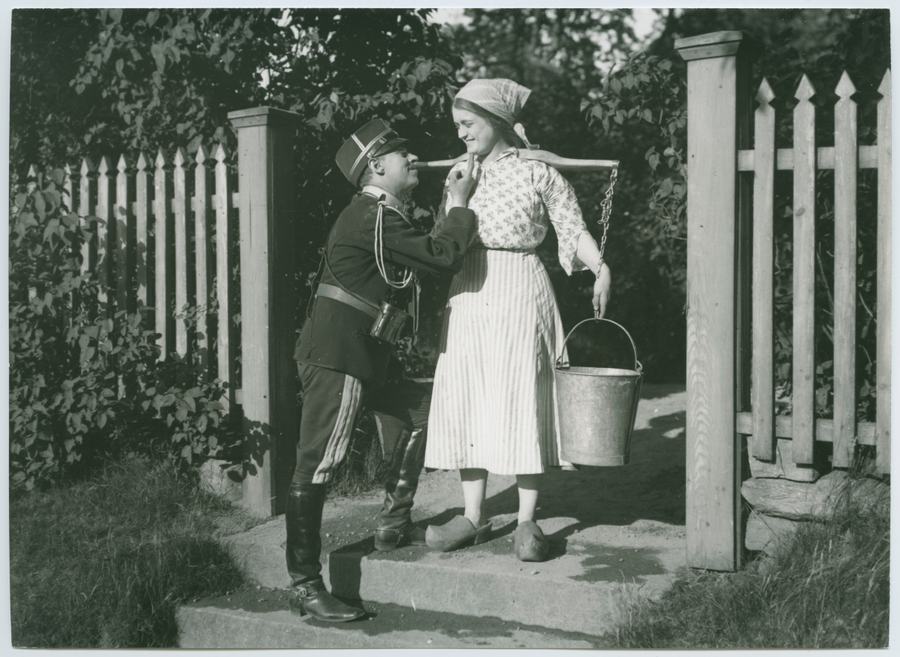
The film's title, 'Revelj' (Reveille), itself carries a rich symbolic weight. A reveille is a signal, typically played on a bugle or drum, to awaken soldiers at dawn. In this context, it could signify Marianne's own awakening, a call to arms for her spirit, or perhaps a metaphorical awakening for those around her to the beauty and value of her inner world. Or, more poignantly, it could represent the jarring call of reality that constantly pulls her away from her dreams. This layered symbolism elevates Revelj beyond a simple domestic drama, imbuing it with a deeper philosophical resonance about the nature of identity and the resilience of the human spirit.
To truly appreciate Revelj, one must consider the cinematic language of the silent era. Directors relied heavily on visual composition, lighting, and editing to convey mood and meaning. For Marianne's 'dramatic dreams,' one can imagine sequences employing special effects available at the time – perhaps superimpositions, dissolves, or even tinted frames to differentiate her fantasy world from the stark reality. The contrast between these dream sequences and the mundane, perhaps dimly lit, reality of her aunt's home would have been a powerful visual metaphor for her internal struggle. Intertitles, the textual inserts providing dialogue or narrative exposition, would have been crucial in clarifying specific plot points and giving voice to Marianne's unspoken thoughts or the aunt's pronouncements.
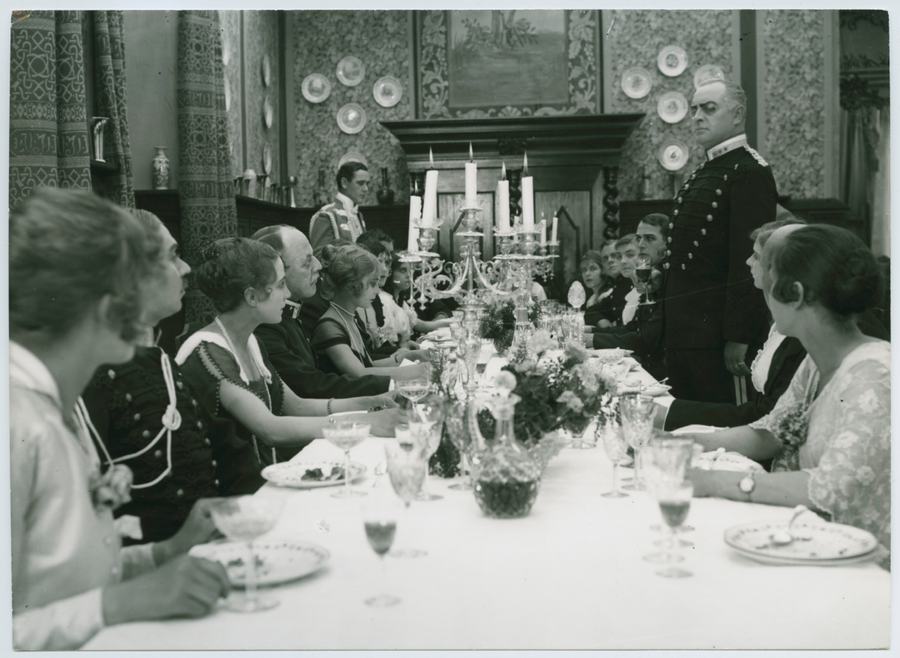
The pacing of silent films often differed from modern cinema, allowing for longer takes and more deliberate scene construction, giving actors ample time to convey emotion through gesture. This would have been particularly beneficial for a character like Marianne, whose internal life is so central to the narrative. The director's ability to guide the audience's gaze, to highlight subtle shifts in Löweström’s expression, or to juxtapose Marianne’s hopeful face with her aunt’s disapproving one, would have been key to the film's emotional impact. The visual grammar of silent cinema, often underestimated, was a sophisticated art form in its own right, capable of conveying profound psychological depth.
Revelj, while focused on an individual's journey, implicitly offers a commentary on the societal values of its time. The early 20th century was a period of significant social change, yet many traditional strictures remained firmly in place, particularly concerning the upbringing of children and the role of women. Marianne’s predicament, the stifling of her creative spirit, can be seen as a microcosm of broader societal pressures to conform, to suppress individuality in favor of order and convention. In this regard, it shares a thematic thread with films that explored social issues, though perhaps in a more direct manner. For instance, films like Sins of Great Cities or Uden Fædreland tackled the darker underbellies and struggles within urban environments or national identity, respectively. While Revelj focuses on an internal, domestic struggle, it nonetheless speaks to the individual's place within a sometimes unyielding social fabric.
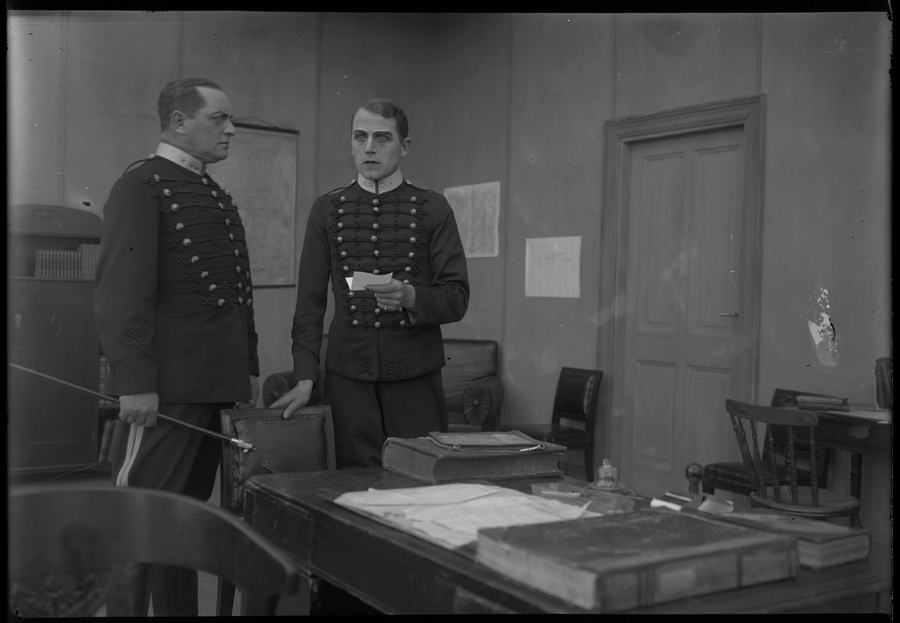
The exploration of a strong female character navigating challenging circumstances also aligns Revelj with other period pieces. One might draw parallels to films like Destiny: or, the Soul of a Woman or The Arrival of Perpetua, which often featured women confronting societal expectations or personal trials. However, Marianne's specific struggle – the repression of her innate imaginative faculty – gives Revelj a distinct psychological depth. It’s not just about overcoming external obstacles, but about the survival of the spirit itself in an environment that fails to nourish it.
For many silent films, their continued existence is a testament to the dedication of archivists and cinephiles. Revelj, like countless others from its era, represents a vital piece of cinematic heritage. Its rediscovery and restoration, if such efforts have been made, allow contemporary audiences to connect with the storytelling traditions and artistic expressions of a bygone era. It offers insights not only into the history of film but also into the cultural psyche of the time, revealing what narratives resonated with audiences and what societal concerns were being explored through this burgeoning art form. To watch Revelj today is to engage in a dialogue across a century, understanding the universal threads of human experience that bind us, regardless of technological or cultural shifts.
The film’s focus on the internal world of a child struggling against an uncomprehending adult world is particularly resonant. It speaks to the importance of nurturing creativity, of listening to the unique voices of the young, and of providing an environment where 'dramatic dreams' are not just tolerated but celebrated. In an age where mental well-being and the fostering of individual talent are increasingly recognized as crucial, Revelj serves as a potent, if unintended, historical reminder of the consequences when such vital aspects of human development are neglected.
Revelj, in its understated yet profound depiction of Marianne’s struggle, stands as a quiet yet powerful testament to the enduring power of the human imagination. It’s a film that asks us to consider the hidden lives within us, the dreams and aspirations that might be suppressed by external pressures, and the profound cost of such repression. While we may not have direct access to the specific directorial nuances or every actor's subtle gesture without viewing the film, the narrative premise alone paints a compelling picture of a universally understood conflict. The strength of the concept, coupled with the expressive capabilities of silent film actors like Gertie Löweström, suggests a cinematic experience that, even a century later, would continue to provoke thought and stir emotion.
It is precisely in these seemingly simple narratives that silent cinema often found its greatest strength, communicating complex human truths through visual poetry. Revelj, with its focus on the 'lively' Marianne and her 'dramatic dreams' that are 'not appreciated,' is a poignant reminder of the fragility and resilience of the individual spirit. It’s a story about finding one's own reveille, a personal call to awaken and embrace the vibrant, often challenging, landscape of one's inner world, even when the outer world seems determined to keep it subdued. Such films are not merely historical curiosities; they are enduring echoes of human experience, resonating with a timeless relevance that continues to captivate and inform.
IMDb 5
1928
Community
Log in to comment.