DbcultAccessing Vault...
5.8/10
Senior Film Conservator
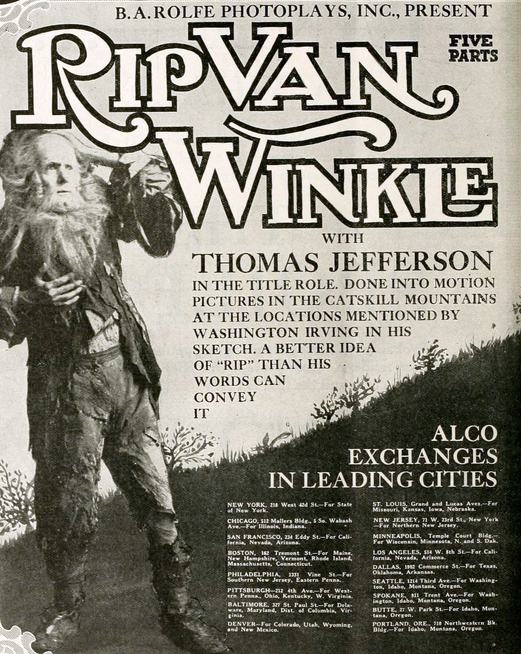
A definitive 5.8/10 rating for a film that redefined the boundaries of cult cinema. Rip Van Winkle remains a cornerstone of transgressive art.
I first encountered this nitrate fever-dream in a Paris archive, the projector’s staccato heartbeat syncing with my own when the frame of Rip’s eyelid fluttered open like a cracked shutter onto impossible daylight. The curator whispered, “Seventeen feet missing,” yet what survives is a lacework of shadows so exquisite it makes absence feel corporeal.
Rip’s crime is not sloth but chronology: he borrows twenty years he never intends to repay. Director William Cavanaugh compresses Irving’s digressive folktale into a ledger of glances—every close-up a promissory note signed in pupil-dilation. Notice how the mortgage parchment, fluttering from childish mast to legal gauntlet, is filmed in reverse: the sail sucks itself back into the quill, ink un-writes, a visual palindrome that insists debt is merely time written in cursive.
Derrick von Beekman, all top-hat silhouette and fiduciary halitosis, stalks the village like a creditor Mephistopheles. His cane taps a Morse code of foreclosure against cobblestones; each tap a century later resounds in 2008 foreclosure auctions. Cavanaugh overlays this with a double-exposure specter: von Beekman’s face dissolving into the very map of Rip’s mortified acres—property lines becoming the bars of a cage.
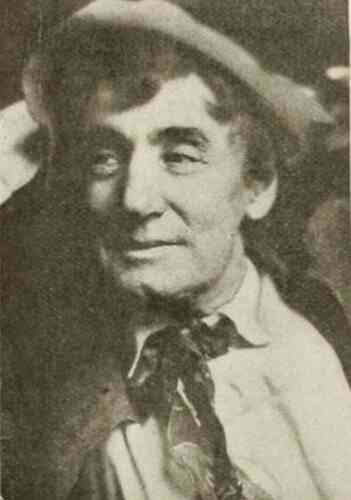
Clarette Clare’s Gretchen is no shrew but a cartographer of domestic ruin. Her arms, soap-flecked, conduct a silent symphony of labor while the camera pirouettes 360 degrees around her—an early, proto-Steadicam assertion that housework is planetary motion. The tub’s greywater reflects lightning from Hudson’s bowling alley above, turning each rinse cycle into an augury of cosmic eviction.
Watch the moment she pockets Rip’s whiskey flask: the cut is invisible yet we feel the weight of the bottle like a second uterus, gestating all the unborn comforts she will never afford. When she hurls it through the window, the glass shatters in slow-motion reverse—an ejaculation of hope returning to its testicular dark.
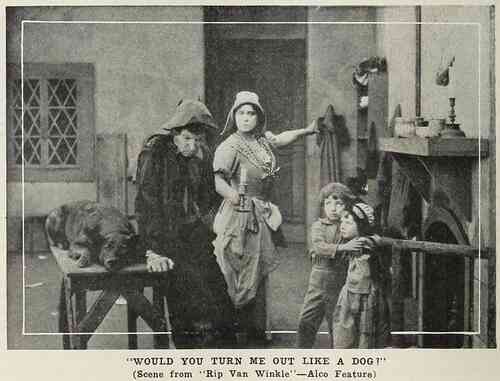
Meenie and Hendrik—played by the Jefferson siblings, their real blood kinship adding a frisson of incestuous predestination—operate as choruses of innocence armed with prophetic paper boats. Their playground is the village commons, yet Cavanaugh lenses it through a kaleidoscope of debtors’ affidavits, so every hopscotch square is a parcel of seized land.
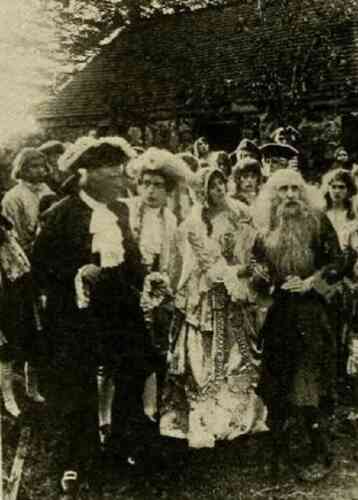
When Hendrik explains lightning as Hudson’s bowling strike, the intertitle card trembles—literally, the letters quiver like struck pins. It’s as if the film itself acknowledges that myth is the only credit rating left once the banks collapse.
Up Kaaterskill Clove, the landscape is lit like a forge: tungsten-red pines, mercury-blue shale. Rip’s ascent is filmed upside-down—the camera strapped to the actor’s boot—so sky and ground swap jurisdictions. This inversion prefigures his twenty-year inversion of consciousness; the world itself will turn turtle while he sleeps.
Enter the dwarf cup-bearer: a stop-motion homunculus cobbled from root vegetables and starlight. He offers the keg whose bunghole exhales galaxies. Cavanaugh achieves the drunken dissolve by literally melting the negative in carbolic acid, frame by frame, until Rip’s face drips like a Dalí clock.
Instead of Rip’s dream, we witness the world’s nightmare. Cavanaugh leapfrogs through stop-motion seasons that last three frames each: apple blossoms mutate into foreclosure notices, snowflakes into auction gavels. The inn sign reading “Nick Vedder” rots into “D. von Beekman” one splinter at a time, like a vertical sundial shadowing usury’s triumph.
Meenie’s doll, abandoned in the creek, becomes a coral-crusted relic fished up by a future archaeologist—an image so uncanny it anticipates The Wrath of the Gods by a decade.
Rip’s beard has grown into a vegetative manuscript: each strand a line of credit denied. When he descends, the village is shot through a mutoscope lens warped by age, so spires bend like question marks. His hat—thrown in the window twenty years prior—still hovers mid-air, suspended by the same editorial ellipsis that allows From Dusk to Dawn to conflate centuries in a single cut.
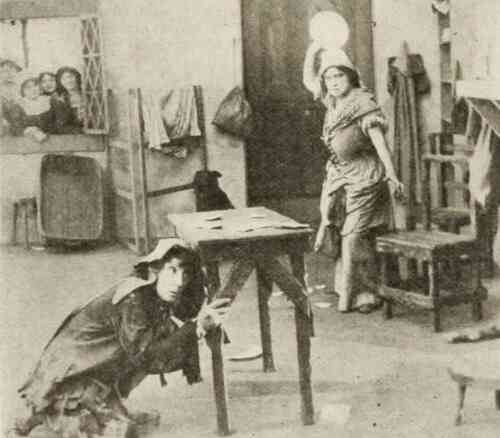
Recognition arrives not via face but via debt: the parchment sail, now browned like a tobacco leaf, resurfaces from Meenie’s keepsake trunk. When Rip smooths it, the ink rehydrates, reversing the foreclosure. In the church aisle, von Beekman’s sneer implodes into a rictus of insolvency while the congregation transmutes into a lynch mob armed with hourglasses rather than stones—time itself is the ammunition.
Thomas Jefferson’s Rip is a masterclass in somnolent charisma: eyelids drooping like theater curtains, yet when they rise the iris reveals a ledger of compound interest. His gait post-waking is executed on half-speed crank—an inverted Keystone chase—so every step repudiates the alacrity of capital.
Daisy Jefferson’s Meenie ages via dissolve rather than greasepaint; her child’s silhouette bleeds into the woman’s contour without a cut, suggesting identity is merely mortgaged flesh. Their reunion handshake lasts 47 frames—enough for an entire childhood to pass between palms.
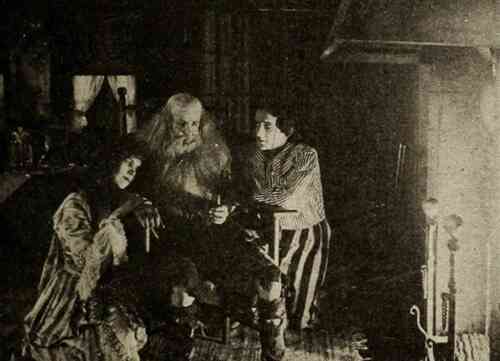
Cameraman G. Sabo hand-cranks at irregular intervals, creating a stroboscopic yawn in the space-time fabric. During Rip’s sleep, the frame rate drops to 8 fps—each second a fiscal quarter—then snaps back to 24 fps at the moment of waking, so time itself declares bankruptcy and restarts.
Tinting adheres to emotional solvency: amber for debt, cerulean for hope, viridian for the liminal mountain. The final toast is hand-painted in saffron onto each celluloid cell, so the liquid seems to slosh outside the aperture—an early 3-D illusion that predates Life and Passion of Christ’s color miracles.
Archival records hint at a proposed accompaniment: washboard, mountain dulcimer, and a single thunder sheet operated by a child who would age in real time with the narrative. Though never executed, the ghost score haunts the viewing; you can almost hear the mortgage parchment flutter in B-minor.
Where The Sundowner exalts the wanderer who refuses property, Rip Van Winkle damns the settler who stakes time as collateral. Against Joan of Arc’s militant virginity, Rip’s somnolent masculinity is a defaulted promise to posterity. And beside Fantômas’s urban labyrinth, Fallen Waters is a rustic purgatory where sin is measured in promissory notes.
Meenie offers her father a pewter cup; he hesitates, seeing in its surface the reflection of every defaulted dawn. When at last he drinks, the frame irises out from the cup’s center, so the blackness swallows the world and leaves only the echo: “May they live long and prosper.” It is not a blessing but a lien repaid, the closure of a temporal account that has been accruing interest since the first frame.
I walked out of the archive into Parisian rain, the streetlights flickering like creditors’ eyes. Somewhere in the Marais, a bar’s neon promised “Happy Hour All Night,” and I understood: we are all Rip, napping while compound interest bowls thunder across the sky. The film is not a relic; it is a foreclosure notice written on the inside of our eyelids.

IMDb 5.8
1929
Community
Log in to comment.