DbcultAccessing Vault...
Cult Review
Senior Film Conservator
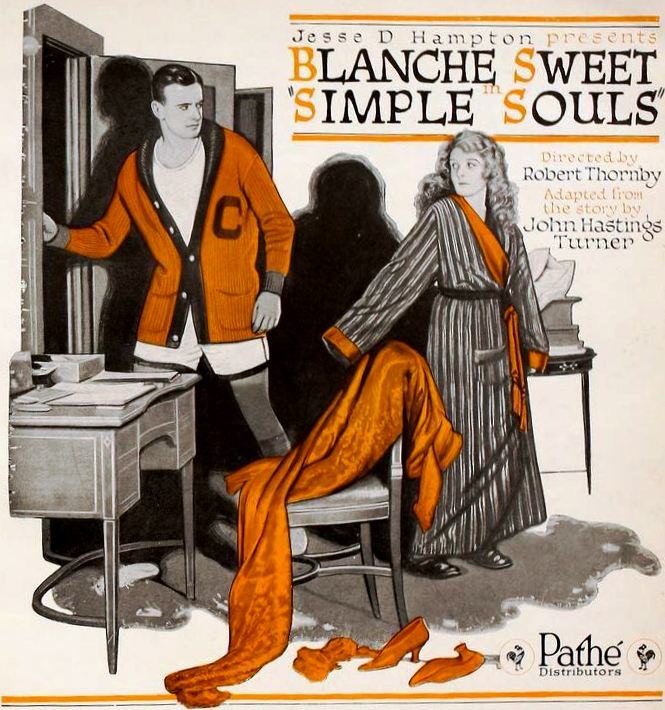
The year 1920 stands as a fascinating threshold in cinematic history, a moment when the primitive experimentation of the previous decade began to coalesce into sophisticated narrative structures. While European audiences were being unsettled by the jagged, expressionist nightmares of The Cabinet of Dr. Caligari, American screens were often occupied by more grounded, albeit socially complex, dramas. Among these lies Simple Souls, a film that deftly maneuvers through the labyrinthine expectations of the British class system while maintaining a surprisingly intimate focus on the transformative power of the written word.
At the heart of Simple Souls is an ideological collision between the ivory tower of the aristocracy and the grit of the working-class mercantile sector. Charles Meredith portrays the Duke of Wynninghame not as a traditional romantic lead, but as a man whose emotional intelligence has been stunted by years of academic isolation. He is an anachronism in his own household, more comfortable with a microscope than a scepter. When he encounters Molly Shine, played with a luminous vulnerability by Blanche Sweet, the connection isn't forged in the fires of physical passion, but in the quiet shared sanctuary of literature. Unlike the overt melodrama found in Hearts of Men, the inciting incident here is remarkably subtle: a Duke paying for a shop girl's books.
This central premise—the 'two pounds for books'—serves as a poignant metaphor for the Duke's disconnect from reality. To him, it is a logical transaction to foster intelligence; to the rest of the world, it is the classic hallmark of a kept woman. The screenplay, penned by Fred Myton and John Hastings Turner, brilliantly utilizes this linguistic and social gap to drive the plot toward its coerced matrimonial conclusion. It’s a far cry from the adventurous spirit of Cavanaugh of the Forest Rangers, opting instead for a domestic claustrophobia that highlights the internal lives of its characters.
Blanche Sweet delivers a performance that anchors the film’s often-precarious tonal shifts. As Molly Shine, she must navigate the transition from a hopeful dreamer to a disgraced daughter, and finally to a neglected duchess. Her ability to convey profound isolation within the sprawling halls of the Wynninghame estate is nothing short of remarkable. While some films of the era, such as The Adventures of Kitty Cobb, lean into the pluckiness of the working-class heroine, Sweet imbues Molly with a contemplative sadness that feels modern even by today's standards.
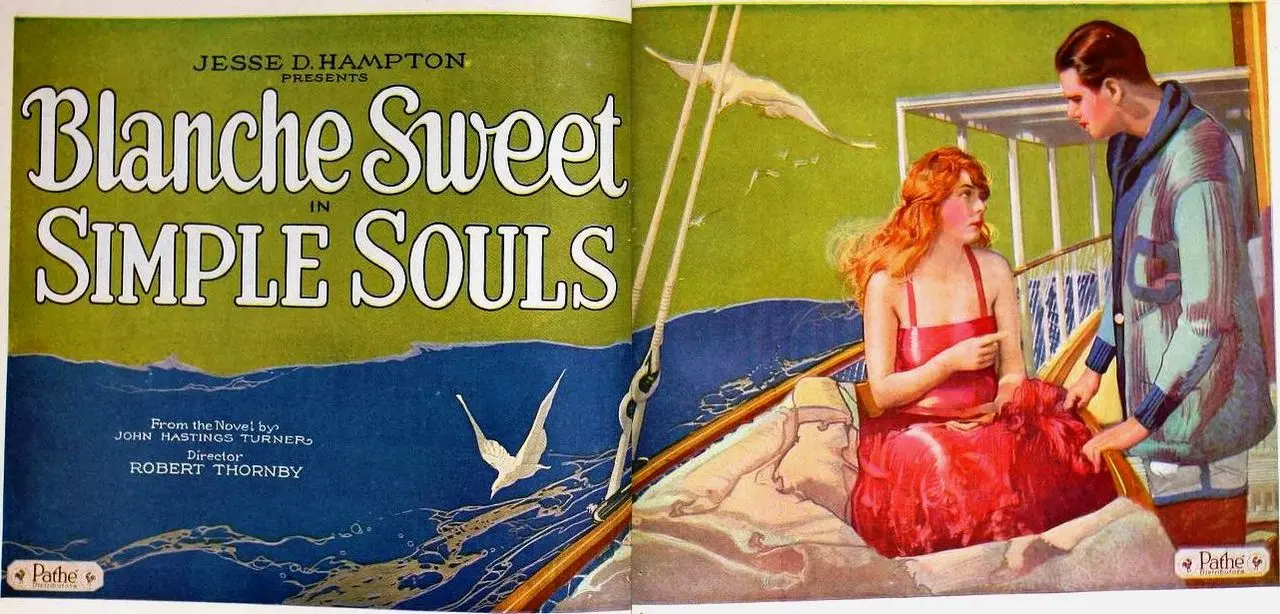
"The tragedy of Simple Souls is not found in the initial scandal, but in the silence that follows the wedding vows. It is a study of how neglect can be a sharper weapon than outright malice."
The chemistry between Sweet and Meredith is intentionally lopsided for much of the runtime. Meredith plays the Duke with a distracted air that might remind some of the distant protagonists in The Drifter. He isn't a villain in the traditional sense; he is simply a man who has forgotten how to be human. This makes the eventual climax—his realization of his love for Molly—all the more earned. It isn't a sudden bolt of lightning but a slow thawing of a frozen heart, a narrative arc that provides a satisfying counterpoint to the more tragic trajectories seen in The Last Payment.
No drama of the British peerage would be complete without a formidable guardian of the status quo. Kate Lester’s portrayal of Octavia, the Duke’s sister, provides the necessary friction to keep the story from becoming a mere fairytale. Octavia represents the rigid, unyielding structures of the past, much like the societal pressures explored in A Dolovai nábob leánya. Her enmity toward Molly is not just personal; it is institutional. She views Molly as an infection in the bloodline, a 'simple soul' who has no business among the complex machinations of the elite.
The production design emphasizes this conflict. The Duke’s laboratory is a place of sea-blue shadows and sharp angles—a sanctuary of logic. In contrast, the public areas of the house are opulent but cold, rendered in a way that suggests Molly is drowning in velvet and marble. This visual storytelling is reminiscent of the atmospheric tension in The Bandbox, where the environment itself becomes a character in the unfolding mystery of the human heart.
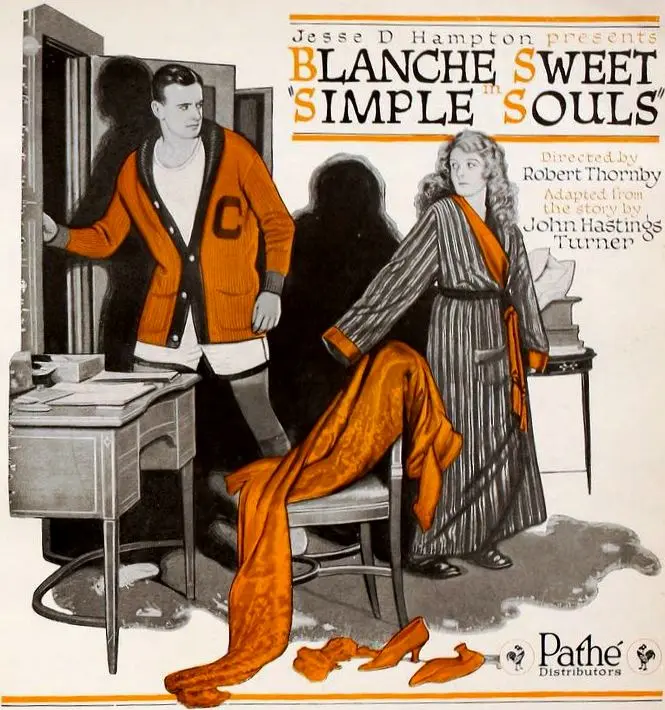
Technically, Simple Souls is a polished example of the Vitagraph style. The lighting, particularly in the scenes where Molly is alone with her books, uses a soft-focus technique that highlights her internal glow. This contrasts sharply with the harsh, direct lighting used during the confrontation with her mother, a sequence that carries the frantic energy of The Greyhound. The pacing, though deliberate, never feels sluggish, as the screenplay balances the Duke’s scientific detours with the mounting emotional stakes of Molly’s domestic exile.
While some might find the happy ending a bit too tidy, it is important to view it within the context of 1920 audience expectations. After the horrors of the Great War, there was a palpable hunger for stories of reconciliation and the breaking down of barriers. The Duke and Molly’s union is a radical statement for its time—a suggestion that shared intellectual passion is a more valid foundation for marriage than social standing or economic necessity. This theme of unconventional love resonates through other works of the period, such as The Prince of Graustark, though Simple Souls handles it with significantly more nuance and less swashbuckling artifice.
Looking back a century later, the film remains a curious and delightful artifact. It avoids the broad slapstick of Kapten Grogg och fru and the gritty realism of The Chimney Sweeps of the Valley of Aosta, carving out a niche as a high-concept romantic drama. It asks a question that is still relevant today: can we truly see another person if we are blinded by the labels society has placed upon them?
The Duke’s journey from a man who sees Molly as a recipient of charity to a man who sees her as his equal is a powerful narrative arc. It’s a transition from the transactional to the transcendental. In the final scenes, as Molly prepares to flee the cold indifference of Wynninghame, the Duke’s frantic realization of his own folly provides a moment of genuine catharsis. It is a testament to the acting prowess of Meredith and Sweet that this shift feels organic rather than forced. For those who enjoy the intricate character studies of Kidder and Ko or the moral dilemmas of A Yoke of Gold, Simple Souls is an essential viewing experience.
In the grand tapestry of silent cinema, Simple Souls may not have the haunting visual legacy of Midnight Gambols, but it possesses a warmth and an intellectual curiosity that makes it stand out. It is a film that celebrates the quiet rebels—those who find their strength in libraries and their love in the most unexpected of places. It reminds us that even the most 'simple' soul is, in fact, a universe unto themselves, waiting to be discovered by someone with the patience to look through the right lens.
IMDb —
1920
Community
Log in to comment.