DbcultAccessing Vault...
Cult Review
Senior Film Conservator
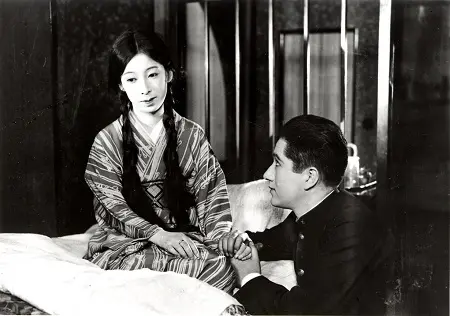
Is Riku no ningyo a hidden classic worth seeking out in the modern era? Short answer: yes, but only for those who can appreciate the slow-burn evolution of social status through the lens of early 20th-century 'modernism.'
This film is for the cinema historian who craves a look at how Japan’s 'Modern Girl' era was influenced by Western aesthetics. It is absolutely not for viewers who demand fast-paced action or the high-octane spectacle of modern blockbusters.
1) This film works because it captures the specific, fragile anxiety of the Japanese upper class during the Taisho-Showa transition with an almost surgical precision.
2) This film fails because the third act relies too heavily on a convenient resolution that undermines the gritty reality of Reiko’s poverty.
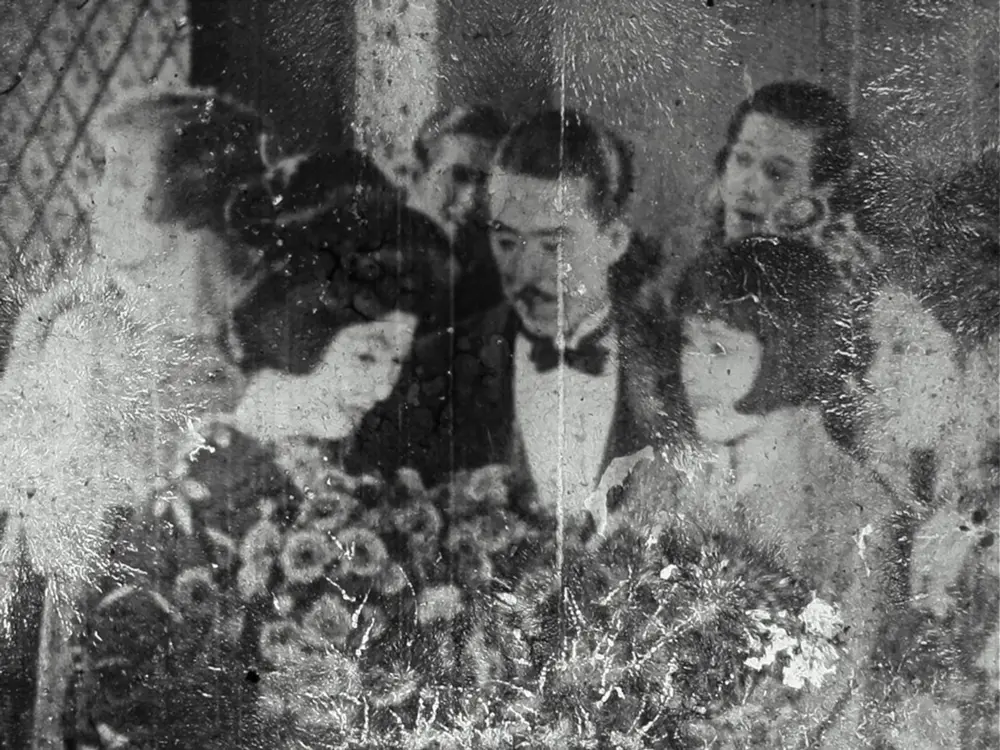
3) You should watch it if you are fascinated by the way Karuizawa served as a psychological playground for the wealthy, much like the Hamptons in American cinema.
The setting of Karuizawa is not merely a backdrop in Riku no ningyo; it is an active participant in the betrayal. In the 1920s, this resort town was the pinnacle of 'Westernized' leisure. The film utilizes the natural beauty of the highlands to contrast with the artificiality of the social interactions occurring within it. We see this early on when Kitagawa is introduced during a sporting event. His movement is fluid and free, yet he is constantly framed by the rigid architecture of the wealthy estates.
The 'Hollywood touch' mentioned in contemporary descriptions is most evident in the pacing of the dialogue scenes. Unlike the stagey, kabuki-influenced performances often found in earlier Japanese cinema, there is a rhythmic quality to the banter between Kitagawa and Toshiko. It reminds one of the sophisticated playfulness found in Madame Bo-Peep, where social standing is a game of chess played with words rather than actions.
The heart of the film lies in the impossible choice between the two women, but the script is smarter than a simple love triangle. Toshiko, played with a brittle elegance by Mineko Tsuji, isn't a villain. She is a product of her environment. In one specific scene where she shows Kitagawa her father’s gardens, her possessiveness is masked as hospitality. It’s a subtle, chilling moment that highlights the transactional nature of her world.
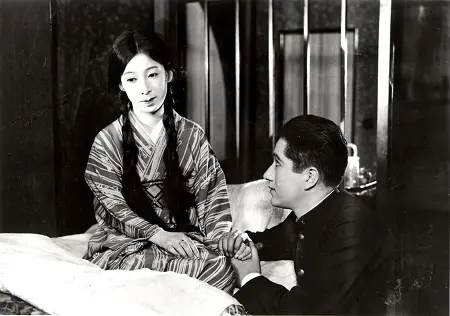
Reiko, on the other hand, represents the 'mermaid' of the title—a creature out of her element. Her poverty isn't just a lack of money; it’s a lack of social oxygen. The film takes a bold stance by making her the intellectual superior to the wealthy characters. When she discusses her future with Kitagawa, her pragmatism is a cold splash of water against his romantic idealism. It’s a brutal contrast. It works. But it’s flawed by the film's eventual need to provide a 'satisfying' ending.
The direction by the uncredited (or varied) hands behind this production shows a clear fascination with the camera as a voyeur. There are moments where the camera lingers on Kitagawa’s athletic form, a choice that feels remarkably modern. This focus on 'physicality' as a trait of the new generation is something we also see explored in films like Bare Fists, though Riku no ningyo handles it with more grace and less grit.
The lighting in the interior scenes at the wealthy villas is particularly noteworthy. While the outdoor scenes are washed in a bright, optimistic summer glow, the interiors are often shadowed and oppressive. This visual dichotomy reinforces the idea that the 'sophisticated' life is one of darkness and secrets. It’s a technique that predates the noir aesthetic but uses similar principles to build tension without a single drop of blood being spilled.
Hikaru Yamanouchi as Kitagawa is the weak link, and that’s a deliberate choice. He is the blank canvas upon which the two women project their desires. His performance is characterized by a sort of 'cheerful vacuity.' He is the sportsman who doesn't realize he is being hunted. In contrast, Komako Sunada delivers a powerhouse performance as Reiko. Her ability to convey years of systemic struggle through a simple downward glance is masterful.

The supporting cast, including Kan'ichi Tani, adds a layer of 'urbanity' that keeps the film from feeling too much like a rustic melodrama. They represent the chattering classes, the people who observe and judge from the sidelines. Their presence in the garden party scenes provides a Greek chorus of judgment that makes the central romance feel dangerous. It’s a level of social texture that makes this feel closer to Sapho than a standard romance.
What makes Riku no ningyo worth your time?
The film is worth watching because it serves as a time capsule of a Japan that was desperately trying to reinvent itself. It is a rare example of a 'Moga' (Modern Girl) era film that treats its female characters with psychological complexity rather than just using them as fashion icons. If you can handle the slower pacing of 1920s storytelling, the emotional payoff is significant.
Pros:
Cons:
Riku no ningyo is a fascinating, if slightly uneven, exploration of the human heart caught in the gears of social change. It isn't a masterpiece of action, but it is a masterpiece of atmosphere. The film manages to take a simple love triangle and turn it into a profound statement on the 'land mermaid'—the person who can see the shore of a better life but can never quite walk upon it. It is a melancholic, beautiful, and essential piece of cinema history that deserves to be pulled from the shadows of obscurity. It’s a bit of a mess, but a glorious one.
IMDb —
1916
Community
Log in to comment.