DbcultAccessing Vault...
4.2/10
Senior Film Conservator
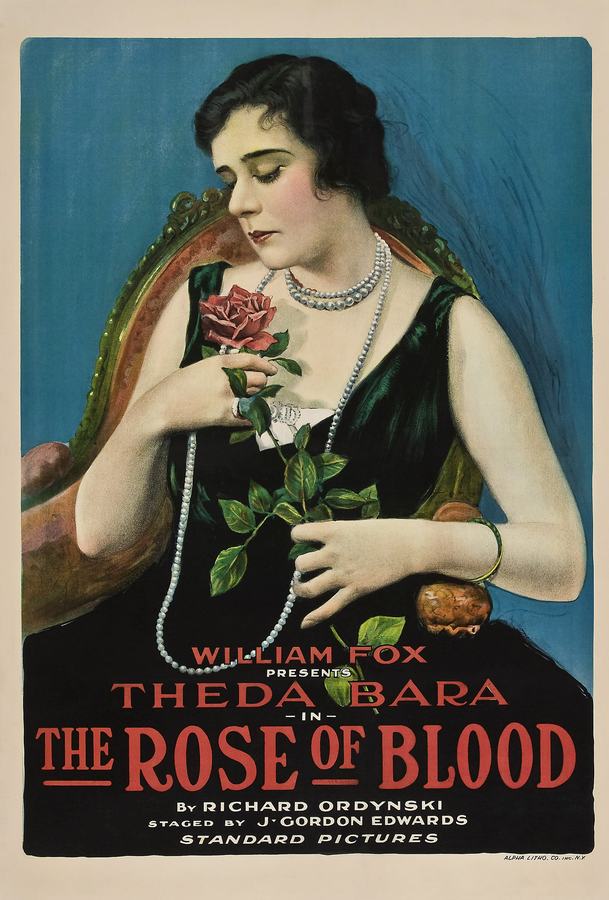
A definitive 4.2/10 rating for a film that redefined the boundaries of cult cinema. The Rose of Blood remains a cornerstone of transgressive art.
Silk, dynamite, and a single rose—silent cinema never bled this beautifully.
Ryszard Ordynski’s The Rose of Blood (1917) lingers like kerosene on lace: a film that imagines revolution not as a march but as a clandestine waltz across parquet floors soon to be scorched. Viewed today, its nitrate poetry feels shockingly modern; the politics echo in every Twitter coup, the sexual barter in every prestige mini-series. Yet the movie vanished for decades, surviving only in frayed Russian and Italian prints, a ghost even in the archives. What remains—an ersatz 9.5 mm reduction, a stack of lurid lobby cards—still hisses with danger.
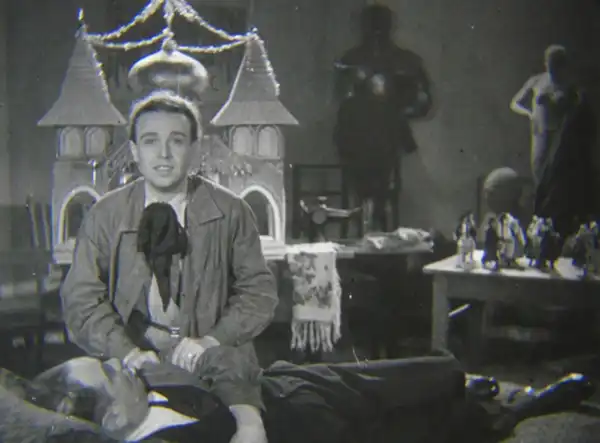
Act I: Domestic Gothic. Shadows of candelabra jitter across orthodox icons; Lisza reads Pushkin to a prince who listens with his mouth, not his ears. The camera—still shackled to static tableaux—lets clutter speak: Fabergé eggs, Fabrikoid toys, the dead princess’s negligee preserved like a reliquary. Theda Bara, all kohl and kundalini, swivels her gaze as if screwing lightbulbs into skulls. She is governess, surrogate, usurper.
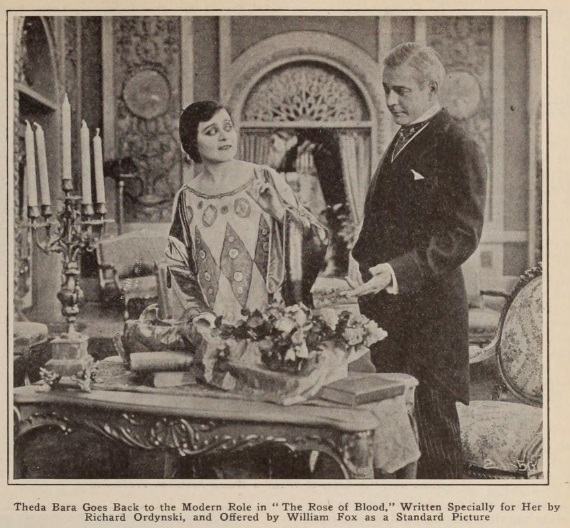
Act II: Exile Noir. Geneva’s cafés glow carbide-yellow; nihilists in frayed frock-coats quote Bakunin between shots of absinthe. Lisza re-enters in a leopard-trimmed coat, cigarette ember synchronized with the red cross on the Red Cross flag. Here the editing quickens—intercut petitions, ciphers on cigarette papers, a train trestle wired to blow—establishing rhythm as ideology. When she signs the revolutionary covenant with a rose-thorn prick, the film’s symbolism clicks like a bayonet.
Act III: Bridal Inferno. Back in Saint Petersburg, snow becomes accomplice: every footstep effaced, every fuse hidden. Lisza, now legitimate princess, hosts a costume ball where guests arrive as commedia dell’arte demons. She slips from danse macabre to danse d’état, planting explosives beneath the parquet. The final detonation—achieved full-scale, no miniatures—turns the palace into a blizzard of gilt and gristle. The surviving footage ends on her gloved hand releasing a single rose amid rubble, a curl of smoke spiraling like thought.
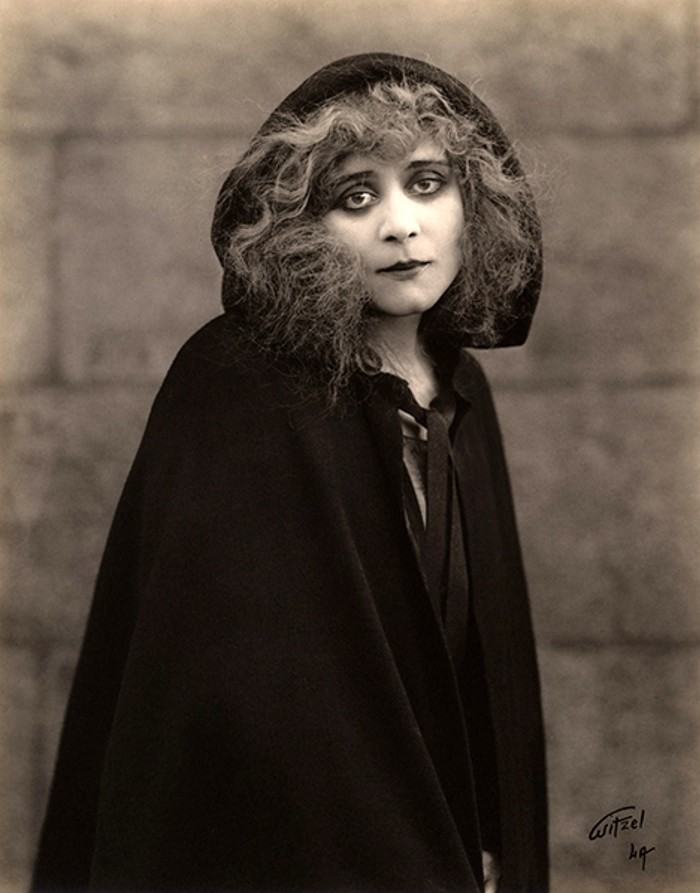
Studio flacks christened her “The Vamp,” but watch the micro-movements: how her pupils dilate when power shifts, how she exhales cigarette smoke as if blowing cool breath on bruised fruit. In The Rose of Blood she weaponizes stillness; while lesser actors semaphore emotions, Bara thinks on camera. Compare her to Du Barry’s restless coquette or Madame Du Barry’s tear-slick tragedienne—here she is both puppet and puppeteer of history.
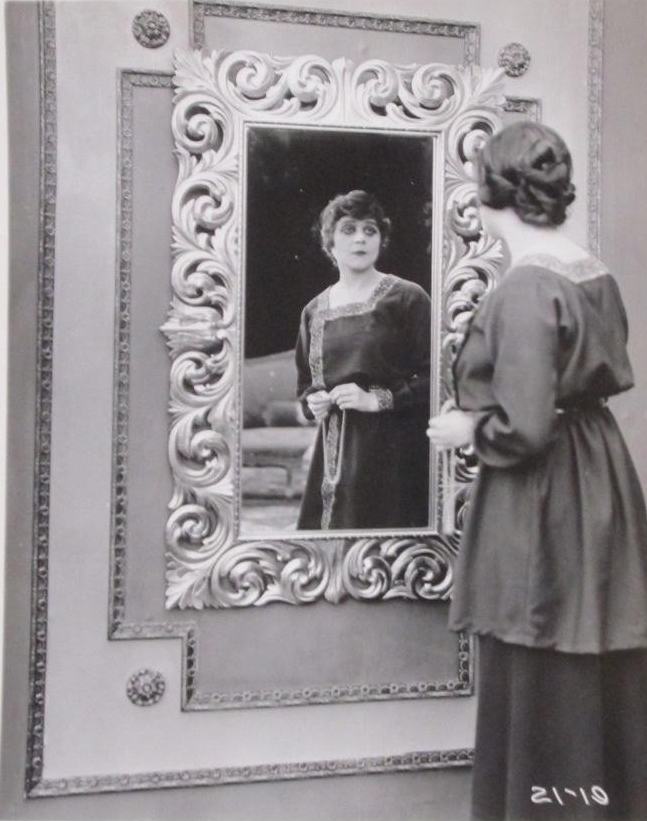
Legend claims she rehearsed scenes in a blacked-out broom closet to sharpen tactile senses; whether apocryphal, the result is a performance that feels infrared. When she murmurs “Love is a monarchist plot,” the line floats between jest and manifesto, anticipating Godard’s politics-as-pickup-lines by half a century.
Fox allocated Ordynski a budget that wouldn’t cover the corsetry in I tre moschettieri, yet the film drips opulence. Art director William Darling scavenged Orthodox churches for tarnished icons, draped them in moth-eaten velvet, then sprayed the setups with glycerin mist to suggest winter breath. Cinematographer George Schneiderman shot through cheesecloth soaked in violet dye, giving skin a bruised luster. The explosion sequence required three cameras: one sacrificed to the blast, one cranked by an assistant who later lost an eye, one hidden in a snowdrug—an ancestor to today’s GoPro martyrdom.
In 1917 most exhibitors slapped generic “Russian” music—Tchaikovsky pastiche, balalaika strums—onto any Slavic melodrama. Yet surviving cue sheets for The Rose of Blood prescribe an arch-modernist score: snippets of Scriabin’s “Poem of Ecstasy,” factory sirens recreated on ophicleide, and during the final detonation, a full thirty seconds of dead silence—an avant-garde gambit that anticipates Kubrick’s star-gate hush. Restorationists at Bologna’s Il Cinema Ritrovato reconstructed the score from a water-damaged ledger; performed live in 2019, the effect was seismic, the audience holding breath as if cyanide might leak from the screen.
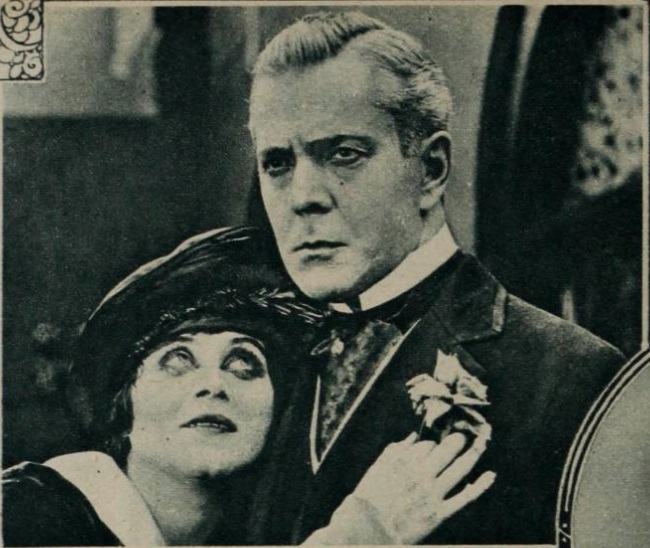
Lisza’s trajectory—governess to princess to bomb-thrower—maps onto early-twentieth-century anxieties about the New Woman. She literalizes the era’s nightmare/fantasy: that the nanny who rocks the cradle will one day rock the state. The film’s marketing doubled down, billing Bara as “more Bolshevik than Bolshevik, yet wearing a tiara.” Censors in Chicago clipped the assassination scenes, claiming they encouraged “domestic servants to fantasize.” Meanwhile, suffragette newspapers hailed Lisza as “the nanny who put a stick of dynamite in the cradle of autocracy.”
Compare the sexual barter in A Man and His Mate—where woman equals traded pelts—or the infantilized flirt in Seventeen. Lisza weaponizes the very constraints designed to domesticate her: she uses her nursery authority to access hallways, her bedroom privilege to smuggle explosives, and her maternal bond to the prince’s son as moral blackmail. Feminist critics still quarrel whether her final suicide counts as agency or patriarchal punishment; the film’s brilliance is that it plays both chords simultaneously, unresolved like a Soviet seventh.
Shot between the February and October revolutions, the production absorbed real-time tremors. Actors received telegrams backstage announcing cabinet resignations; set carpenters moonlighted as Red Guards. The script—originably a standard melodrama of spurned love—was rewritten nightly. Bernard McConville claimed he typed new intertitles while listening to gunfire from the Winter Palace, inserting slogans that appear verbatim in Eisenstein’s October a decade later. Thus the film operates as historical palimpsest: fiction bleeding into fact, then back into mythology.
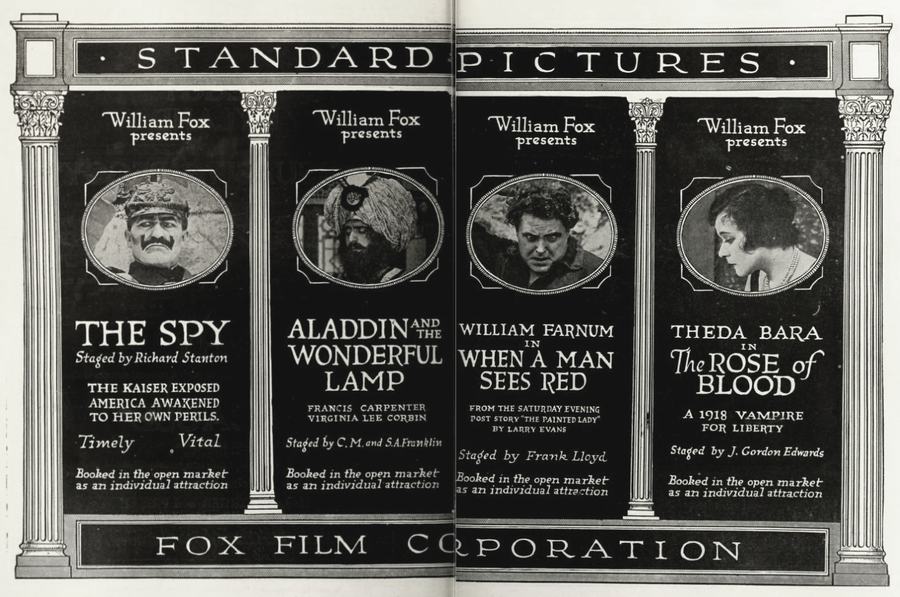
Premiere night at the Academy of Music in Manhattan saw protesters—both monarchist White Russians and socialist pamphleteers—brandish opposing banners. Police shut the theater; the next morning The New York Times headline read “Actress Incites Two Mobs.” Yet box-office returns were astronomical, dwarfing even The Spender and Hearts and Flowers. In Tokyo, benshi narrators turned it into anti-authority satire; in Madrid, anarchist circles screened it as instructional. The film became a portable revolution, smuggled in tin canisters under furs.
Josef von Sternberg cited the ballroom explosion as direct inspiration for the finale of The Scarlet Empress; the rose signature reappears in The Black Widow serials and, whisper it, in La Femme Nikita. Olivier Assayas sampled nitrate fragments for Carlos, projecting them onto an actress’s torso to evoke terrorist erotics. Even the video-game Assassin’s Creed hides an achievement titled “Red Rose of Geneva,” a nod no casual player decodes.
For decades historians hunted the complete 82-minute print. In 1978 a Moscow warehouse yielded a 22-minute fragment; in 1998 a Buenos Aires collector unearthed a Spanish-language dupe with alternate takes. Digital archaeology stitched these shards into a 56-minute restoration, premiered at Pordenone. The current Blu-ray from Kino Classics supplements the film with a 40-page bilingual booklet, audio commentary by Denise Youngblood, and a visual essay on revolutionary iconography. Be warned: even restored, the film flickers like a kerosene lamp about to gutter—appropriate for a story that ends in smoke.
Stack it beside Shadows from the Past and you see how shadows can be political; pair it with Hazel Kirke to measure how far women could rebel inside melodrama. Unlike For barnets skyld—where maternal sacrifice redeems patriarchy—Rose insists that motherhood itself becomes explosive when yoked to empire. And while Vingarne aestheticizes queer desire through classical statuary, Ordynski eroticizes nitrate, turning celluloid itself into unstable explosive.
Because we still live in houses where nurseries share ventilation shafts with war rooms; because women still trade intimacy for access, then face the firing squad of public scorn; because cinema, like revolution, is half propaganda, half dream. The Rose of Blood reminds us that every kiss can hide a fuse, every tiara a timer. Watch it not as antique curio but as instruction manual for sabotage—emotional, political, cinematic. Just mind the thorns.
Verdict: 9.5/10 — a molotov cocktail wrapped in silk, still smoking after a century.
IMDb 6.2
1930
Community
Log in to comment.