DbcultAccessing Vault...
7/10
Senior Film Conservator
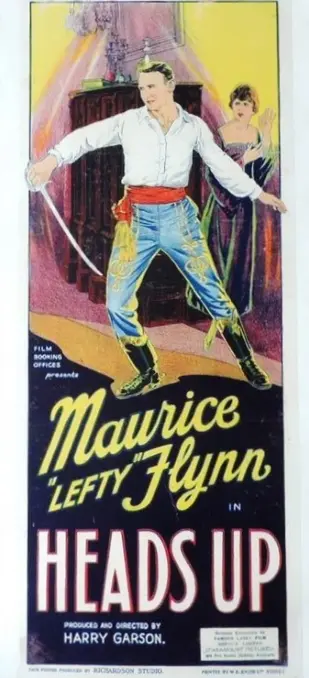
A definitive 7/10 rating for a film that redefined the boundaries of cult cinema. Heads Up remains a cornerstone of transgressive art.
Is 1925’s Heads Up a hidden gem worth your modern attention? Short answer: No, unless you are a dedicated historian of silent-era tropes or a completionist for the career of Maurice 'Lefty' Flynn.
This film is specifically for those who enjoy the 'American abroad' subgenre of the 1920s where a square-jawed hero fixes a foreign government over a weekend. It is emphatically not for viewers who demand political nuance or anything resembling a modern understanding of international relations.
1) This film works because Maurice 'Lefty' Flynn’s natural athleticism provides a physical center that the thin script lacks.
2) This film fails because the resolution—literally paying off an army with a bank draft—is the most uninspired 'deus ex machina' in silent cinema.
3) You should watch it if you want a brisk, 70-minute example of how the 1920s viewed the world as a playground for American intervention.
The film opens with Breckenridge Gamble, a character archetype we’ve seen in better films like Manhattan or The Poor Boob. He is the restless socialite, a man with too much money and not enough purpose. It’s a classic setup for 1920s adventure: the hero needs a reason to leave the parlor and enter the jungle.
Maurice 'Lefty' Flynn, a former football star, plays Gamble with a physical confidence that borders on arrogance. He doesn't act so much as he occupies space. In the early scenes, his boredom is palpable, but it feels less like a character trait and more like Flynn himself waiting for the director to let him do something physical. It’s a performance of posture rather than psychology.
The inciting incident involves 'oil magnates.' In 1925, this was shorthand for adventure and progress; today, it feels like a cynical precursor to decades of corporate-sponsored instability. Gamble is sent to Centralia, a fictionalized South American republic that exists solely to be rescued by a man in a clean suit.
Upon arriving in Centralia, the film shifts gears into a revolutionary melodrama. We meet Angela, played by Kathleen Myers, who serves as the standard-issue 'damsel in distress' with a political pedigree. Her father, the President, has been ousted by the villainous Cortez. Kalla Pasha plays the revolutionary leader with a broad, almost pantomime villainy that was common in the era but lacks the menace found in contemporary European films like Dämon und Mensch.
The middle act of Heads Up is where the film finds its pulse. Gamble’s imprisonment and subsequent escape are the highlights. The sequence where he impersonates the prison comandante is a masterclass in the 'charming American rogue' trope. It’s not believable for a second—his Spanish is presumably non-existent and his features are distinctly un-Centralian—but the film doesn't care. It moves with a frantic energy that prevents you from asking questions.
One specific scene stands out: Gamble’s interaction with the prison guards. He uses a mix of physical comedy and sheer audacity to walk out the front door. It’s a moment that reminds the viewer of the lightheartedness of The Masquerader, yet it lacks the sophisticated wit of that film’s script. It’s blunt-force charisma.
Visually, Heads Up is a standard product of the mid-20s studio system. Director Rob Wagner, who was more famous for his writing and social commentary, handles the camera with a functional, if uninspired, hand. There are no experimental flourishes here. You won't find the moody shadows of The Fatal Sign or the delicate framing of Still Waters.
The outdoor locations are well-utilized, providing a sense of scale that the interior sets lack. The jungle shots feel authentic enough to ground the escapade, but the 'palace' interiors feel like they were borrowed from a different, cheaper production. The lighting is flat, designed to ensure the audience never misses a single movement of the athletic lead.
The editing is perhaps the film’s strongest technical suit. The transition from Gamble’s escape to his raising of an army is handled with a brisk pace that hides the absurdity of the timeline. Within what feels like twenty minutes of screen time, Gamble goes from a prisoner to a military commander. It’s ridiculous. It works. But it’s flawed.
For the casual viewer, the answer is a firm no. The political optics of the film have aged poorly. The idea that a single American with a large check can 'save' a nation and win the heart of the President’s daughter is the kind of 'white savior' narrative that feels increasingly tone-deaf. However, for a student of film history, it is a fascinating document of its time.
It represents a specific moment in American culture where the 'oil magnate' was a hero and the world was an oyster waiting to be shucked. If you view it through that lens, it’s an intriguing, if shallow, experience. It doesn't have the emotional weight of Et Syndens Barn or the artistic ambition of Anita Jo. It is a popcorn flick from a time before popcorn was the standard.
The most debatable aspect of Heads Up is its climax. Gamble doesn't defeat Cortez through superior strategy or moral high ground; he defeats him by delivering a 'large money draft' to pay the army. It is a stunningly literal interpretation of 'money is power.' In the world of this film, loyalty is a commodity that can be bought by the highest bidder—specifically, the American bidder.
This cynical undercurrent is likely unintentional, but it makes the film a darker watch today than it was in 1925. Compare this to the more human-centric struggles in Farkas, and Heads Up feels like a corporate training video disguised as an adventure. It’s a film that believes in the power of the dollar above all else.
Heads Up is a competent, middle-of-the-road silent adventure that survives solely on the back of its leading man's charisma. It is a relic of a bygone era of American exceptionalism, filled with tropes that have since been parodied into oblivion. While it offers some minor thrills during its escape sequences, the resolution is so hollow that it undermines the preceding 60 minutes. It’s a film that starts with a yawn and ends with a receipt. Watch it for the history, but don't expect to be moved.
IMDb —
1920
Community
Log in to comment.