DbcultAccessing Vault...
5.6/10
Senior Film Conservator
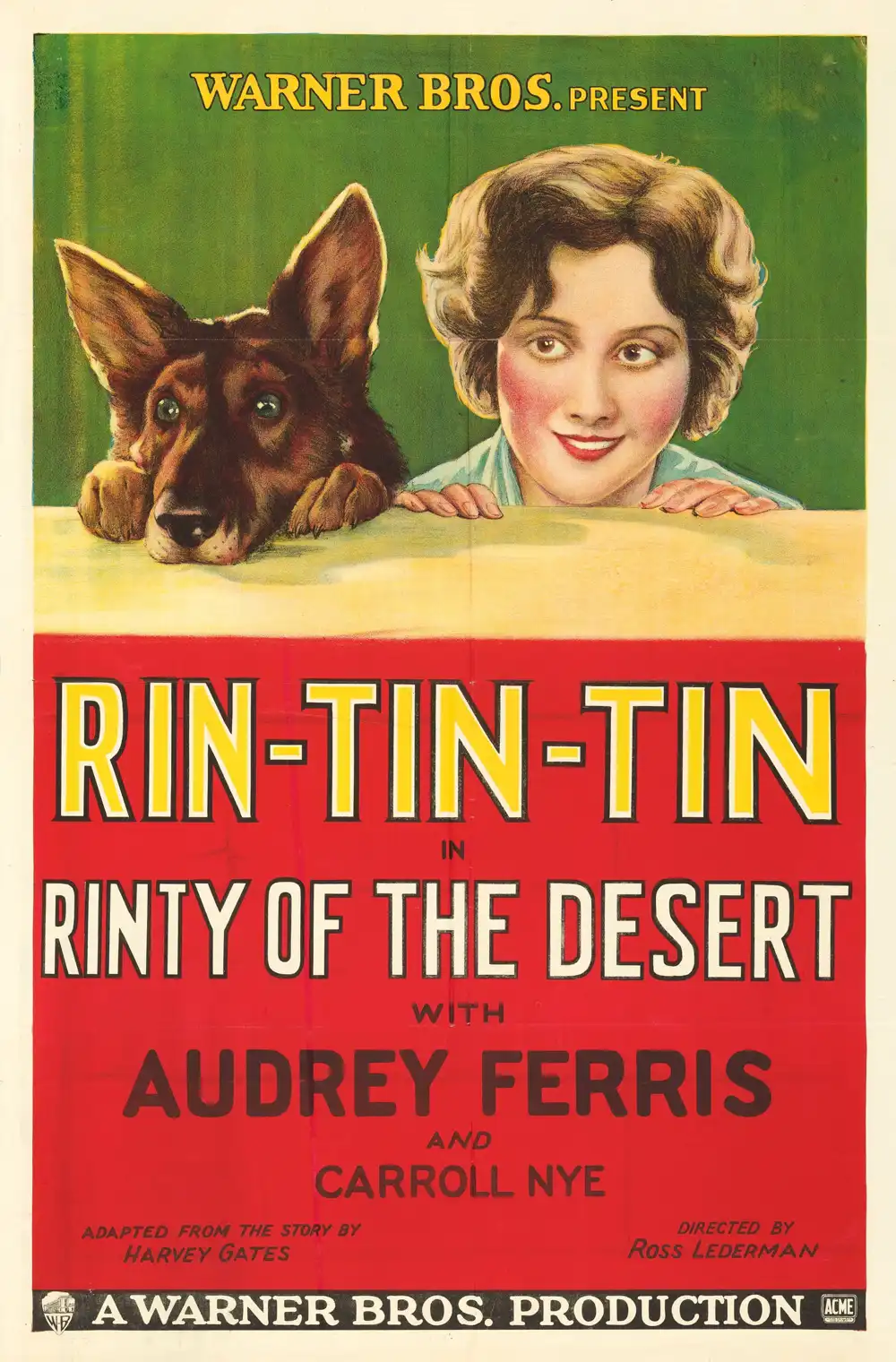
A definitive 5.6/10 rating for a film that redefined the boundaries of cult cinema. Rinty of the Desert remains a cornerstone of transgressive art.
Okay, so "Rinty of the Desert" is definitely one for the silent film buffs and anyone who has a soft spot for old dog movies. If you're looking for modern pacing or, you know, dialogue, you'll probably bounce off this one pretty quick. But for those who appreciate the charm of early cinema and a four-legged star, it's a solid, if sometimes simplistic, bit of nostalgia.
Rinty, played by the legendary Rin-Tin-Tin, starts out as this magnificent, free-roaming desert dog. The opening shots really sell that wild, untamed spirit. He’s just doing his dog thing, exploring vast, dusty landscapes.
Then, of course, the city calls. When Rinty wanders into town, it’s a bit of a shock. Not just for him, but the way the film shows it. Lots of frantic, overlapping shots, cars zooming by. It’s like a completely different world from the quiet desert, and you feel Rinty’s confusion. There’s a moment he just looks utterly overwhelmed, like he finds a quiet corner and just lies down, almost giving up. That small detail really grounds him as a creature in a strange new place.
He eventually lands with June Marlow, played by Audrey Ferris, who is just lovely. She's got that classic ingenue vibe, all sweetness and light. You can tell Rinty instantly takes to her, and their scenes together are genuinely heartwarming. Like, the way he looks at her, that deep, soulful gaze, you just get that connection. It’s a good reminder why Rin-Tin-Tin was such a big star.
Then comes Mike Doyle, the animal trainer, played by Paul Panzer. Oh boy. This guy is a piece of work. He treats Rinty really badly. There’s a scene where he’s trying to break Rinty, practically whipping him with a lead, and you just want to reach into the screen and smack him. Panzer really leans into the villain role, all sneers and harsh gestures, practically twirling an invisible mustache. It’s quite effective, even without a single spoken word.
The film doesn't shy away from showing Rinty's distress, which is a bit tough to watch at times. But it makes his eventual loyalty and heroism all the more impactful. When Rinty finally steps up to protect June from Doyle's unwelcome attentions, it's a real fist-pump moment. The dog just knows. He puts himself between them. You see him growl, all teeth, and Doyle backs off. Good.
Later, the plot thickens a bit with June’s grandfather, Pop Marlow (Otto Hoffman), getting into trouble with a gang of hooligans. These guys are pretty standard silent film bad guys, lots of dramatic arm-waving and menacing expressions. Pop Marlow is tied up in a dusty shack, and Rinty, naturally, has to save the day again.
The whole rescue sequence is pretty frantic, with Rinty running back and forth, trying to get help, then eventually confronting the gang himself. It’s all very… energetic. There’s a bit where he’s untying Pop, and the bad guys are almost on them. You can almost feel the movie trying to convince you this moment matters, with close-ups of the ropes and Rinty’s frantic movements. It works though, mostly.
One thing that sticks out is how much screen time Rin-Tin-Tin gets to just *act*. He’s not just performing tricks for the camera. He's conveying emotion through his posture, his eyes, his reactions to the human characters. He really sells the idea that this dog is thinking and feeling complex stuff. It's not just a dog on screen; it's a character with motivations.
The intertitles, as you'd expect from a silent film, do a lot of heavy lifting. Sometimes they feel a little clunky, spelling out emotions that the actors (or Rin-Tin-Tin!) are already perfectly capable of showing. But other times, they add a nice bit of old-school flair to the storytelling, like a little whispered secret directly to the audience.
Pacing wise, it definitely has its moments where things slow down. You get these long shots of people reacting, or Rinty just sort of staring off into the distance, and you might find yourself wondering if the scene is ever going to move on. That’s just silent film
IMDb 5.8
1932
Community
Log in to comment.