DbcultAccessing Vault...
Cult Review
Senior Film Conservator
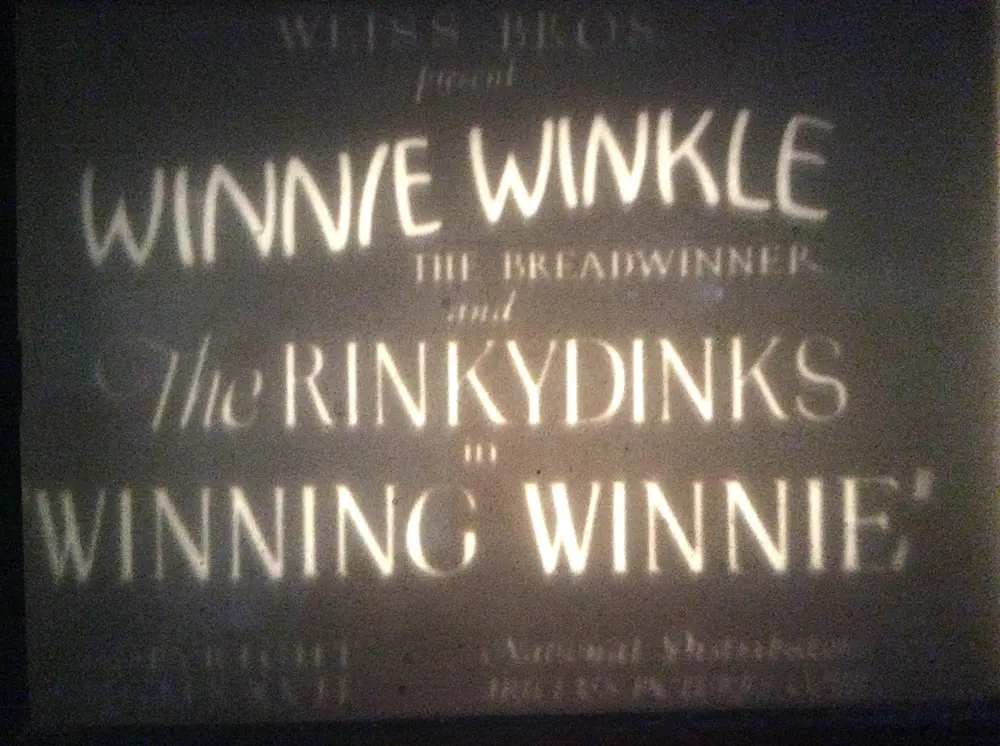
Is Winning Winnie a film that commands attention in our modern viewing landscape? Short answer: yes, but with significant caveats that demand a particular kind of cinephile. This silent-era picture, while undeniably a product of its time, offers a surprisingly robust narrative about female ambition and resilience that feels both quaint and remarkably forward-thinking. It’s a film that resonates most deeply with those who appreciate the foundational artistry of early cinema, understand its technical limitations, and can find beauty in its often exaggerated expressions.
This film is absolutely for lovers of silent cinema, those fascinated by historical portrayals of women, and anyone eager to witness the genesis of storytelling tropes that persist to this day. Conversely, it is decidedly not for viewers who demand rapid pacing, sophisticated dialogue, or pristine digital restoration. If you struggle with the visual language of the 1910s or prefer narratives unburdened by melodramatic flourishes, Winning Winnie might test your patience more than reward it.
This film works because of its surprisingly tenacious lead performance and a narrative that, for its era, champions female independence with genuine conviction.
This film fails because of its often simplistic characterizations and a reliance on melodramatic contrivances that can feel dated to modern eyes.
You should watch it if you seek a window into early cinematic history and appreciate the raw, foundational power of silent storytelling.
The heart of Winning Winnie beats strongest in the performance of Ethelyn Gibson as Winnie herself. Gibson, with her expressive eyes and dynamic physicality, embodies the 'winning' spirit of her character with an infectious energy. She manages to convey Winnie's ambition, vulnerability, and sheer determination without uttering a single word, relying instead on the grand gestures and subtle facial shifts characteristic of the silent era. Her portrayal elevates the film beyond a simple melodrama, imbuing Winnie with a relatable, almost proto-feminist strength.
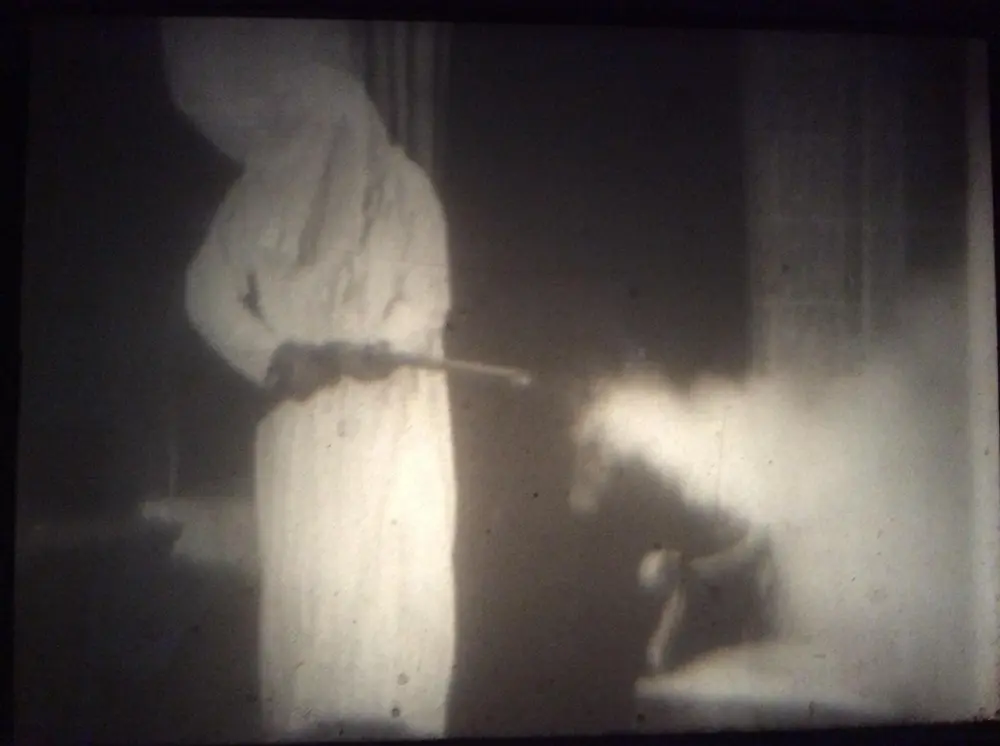
Consider the scene where Winnie first presents her hat designs to the skeptical competition judges. Gibson’s posture, initially tentative, gradually straightens, her chin lifts, and a defiant glint enters her eyes as she silently challenges their dismissive gazes. It’s a masterclass in non-verbal communication, powerfully conveying Winnie's inner resolve. This isn't just acting; it's a profound understanding of how to communicate complex emotions within the unique constraints of the medium.
Junior Johnston, as the initially aloof journalist Jack Harrington, provides a compelling foil. His transformation from cynical observer to Winnie's ardent supporter is handled with a believable, if accelerated, arc. Johnston’s early scenes portray a detached professionalism, his body language stiff and guarded. As he witnesses Winnie's struggles and triumphs, his gestures soften, his expressions shift from skepticism to admiration, culminating in a palpable warmth. It’s a performance that, while secondary to Gibson's, grounds the romantic subplot with a necessary sincerity.
However, the supporting cast, while competent, often falls into archetypal traps. Billy Bassette’s bumbling assistant, while providing comedic relief, occasionally verges on caricature, a common pitfall of early cinema. Ray Erlenborn and Albert Schaefer as the more static, often villainous figures, deliver performances that are effective in their villainy but lack the nuanced depth Gibson brings to Winnie. Their grand gestures of malice or condescension serve the plot but offer little in the way of complex character study.
The film’s strength in performance lies almost entirely with its titular star. Gibson carries the narrative weight effortlessly, making Winnie a character easy to root for, despite the often-exaggerated reactions of those around her. It’s a testament to her talent that Winnie remains a vivid, memorable figure long after the final fade to black.
The direction in Winning Winnie, while not revolutionary, is remarkably effective in its clarity and pacing for the period. The film moves with a briskness that belies its age, largely avoiding the languid stretches sometimes found in contemporary works like The Eternal Grind. The director understands the importance of visual momentum, particularly in the competition scenes, where tension is built through a series of quick cuts and close-ups on the characters’ reactions.
There's a commendable use of parallel editing during key moments, such as when Winnie is working tirelessly on her designs juxtaposed with Priscilla Thorne’s leisurely social engagements. This technique effectively highlights the class disparity and the sheer effort Winnie must exert to simply compete, a subtle but powerful social commentary. It's a directorial choice that helps to streamline the narrative, making it accessible even to modern audiences unfamiliar with the silent film idiom.
Cinematography, while basic by today's standards, is functional and occasionally inspired. The use of natural light in Winnie's humble workshop provides a stark contrast to the artificially bright, opulent settings of Priscilla Thorne’s world. This visual distinction reinforces the central conflict, grounding Winnie’s struggle in a tangible reality. The camera work is largely static, as expected, but when it does move, it does so with purpose, often following Winnie as she navigates crowded streets, emphasizing her journey through a bustling, indifferent city.
One particularly striking shot involves a low-angle perspective of Winnie standing before a large, imposing building – the location of the competition – making her appear small yet determined against the backdrop of an intimidating establishment. This visual metaphor for her uphill battle is simple but potent. While not pioneering in the vein of a D.W. Griffith, the visual language here is articulate and serves the story well.
At its core, Winning Winnie is a surprisingly potent exploration of ambition, class, and the burgeoning independence of women in the early 20th century. Winnie’s struggle to open her own hat shop, a seemingly modest goal, becomes a powerful symbol of self-determination in an era where such aspirations for women were often met with resistance. The film critiques, albeit gently, the societal constraints placed upon women, suggesting that true 'winning' extends beyond mere competition to encompass self-actualization.
The rivalry between Winnie and Priscilla Thorne, while somewhat one-dimensional, effectively highlights the chasm between inherited privilege and earned success. Priscilla represents the old guard, content with superficial accomplishments, while Winnie embodies the spirit of a new era, one where merit, talent, and hard work could potentially overcome social stratification. This theme, while presented through the lens of a light-hearted drama, possesses an enduring relevance that still resonates today.
The film also touches upon the nascent power of media and public perception, through the character of Jack Harrington. His initial journalistic detachment and subsequent advocacy for Winnie underscore how public opinion, shaped by figures like himself, can sway outcomes and challenge preconceived notions. It’s a subtle commentary on the evolving role of journalism, even if it's primarily used to advance the romantic subplot.
One could argue that the film’s resolution is overly simplistic, neatly tying up all loose ends with a romantic flourish and a professional triumph. This is a fair criticism, as the complexities of real-world class struggles and gender biases are rarely resolved so cleanly. However, within the conventions of its time, this optimistic conclusion served to reinforce the aspirational message of the film, offering a hopeful vision of progress.
I find the film's commitment to portraying Winnie's journey as legitimate, rather than a mere feminine whim, to be genuinely refreshing. It avoids reducing her ambition to a plot device for romance; instead, the romance enhances her journey, rather than defining it. This is a subtle yet crucial distinction that sets it apart from many contemporaries, such as perhaps Blind Love, where the female protagonist's agency often feels secondary to her romantic entanglements.
The pacing of Winning Winnie is surprisingly brisk, a testament to its concise storytelling. The narrative rarely lingers, moving efficiently from one plot point to the next, maintaining viewer engagement throughout its runtime. This efficiency is crucial for a silent film, where prolonged scenes without clear narrative progression can quickly lead to viewer fatigue. The intertitles are used sparingly and effectively, providing just enough context without overwhelming the visual storytelling.
The tone strikes a careful balance between lighthearted comedy, particularly in the antics of Billy Bassette’s character, and genuine dramatic tension during Winnie’s more challenging moments. This tonal versatility prevents the film from becoming monotonous, allowing it to appeal to a broader audience than a purely melodramatic or comedic offering. The shifts feel natural, guiding the viewer through Winnie's emotional landscape.
An unconventional observation for me is how the film inadvertently highlights the sheer physical labor involved in early 20th-century fashion. The scenes of Winnie meticulously crafting hats, often late into the night, are surprisingly visceral. It’s not just about winning a competition; it’s about the sweat and dedication behind the craft. This focus on the artisanal process offers a fascinating, almost documentary-like glimpse into a bygone industry, something rarely emphasized in such romanticized narratives.
The film works. But it’s flawed. Its melodramatic peaks, while charmingly old-fashioned, occasionally pull at the seams of its otherwise grounded narrative. Yet, these are minor quibbles in the face of its overall impact.
Winning Winnie is more than just a relic from the silent era; it is a surprisingly engaging and thematically rich piece of early cinema. While it certainly bears the hallmarks of its time – the grand gestures, the occasional oversimplification – it transcends these limitations through the sheer force of its lead performance and a narrative that, at its heart, champions a timeless message of self-belief and perseverance. Ethelyn Gibson's Winnie is a character who truly 'wins' in every sense of the word, leaving a lasting impression long after the final frame.
For those willing to embrace the unique charm and visual language of silent film, Winning Winnie offers a rewarding experience. It’s a valuable historical document, yes, but also a thoroughly enjoyable story that reminds us that the struggle for independence and recognition is a perennial human endeavor. It’s a film that deserves to be rediscovered, not just for its historical significance, but for its enduring spirit. Go watch it. You might be surprised by how much it still has to say.
IMDb 7.4
1929
Community
Log in to comment.