DbcultAccessing Vault...
Cult Review
Senior Film Conservator
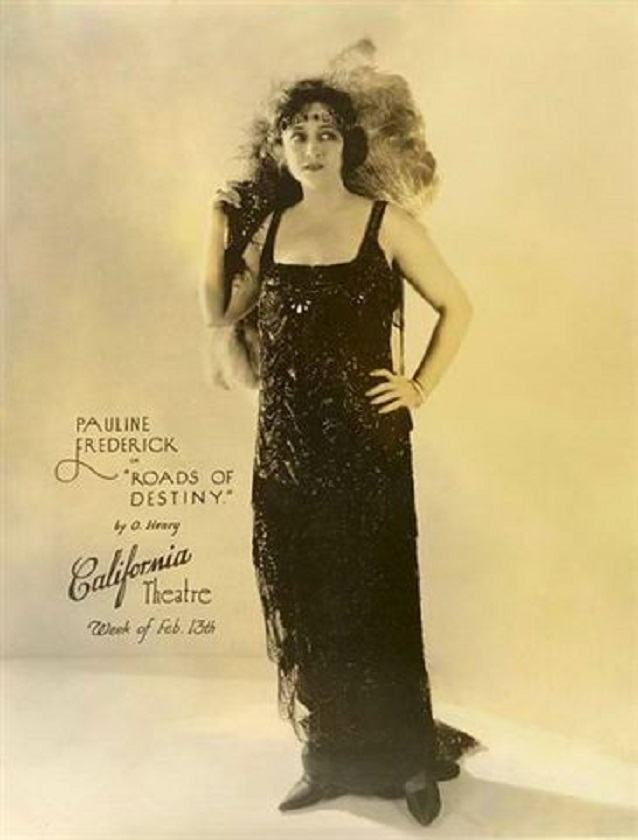
There is a moment, barely thirty seconds into Roads of Destiny, when the camera lingers on a kerosene lamp sputtering in a parlour that seems too small for all the guilt trapped inside it. That guttering flame is the film’s manifesto: light will try to steady itself, yet every breath of human deceit tilts the wick. What follows is no mere love triangle; it is a Möbius strip of ethical inertia, adapted from O. Henry’s story and flung onto the screen with a nervy audacity that 1921 audiences were scarcely prepared to parse.
Most silent narratives content themselves with a single moral reversal—think of Children of the Feud and its blood-for-blood symmetry—but Roads of Destiny insists on kaleidoscopic triplication. David Marsh, played by Richard Tucker with the kind of laceted stoicism that makes inertia feel valiant, becomes both Theseus and Minotaur in the dream-labyrinth his subconscious engineers. Each corridor is geographically disconnected yet morally soldered: the Yukon, the Eastern Seaboard, a pueblo south of the Rio Grande. The through-line? Ann Hardy—sometimes a cabaret siren, sometimes a débutante, always the axis on which masculine cowardice pirouettes.
Notice the visual shorthand: in Alaska, the film’s tinting veers toward cyanotic blue, skin tones frosting into pewter; in the East, amber washes cue affluence but also spiritual jaundice; south of the border, sepia cloaks everything like dried blood on parchment. These chromatic choices, accomplished via volatile dye-bath prints that dissolve if mishandled, whisper what the intertitles dare not: geography is not scenery—it is verdict.
Jane Novak’s Ann in the Alaskan segment should be required viewing for anyone who thinks silent acting is all flutter and mime. When her character realizes the young inventor (John Bowers) loves another woman, Novak drops her cigarette holder—not in theatrical despair, but with the dulled precision of someone who understands the house always keeps 5 %. The ensuing death—off-screen yet violently hinted via an iris that clamps shut like a fist—lands harder than many a modern gore-fest because the film has trained us to supply the emotional gore ourselves.
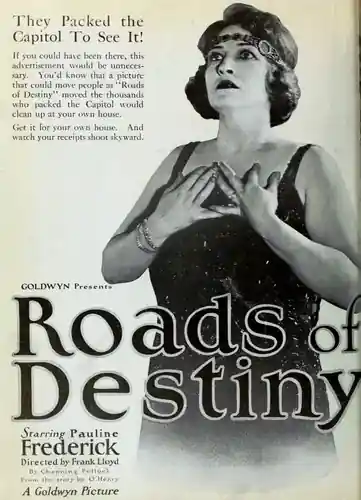
Shift to the Eastern episode and suddenly the intertitles gleam with urbane venom: “A reputation is a china plate—once cracked, it may hold glue, but never tea.” Pauline Frederick, as the society Ann, utters this line through a smile so rigid it could fracture celluloid. The camera positions her between two mirrors, creating infinite regressions; each reflection is a potential future David might awaken to if he continues dithering. The mise-en-abyme is silent-era psychology at its most eloquent: choice paralysis multiplied unto vanishing point.
Many American films of the period treat Mexico as exotic peril—see Durand of the Bad Lands—yet here the locale becomes a crucible of fatal honesty. Maude George’s Rosita (the Rose-figure transplanted) kneels in candle-lit confession while shadows of a barred window stripe her like a jailbird. The visual rhymes with Lewis’s earlier rejection of Rose in the prologue: bars need not be iron; social decree can imprison as effectively as any jailer. When the blade inevitably falls, the screen fades to scarlet tint so saturated it feels like we are watching the celluloid itself bleed out.
Richard Tucker’s greatest asset is his capacity for stillness; in a medium that rewarded florid semaphore, he lets the audience project onto his inertness. Watch his eyes during the tri-dream coda: each blink is a metronome counting down to moral revolt. By contrast, Willard Louis’s Lewis is a grinning wound, a man who weaponizes bonhomie. Their juxtaposition embodies the post-WWI American male—one brother scarred by too much conscience, the other by too little.
And then there is Hardee Kirkland’s direction—often unfairly eclipsed by the O. Henry pedigree. Kirkland choreographs crowd scenes with a geometric clarity that anticipates late-period Lang: bodies disposed in diagonals, negative space turned into accusatory alleys of shadow. The absence of synchronous sound allows every creaking chair, every distant piano trill from the orchestra pit, to seep into the viewer’s sensorium like ambient guilt.
Channing Pollock’s adaptation retains O. Henry’s irony yet injects a filmic liquidity; incidents that unfold across pages now collapse into montage. Note how the intertitles eschew verbosity—never more than twelve words—yet each phrase is a barb: “Love unpaid becomes a debt of shame.” Compare that to the loquacious title cards in When Rome Ruled and you appreciate the disciplined sting.
Critics hunting for lineage will spot DNA strands that resurface in Out of the Fog (destiny as noir ambush) and even in the Technicle anxiety of God’s Country and the Woman. Yet Roads of Destiny is more radical: it posits that morality is not a fork but a trident, each tine piercing a different continent of the self.
Only fragmented prints survive—primarily a 35 mm nitrate reel discovered in a defunct Montana parish in 1978—transferred to safety stock with unavoidable scratches that flicker like heat lightning. Some cinephiles find these scars distracting; I’d argue they reinforce the film’s thesis: history itself is a wounded text we keep re-dreaming. A new 2K restoration premiered at Pordenone in 2019, accompanied by a somber guitar score that avoids the usual jaunty ragtime cliché. Seek it out; YouTube bootlegs mute the tinting, effectively lobotomizing the experience.
In an era of algorithmic matchmaking and swipe-forgetting, the film’s central anxiety—what happens to the people we discard en route to the idealized match—feels prophetic. David’s final decision to wed Ann is less rom-com closure than ethical ultimatum: if you cannot solve the triangle, own the angle that does least harm. That ambivalent optimism may irk viewers weaned on tidy finales like Bill Settles Down, yet it is truer to the messy ledgers of lived life.
Is the pacing uneven? Assuredly. Does the third dream sag slightly under ethnographic stereotype? Historically, yes. But the film’s cumulative throb—its insistence that every choice ricochets across geographies and psyches—makes it essential. In 1921, viewers exited nickelodeons blinking against daylight, unsure whether the dream had ended or merely relocated. A century later, that disorientation feels like prophecy. Score: 9/10 for ambition, 8/10 for execution, 10/10 for remaining under your skin longer than any big-budget blockbuster dares to linger.
Watch it for the triptych structure that foreshadows everything from Rashomon to Run Lola Run. Re-watch it for Jane Novak’s cigarette-drop, for Pauline Frederick’s cracked-tea-cup smile, for the moment a scarlet tint swallows a Mexican plaza and becomes a wound you can taste. Above all, watch it because every generation needs a reminder: destiny is not a road but a hydra—cut off one path, and two more will dream themselves into being.
IMDb 6.6
1920
Community
Log in to comment.