DbcultAccessing Vault...
Cult Review
Senior Film Conservator
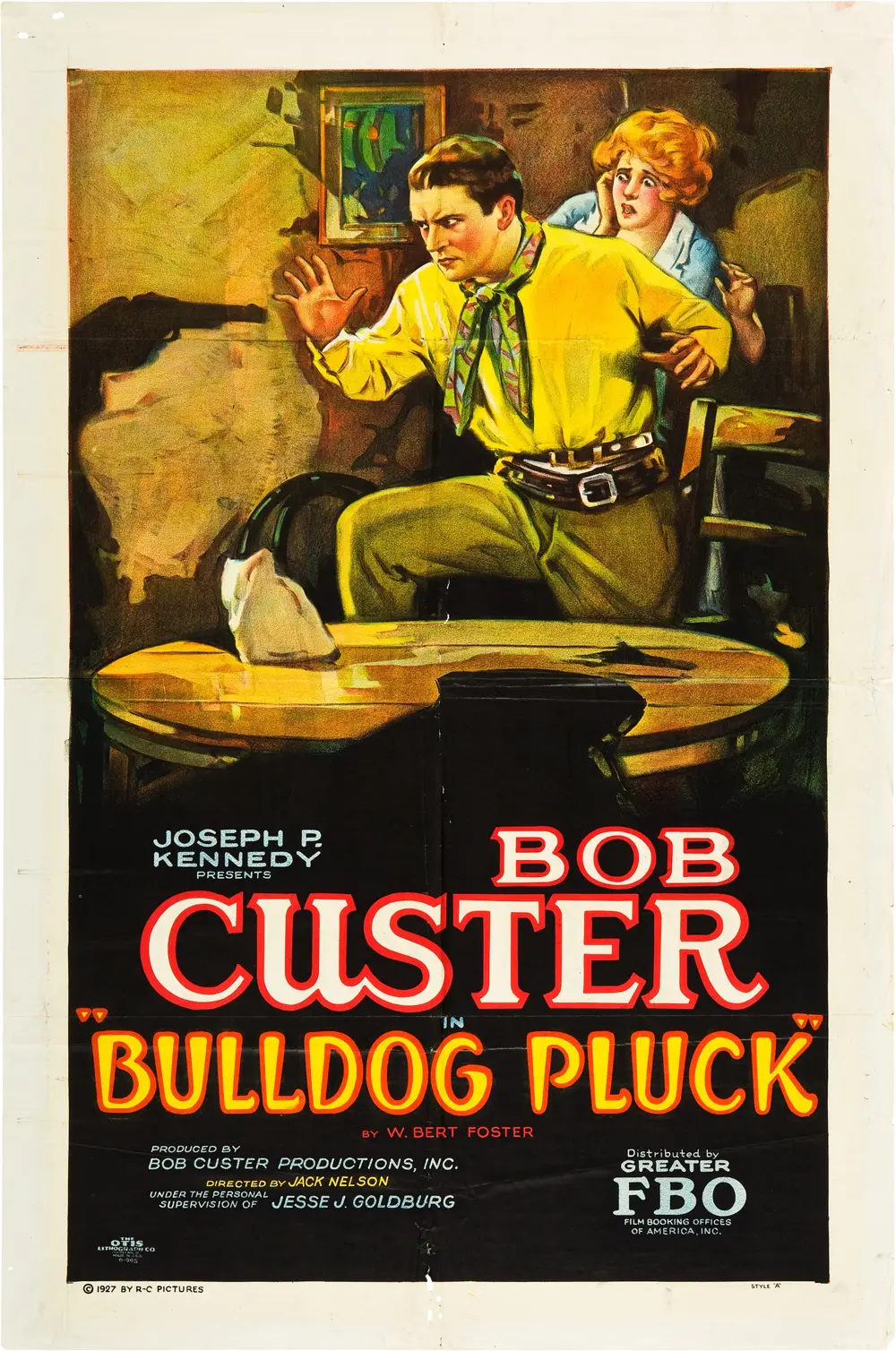
Is Bulldog Pluck worth your time in the modern era? Short answer: only if you are a dedicated archivist or a fan of the specific, moralistic subgenre of silent Westerns that prioritize temperance over gunfights. This film is for the viewer who enjoys dissecting the social anxieties of the late 1920s, but it is certainly not for anyone looking for the high-octane spectacle of a John Ford or Howard Hawks production.
This film works because it subverts the typical 'outlaw' trope by making a saloon owner the moral protagonist, creating an interesting tension between his profession and his principles.
This film fails because the central conflict—closing times and Sunday laws—lacks the visceral stakes required to sustain a feature-length narrative, leading to repetitive scenes of bureaucratic posturing.
You should watch it if you want to see a rare example of a 'Prohibition-era' Western that attempts to bridge the gap between frontier lawlessness and the burgeoning 'civilized' social movements of the 20th century.
The premise of Bulldog Pluck is, on paper, almost absurd. We are accustomed to Westerns where the saloon is the heart of darkness or a neutral ground for the hero to get a drink. Here, Bob Custer’s character decides that his own business is the problem. It is a fascinating, if somewhat didactic, narrative pivot. The film doesn't just want to tell a story of good versus evil; it wants to tell a story of civic responsibility. This puts it in a similar thematic camp as Honesty - The Best Policy, where the moral lesson is baked into the very fabric of the plot.
The screenplay, penned by Madeline Matzen, Evanne Blasdale, and W. Bert Foster, is surprisingly heavy on dialogue for a silent film—or rather, it is heavy on the *implication* of dialogue. The title cards are doing a lot of heavy lifting here. When Custer’s character stands up to the corrupt officials, the conflict isn't just about money; it’s about the soul of the town. This is a far cry from the more whimsical nature of films like Felix Minds His Business, where the stakes are purely personal and comedic.
Bob Custer was never the most expressive actor of the silent era, but his rigid, stoic presence actually works in his favor here. He carries a certain 'bulldog' tenacity that justifies the film's title. When he faces off against Richard Neill, who plays the primary antagonist with a greasy, over-the-top villainy, the contrast is stark. Neill represents the old guard of the West—men who profited from the vices of others. Custer represents the 'New West,' a place of rules, regulations, and, frankly, a bit of boredom.
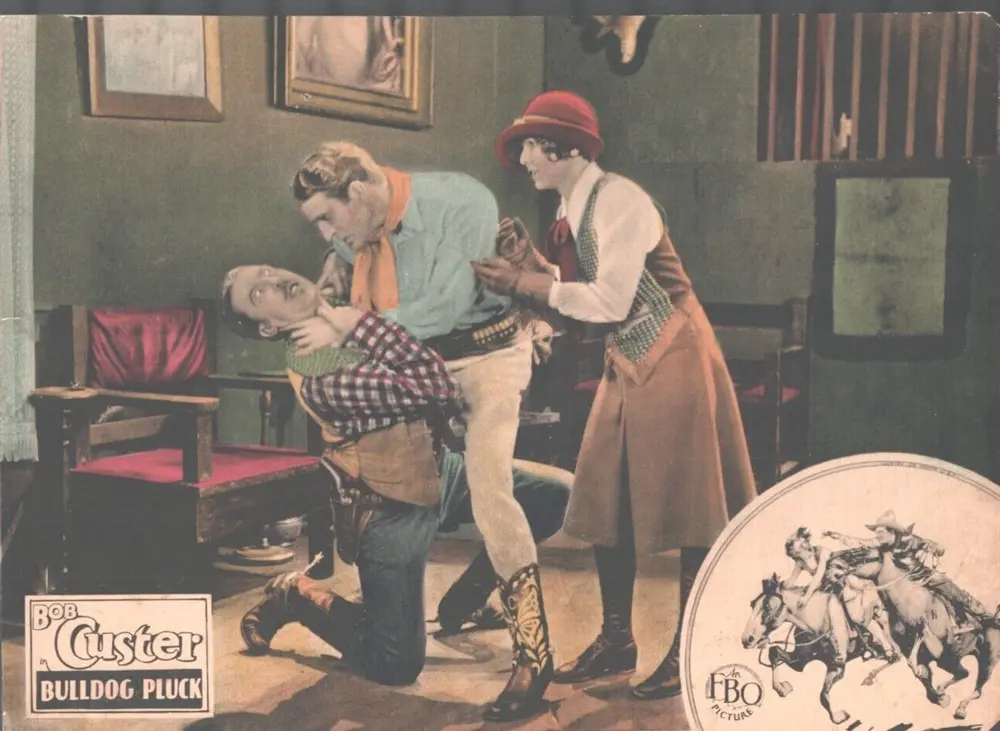
The directing by Archie Vosburgh (often uncredited or working under pseudonyms in this era) is functional but uninspired. There is a distinct lack of the visual flair you might find in Vanina or the atmospheric dread of Das Todesgeheimnis. Most scenes are shot in medium wide shots, allowing the actors to move within a static frame. It’s stagey. It’s flat. But it’s clear. You never lose track of who is arguing with whom, which is more than can be said for some of the more chaotic B-Westerns of the time, such as A Young Tenderfoot.
The biggest hurdle for a modern audience is the pacing. The film obsesses over the minutiae of town council meetings and legal threats. While this provides a grounded sense of realism, it drains the movie of its momentum. There is a scene midway through where the corrupt officials attempt to frame Custer’s character, and while it should feel tense, it feels like a foregone conclusion. The film is too earnest for its own good. It lacks the playful spark found in Little Miss Mischief or the domestic charm of Home, Sweet Home.
However, there is a certain grit to the production. The sets look lived-in. The costumes are appropriately dusty. When the action does finally arrive—mostly in the final act—it is handled with a rough-and-tumble physicality that reminds you why the Metzetti family (Victor Metzetti stars and was part of a famous stunt family) was involved. The stunts are the highlight. They are raw, dangerous, and lack the polished safety of modern choreography. It’s real men falling off real horses onto very real dirt.
Bulldog Pluck is a difficult film to recommend to a general audience. It is not a masterpiece of cinema, nor is it a forgotten gem of storytelling. It is a historical artifact. If you are interested in how the Western genre was used as a vehicle for social reform and 'Blue Laws' advocacy, it is essential viewing. If you are looking for a thrilling adventure, you would be better served elsewhere. It’s a lecture in a cowboy hat. It works as a piece of history. But it’s flawed as a piece of entertainment.
Pros:
- Unique thematic focus on civic reform within the Western genre.
- Strong, physical performances during the action sequences.
- A rare look at the 'temperance' movement's influence on early Hollywood.
Cons:
- Static cinematography that feels dated even for 1927.
- Repetitive narrative beats regarding town ordinances.
- Lack of emotional depth in the supporting cast.
Bulldog Pluck is a curious beast. It attempts to marry the rugged individualism of the West with the collectivist morality of the late 1920s. While it doesn't entirely succeed—often feeling more like a pamphlet than a movie—it remains a fascinating example of a genre in transition. It is much more serious than The Infant at Snakeville, but lacks the narrative complexity of Paradise Lost. Watch it for the history, stay for the stunts, but don't expect to be moved. It’s a sturdy, unremarkable piece of 1920s craft.
IMDb —
1921
Community
Log in to comment.