DbcultAccessing Vault...
Cult Review
Senior Film Conservator
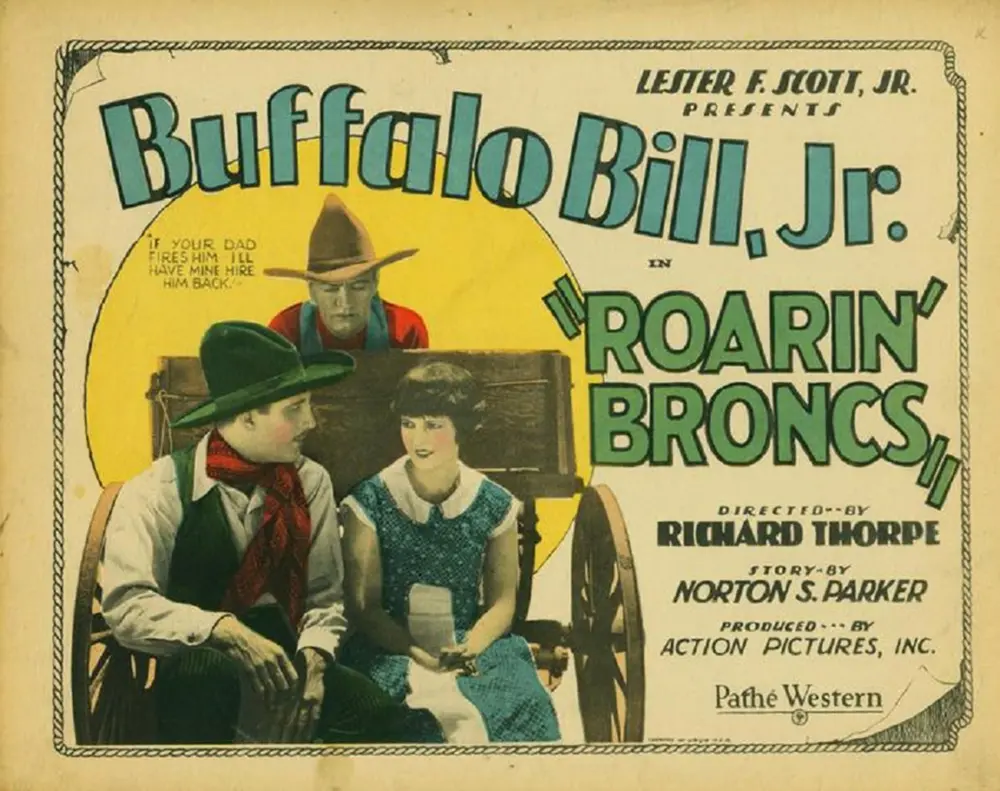
Is Roarin' Broncs worth watching today? Short answer: yes, but with significant caveats that anchor it firmly in its historical context. This 1926 silent Western offers a fascinating, if sometimes challenging, glimpse into the nascent days of Hollywood and the enduring appeal of the frontier narrative.
This film is unequivocally for silent film enthusiasts, Western history buffs, and those with a keen interest in the evolution of cinematic storytelling. It is emphatically NOT for audiences seeking modern pacing, complex character development, or high-fidelity sound design. Approach it with an open mind and a respect for its era, and you might just find a dusty gem.
This film works because of its raw, unpretentious energy and the magnetic screen presence of George Magrill, who embodies the archetypal silent Western hero with conviction.
This film fails because its narrative predictability and reliance on well-worn tropes prevent it from truly innovating, even for its time, making it feel somewhat rudimentary to a contemporary eye.
You should watch it if you appreciate the foundational elements of the Western genre, are keen to observe early directorial techniques, and enjoy the pure, unadulterated escapism that silent cinema can offer.
The plot of Roarin' Broncs is, by modern standards, a straightforward affair, yet it is precisely in this simplicity that its historical value lies. We are introduced to a classic conflict: the honest, hardworking rancher (Magrill) pitted against a land-grabbing villain. This isn't a story of moral ambiguity or psychological depth; it's a stark portrayal of good versus evil, a narrative framework that defined countless early Westerns.
Richard Thorpe and Norton S. Parker, the film's writers, leaned heavily into the established tropes of the genre. The damsel in distress, the brave hero, the nefarious schemer—all are present and accounted for. What's compelling isn't the originality of the story beats, but the efficiency with which they are deployed. Every scene serves a singular purpose: to advance the conflict, showcase a stunt, or highlight the heroism of Magrill's character.
Consider the central tension around water rights. In the arid West, control over water was tantamount to control over life itself. This simple, tangible stakes-setting immediately grounds the fantastical elements in a harsh reality. While the motivations of the villain are painted in broad strokes of pure greed, it's a motivation easily understood and universally condemned, making the hero's struggle all the more righteous.
The narrative flow, while occasionally interrupted by the necessary intertitles, maintains a surprising momentum for a silent film of this vintage. The pacing builds towards the inevitable climactic showdown, often involving a daring rescue or a physical contest. It's a testament to the early filmmakers' understanding of visual storytelling, even without the aid of spoken dialogue. The story is told through action, expression, and the sheer physicality of its performers.
The acting in Roarin' Broncs is a fascinating study in silent film performance, a style often misunderstood by contemporary audiences. George Magrill, as the lead, embodies the strong, silent type with an almost effortless grace. His performance relies heavily on physical presence and a stoic, yet expressive, face. There’s a particular scene where his character confronts the villain in the saloon; Magrill’s narrowed eyes and clenched jaw convey more simmering rage and resolve than any spoken line could. It’s a masterclass in understated intensity for its era.
Harry Todd and Lafe McKee, seasoned character actors of the period, provide solid support, often playing the grizzled sidekicks or the wise elder figures. Todd’s comedic timing, even without dialogue, is often apparent in his exaggerated gestures and reactions, providing much-needed levity amidst the drama. McKee, on the other hand, projects an air of gravitas, his presence lending weight to the community's struggles.
Ann McKay, as the film's leading lady, delivers a performance typical of the era: a blend of vulnerability and spirited resilience. Her wide-eyed expressions and dramatic gestures are designed to be read across the theater, communicating fear, hope, and affection in clear, unambiguous terms. While some might find it overly theatrical today, it was the language of silent cinema, a direct conduit for emotion before the advent of sound.
One could argue that the performances, while effective for their time, lack the nuanced internal lives we expect from modern actors. Yet, to judge them by such a metric is to miss the point. These actors were pioneers, developing a new craft, learning to communicate complex emotions through a purely visual medium. Their commitment to their roles, however stylized, is palpable and contributes significantly to the film's charm. It’s a style that demands a different kind of engagement from the viewer, one that rewards attentiveness to subtle shifts in posture and expression.
Richard Thorpe, a prolific director who would go on to helm over 180 films, including The Sea Tiger, demonstrates an early command of visual storytelling in Roarin' Broncs. His direction is functional and efficient, prioritizing clarity and action over stylistic flourishes. This isn't a criticism; it's an observation of a director working within the conventions and technological limitations of 1926.
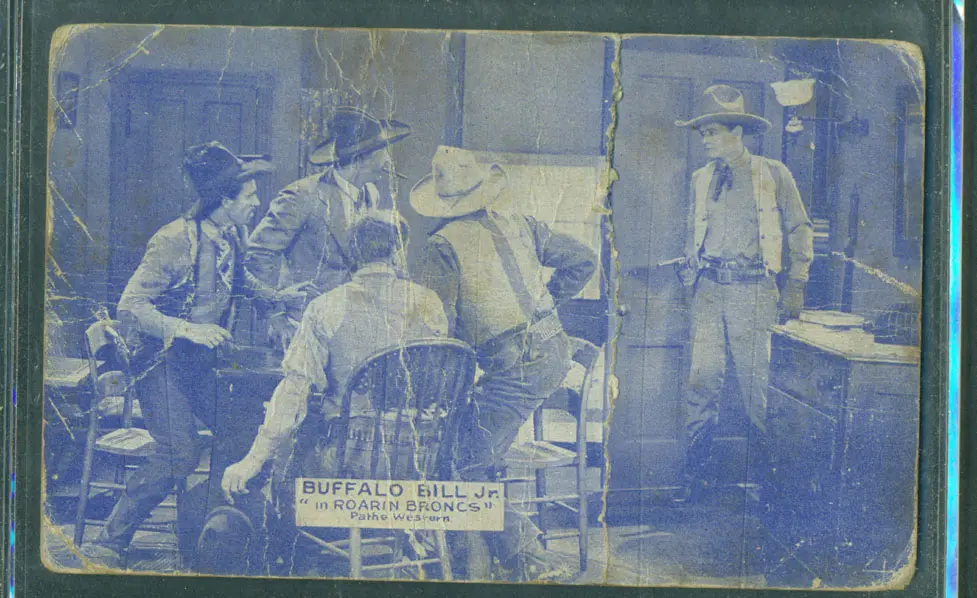
Thorpe excels in staging the film's action sequences. The bronc riding scenes, for instance, are shot with a dynamic energy that still manages to thrill. He uses a combination of long shots to establish the vastness of the arena and tighter framing to capture the struggle between rider and beast. The camera, while largely static, is positioned to maximize the visual impact of the stunts, a practical necessity in an era without sophisticated tracking shots.
There's a noticeable emphasis on practical effects and genuine stunt work. When a character falls from a horse or engages in a fistfight, it feels authentic because, by and large, it is. Thorpe's approach here is refreshingly grounded, eschewing elaborate trickery for raw, visceral action. This commitment to realism, even within a melodramatic narrative, gives the film an enduring grit.
However, Thorpe's direction also reveals the nascent state of film grammar. While effective in conveying plot, there's less experimentation with camera angles or complex editing rhythms than one might see in contemporaneous European cinema. The focus remains squarely on the performers and the unfolding events, a pragmatic choice for a mass-market Western aimed at broad appeal. His later films, like The Complete Life, would show a gradual refinement of technique, but here, the foundations are being laid with workmanlike precision.
The cinematography of Roarin' Broncs is a testament to the power of black and white imagery in capturing the stark beauty of the American West. While the specific cinematographer is uncredited in many records, the visual language employed is characteristic of the period. Sweeping vistas of open plains and rugged mountains establish the sense of isolation and grandeur inherent to the genre. These wide shots are crucial in immersing the audience in the frontier setting, making the environment itself a character.
Lighting, primarily natural or broadly diffused, creates a sense of authenticity. Indoor scenes often rely on high-key lighting, ensuring that every actor's expression and every detail of the set are clearly visible. While not as artfully composed as some of the more experimental films of the era, the practical approach ensures clarity, which was paramount for silent film audiences who relied entirely on visual cues.
The pacing of the film is a fascinating blend. It starts with a deliberate, almost languid rhythm, establishing the characters and their world. However, once the conflict is introduced, the film shifts gears, accelerating into a series of action sequences and dramatic confrontations. The editing is generally straightforward, utilizing cuts to maintain continuity and build tension during chases or fights. There's a particular sequence involving a horseback pursuit that, even without sound, generates a palpable sense of urgency through rapid cuts and dynamic camera angles.
One unconventional observation: the film’s occasional moments of almost static imagery, where characters simply hold a pose or gaze, act as unexpected punctuation marks. These aren’t flaws but rather deliberate pauses, allowing the audience to absorb the visual information and the emotional weight of a moment before the narrative pushes forward. It’s a subtle form of audience engagement that modern cinema, with its relentless pace, has largely abandoned.
Yes, Roarin' Broncs absolutely holds historical and entertainment value. It offers a clear window into early Hollywood's Western factory. The film is a foundational text for understanding the genre's evolution. Its straightforward narrative provides a nostalgic escape. The raw, physical performances are captivating. It's a reminder of cinema's power before sound.
Beyond the surface-level adventure, Roarin' Broncs inadvertently touches upon themes that resonate even today, albeit through a very different lens. The struggle for land and resources, the clash between individual freedom and corporate greed, and the inherent dangers of an untamed landscape are all present. These are not merely plot devices; they are reflections of anxieties and aspirations prevalent in American society during the 1920s.
One could argue that the film, despite its simplicity, serves as a powerful allegory for the challenges of nation-building and the establishment of law and order in burgeoning communities. The hero isn't just fighting for his ranch; he's fighting for the very ideal of a just society. This ideological underpinning, while not explicitly stated, is profoundly felt.
However, it's also important to acknowledge the romanticized view of the West presented here. The complexities of indigenous populations, the harsh realities of frontier life beyond a few specific challenges, and the darker aspects of expansion are conspicuously absent. This isn't a historically accurate documentary, but a myth-making exercise, designed to reinforce certain cultural values. It’s a vision of the West that is both alluring and, frankly, incomplete. To truly understand the era, one might need to compare it with films like The Pioneers, which might offer a different perspective on similar themes.
My strong, debatable opinion is that Roarin' Broncs, and many films like it, did more to solidify a romanticized and ultimately misleading image of the American West than any history book could. This isn't necessarily a flaw of the film itself, which operates within its genre's conventions, but it's a critical lens through which we must view such historical artifacts. The film is a product of its time, and in that, lies its immense value as a cultural document.
Roarin' Broncs is a fascinating, if not groundbreaking, entry into the annals of silent Western cinema. It works. But it’s flawed. Its true appeal lies not in its narrative innovation, but in its ability to transport viewers back to an era where the flickering image and a stirring musical score were enough to evoke grand adventures and heroic deeds. George Magrill’s stoic presence and Richard Thorpe’s unpretentious direction combine to create a film that, while undeniably a product of its time, still possesses a raw, unvarnished charm.
For those willing to engage with the unique conventions of silent film, and who possess an appreciation for the foundational myths of the American West, Roarin' Broncs offers a worthwhile journey. It’s a piece of living history, a testament to the enduring power of simple, compelling storytelling. It might not redefine your understanding of cinema, but it will certainly enrich your appreciation for where it all began.
IMDb —
1917
Community
Log in to comment.