DbcultAccessing Vault...
Cult Review
Senior Film Conservator
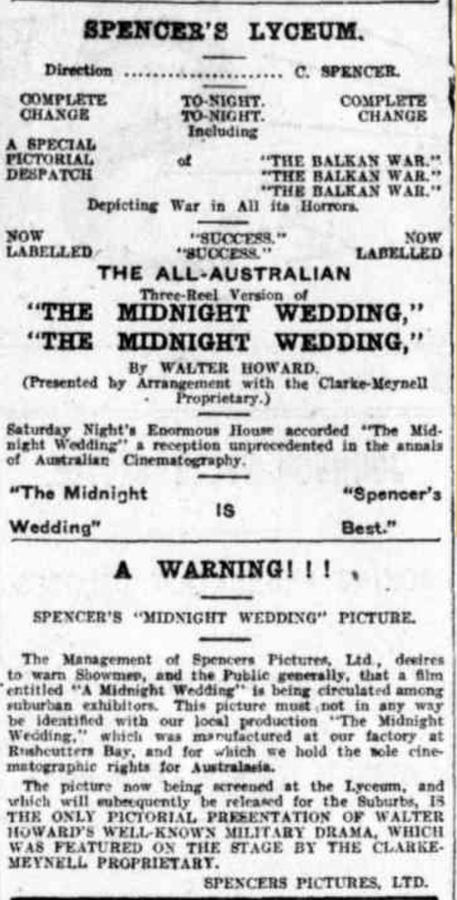
Stepping back into the nascent days of cinematic storytelling, one encounters a fascinating tapestry of human emotion, often painted with broad strokes and heightened drama. The Midnight Wedding, a gem from the early 20th century, stands as a testament to the enduring power of melodrama, even in its most nascent, silent form. Penned by the imaginative duo of Walter Howard and Raymond Longford, this film, like many of its contemporaries, sought to captivate audiences with tales of love, betrayal, and redemption, often framed against the rigid social hierarchies of the era. It’s a film that, despite the limitations of its time, manages to convey a surprising depth of feeling, primarily through the expressive performances of its dedicated cast, including J. Barry, D.L. Dalziel, Jack Goodall, and Robert Henry.
At its core, The Midnight Wedding is a quintessential tale of star-crossed lovers battling against an insurmountable societal chasm. Lady Eleanor, portrayed with a poignant vulnerability by D.L. Dalziel, embodies the tragic heroine, her future mortgaged by her family’s desperate financial straits. The specter of a forced marriage to the malevolent Lord Blackwood, a character brought to life with chilling effectiveness by J. Barry, looms large. Barry’s portrayal, even in the absence of dialogue, undoubtedly conveyed the character's avarice and cruelty through exaggerated gestures and piercing gazes, a hallmark of early silent film acting. Blackwood is not merely a suitor; he is an antagonist, a symbol of the venality that often corrupted the aristocracy, contrasting sharply with the purity of Eleanor’s affections.
Her heart, a fragile beacon of hope, beats solely for Arthur, an artist of humble origins but noble spirit, likely played with earnest conviction by Jack Goodall. Goodall, in this context, would have needed to project both artistic sensitivity and a burgeoning heroic resolve, a difficult balance to strike without spoken words. The love between Eleanor and Arthur is presented as a pure, unblemished force, a stark contrast to the transactional nature of the proposed union. This thematic juxtaposition is a recurring motif in early cinema, often seen in narratives like The Love Tyrant or even the dramatic stakes of Der Zug des Herzens, where emotional purity clashes with external pressures.
The narrative gains considerable momentum as the fateful midnight ceremony approaches. The titular 'midnight wedding' itself is a brilliant plot device, instantly conveying a sense of urgency, secrecy, and foreboding. It's a moment designed to heighten tension, to make the audience lean forward, anticipating the inevitable intervention. The choice of a remote, heavily guarded estate for the forced nuptials further amplifies the feeling of imprisonment and isolation for Eleanor, making Arthur’s quest all the more formidable. Robert Henry, perhaps playing one of Arthur’s loyal companions, would have contributed to the film’s sense of camaraderie and daring, essential elements for the heroic rescue.
The dramatic tension built around this impending event is palpable, reminiscent of the climactic race against time in films like Robbery Under Arms (though in a completely different genre), where the stakes are life and liberty. Howard and Longford, as writers, masterfully construct a scenario where every tick of the clock amplifies the lovers’ plight and Arthur’s desperate resolve. This kind of narrative economy, where a single event serves as the fulcrum for all dramatic action, was a hallmark of successful silent film screenwriting.
In the silent era, the onus of conveying emotion, character, and plot fell squarely on the actors’ physical expressiveness. D.L. Dalziel, as Lady Eleanor, would have relied on nuanced facial expressions, delicate gestures, and perhaps a certain stillness to portray her character’s internal conflict and despair. Her silent tears, her pleading glances, her resigned posture would have spoken volumes, drawing the audience into her predicament. Conversely, J. Barry’s Lord Blackwood would have employed a more theatrical, menacing physicality – a sneer, a forceful gesture, a looming presence – to establish his villainy without uttering a single word. This contrast in acting styles would have been crucial for defining the moral landscape of the film.
Jack Goodall, as Arthur, would have needed to project a blend of romantic idealism and courageous determination. His hurried movements, his determined stride, and his climactic confrontation with Blackwood would have been choreographed to maximize dramatic impact. The supporting players, like Robert Henry, would have provided solid, often understated, backing, their loyalty and actions serving to propel Arthur’s heroic journey forward. The direction, while perhaps uncredited or less emphasized in early cinema, would have been pivotal in framing these performances, using camera placement and rudimentary editing to guide the viewer’s eye and emotional response. Think of the impactful tableaux seen in films like Life and Passion of Christ or the narrative clarity of Oliver Twist, where visual storytelling was paramount.
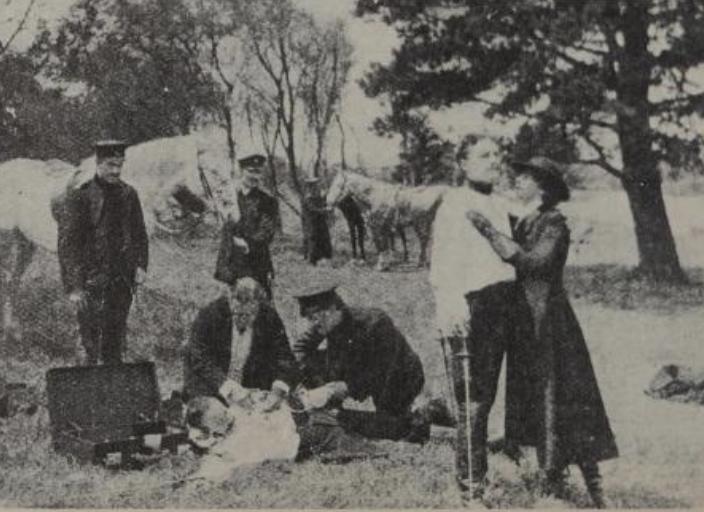
The film’s climax, the dramatic interruption of the wedding, is where all the narrative threads converge. The sudden burst of Arthur and his companions into the solemn, illicit ceremony is a moment of pure cinematic exhilaration, designed to elicit gasps and cheers from the audience. This scene, undoubtedly choreographed for maximum visual impact, would have featured a flurry of action, a chaotic disruption of the established order. The confrontation between Arthur and Blackwood, a battle of good versus evil, would have been the emotional and physical peak of the film. The use of intertitles here would have been critical, not just to convey dialogue, but to punctuate the emotional beats, to reveal Blackwood's treachery, and to celebrate Arthur's heroism.
This kind of triumphant resolution, where virtue is rewarded and villainy exposed, was a deeply satisfying conclusion for audiences of the era. It reinforced societal norms and moral codes, even as it challenged the more rigid aspects of class and wealth. The rescue of Eleanor is not just a personal victory for the lovers but a moral triumph, suggesting that true love and integrity can indeed overcome the most formidable obstacles. This echoes the thematic justice found in films like The Redemption of White Hawk, where moral rectitude ultimately prevails.
Examining The Midnight Wedding also offers a window into the evolving craft of early filmmaking. The cinematography, while likely static by modern standards, would have focused on clear composition, ensuring that the actors’ expressions and actions were legible. Lighting, often natural or augmented by rudimentary artificial sources, would have played a crucial role in creating mood – the dim, ominous glow of the midnight ceremony versus the hopeful light of dawn in the resolution. Set design, though perhaps simplistic, would have effectively conveyed the opulence of Blackwood’s estate and the humble charm of Arthur’s world, providing visual cues for the stark class differences at play. The costumes would have been meticulously chosen to define character and era, with Eleanor’s bridal gown transforming from a symbol of oppression to one of liberation.
Walter Howard and Raymond Longford, as writers, faced the unique challenge of crafting a compelling narrative that could be understood without dialogue. This required a reliance on visual storytelling, clear character motivations, and well-timed dramatic beats. Their collaboration likely resulted in a screenplay that was less about intricate dialogue and more about powerful situations and emotional tableaux. This approach to storytelling is evident in many early narrative films, from the historical sweep of The Life and Death of King Richard III to the intimate dramas of the period. The absence of synchronized sound forced filmmakers to be incredibly inventive with visual cues and dramatic pacing, a discipline that, arguably, laid the groundwork for much of what we consider effective cinematic grammar today.
While perhaps not as widely known as some of its more epic contemporaries like Cleopatra or Dante's Inferno, The Midnight Wedding represents a significant thread in the rich tapestry of early cinema. It speaks to the universal themes of love, sacrifice, and the struggle against injustice that continue to resonate with audiences across generations. The film’s success, even in its limited run, would have hinged on its ability to evoke strong emotional responses through its compelling narrative and the dedicated performances of its cast. It’s a reminder that even in an era without the sophisticated technology we now take for granted, filmmakers were capable of crafting deeply affecting stories.
The simplicity of its storytelling, far from being a weakness, is often its strength, allowing the fundamental human emotions to shine through with unvarnished clarity. For cinephiles and historians alike, revisiting films like The Midnight Wedding offers invaluable insight into the foundational elements of cinematic art. It demonstrates how early directors and writers understood the power of visual narrative, character archetypes, and carefully constructed dramatic arcs to engage and move an audience. It's a testament to the fact that even in its infancy, cinema was already a potent medium for exploring the complexities of the human condition. Its legacy lies not just in its plot, but in its contribution to the evolving language of film, proving that a compelling story, well-told, can transcend technological limitations and speak directly to the heart.
In conclusion, The Midnight Wedding, with its gripping melodrama, expressive performances, and timeless themes, remains a fascinating artifact of early cinema. It’s a film that, despite its age and the constraints of its medium, offers a powerful emotional journey, reminding us of the enduring allure of a well-told story where love conquers all, even under the cloak of a midnight sky.
IMDb 4.7
1936
Community
Log in to comment.