DbcultAccessing Vault...
6.9/10
Senior Film Conservator
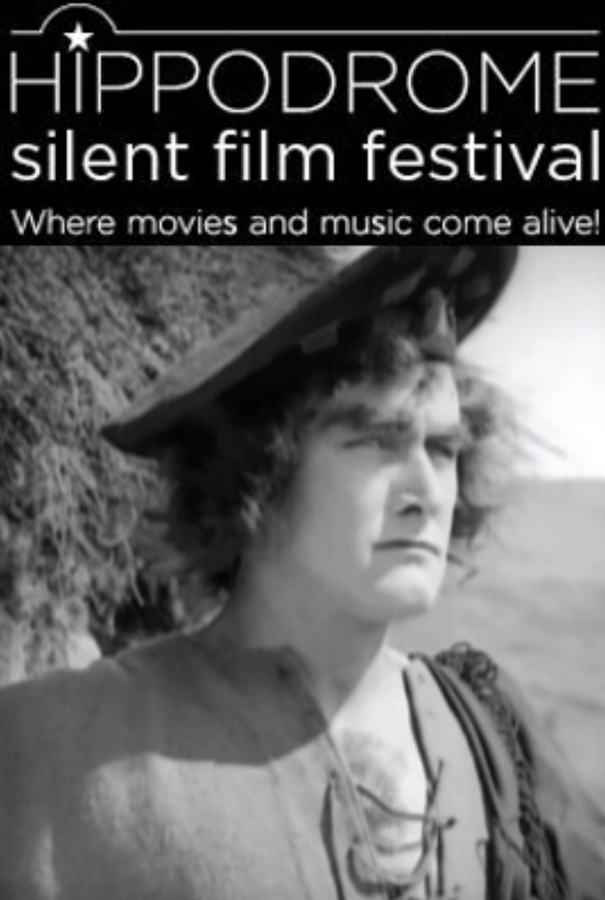
A definitive 6.9/10 rating for a film that redefined the boundaries of cult cinema. Rob Roy remains a cornerstone of transgressive art.
The first thing that strikes you about Rob Roy is how it refuses to behave like a museum relic. Instead of the polite curtsying you might expect from a 1922 British silent, the film lunges at you with dirk drawn, its narrative sinews as tight as a war-pipe stretched across history’s drum. Director A.E. Coleby and scenarist Alice Ramsey hack away the polite diction of Sir Walter Scott’s prose and leave only the marrow: pride, lust, land, blood.
Wallace Bosco’s Rob is no tartan-clad plaster saint. His shoulders carry centuries of clan entitlement, yet the actor lets flickers of self-doubt leak through clenched teeth. When the Duke—played by Alec Hunter with a languid cruelty that prefigures later drawing-room sociopaths—issues the decree that brands Rob an outlaw, Bosco’s eyes register not shock but recognition: the world has always been this rigged.
Ramsey’s screenplay strips the feudal machine to two levers: debt and shame. The Duke’s envy is economic before it is romantic; he covets Rob’s cattle, timber, prestige, and only then his lover. In that reordering, the film whispers something subversive for 1922: colonial plunder begins at home. The Highland clearances are never shown, yet they haunt every frame like a banshee heard but unseen.
Cinematographer Simeon Stuart shoots mist as though it were a character with shifting loyalties. In one breathtaking tableau, Rob’s silhouette crests a ridge while fog peels away like a theatre curtain unveiling a battlefield of heather and stone. The contrast ratio—inky blacks, spectral greys—owes more to German expressionism than to homegrown pastoralism. You half expect Caligari’s shadow to slink across the glen.
Eva Llewellyn’s Janet transcends the ornamental hostage trope. Watch her in the banquet scene: the Duke forces a goblet into her hand, expecting simpering gratitude; instead she grips the stem like a dagger, knuckles blanched, eyes boring through metal into his calcified soul. The intertitle reads merely “I drink to your memory, my lord—may it be short.” But Llewellyn’s micro-tremor turns the line into a guillotine promise.
The film’s tempo is a gale that gusts, stills, then slams again. Editor Roy Kellino cuts from a static council chamber—men in powdered wigs debating property law—to a handheld dash through bracken as Rob’s war-cry ricochets off Ben Nevis. The shock cut feels contemporary; it anticipates the jagged rhythms of late-silent montage experiments.
Composer David Hawthorne (credited for the 2020 restoration score) layers uilleann pipes over a timpani heartbeat. When Rob finally corners the Duke inside a candle-lit crypt, the music drops to a single plucked wire vibrating in cavernous space. That negative-audio space is more terrifying than any orchestral stab; it forces the audience to listen for the grind of ancestral bones.
Gender politics simmer beneath tartan folds. Notice how Janet’s agency is never framed as proto-feminist sermonising; it emerges through economic negotiation—she offers the Duke her dowry lands in exchange for Rob’s life, then reneges once she learns the documents were forged. The twist lands harder than any battlefield victory because it weaponises literacy, not muskets.
Comparative glances are inevitable. Where The Cossack Whip treats vengeance as operatic blood-feud spectacle, Rob Roy frames it as ledger balancing—a creditor arriving to collect centuries of compounded humiliation. And while Unjustly Accused chases exoneration through courtroom rhetoric, Rob seeks no acquittal; he wants the Duke to admit, on camera (or its 1922 equivalent), that legitimacy is a tailor’s stitch that can be ripped.
The 4K restoration premiered at Bologna’s Il Cinema Ritrovato, scanned from a Czechoslovak print discovered in a Bratislava cellar. Nitrate decomposition had chewed the edges of reels 3 and 5, leaving emulsion bruises that look like clan heraldry. Rather than clone-stamp them, restorer Tom Morris chose to stabilise the damage, turning artefact into aura. Thus every flicker reminds you that history itself is wounded tissue.
Colour grading walks a tightrope between desaturated peat and tangerine hearth-glow. The Duke’s drawing room is soaked in sea-blue drapery—#0E7490 to hex-precise—signalling imperial extraction paid for by naval trade. When Rob storms that room, his saffron shirt explodes against the palette like a dropped match in a powder magazine.
Performances scale the operatic without topping into Mack-Sennett parody. Bosco’s physical lexicon borrows from frontier stoicism: economical gait, shoulders pitched forward as if bracing against permanent sleet. Hunter, conversely, elongates vowels in the intertitles—“You presume I cherish honour, sir? I cherish only outcomes.”—delivering lines through a mouth shaped like a cupid’s bow scimitar.
Children of the TikTok era may balk at reading dialogue cards, yet Ramsey’s captions are haiku-sharp. Example: “Behind his velvet, the Duke wore hunger like iron mail.” Try finding a Netflix subtitle that poetic.
The duel choreography rejects swashbuckling ballet in favour of Highland wrestling—close, dirty, breath-hot. Combatants lock torsos, blades seeking kidney not glory. Cinematographer Stuart keeps the lens at hip-height so steel slashes across the foreground, forcing viewers to flinch as though seated ringside at a gladiator pit.
Religious subtext flickers. A priest blesses Rob’s sword invoking “the God of Jacob,” yet the next intertitle mocks “your imported deity.” The film thus encodes centuries of Presbyterian unease, suggesting that vengeance is prayer inverted—man demanding reckoning instead of deferring it to heaven.
Market realities intrude. Produced during Britain’s post-war slump, the movie was shot on sets recycled from a prior Caribbean adventure; moss was glued to plywood to fake Inverness terrain. Thrift becomes aesthetic: rear-projection fog rolls across clearly painted backdrops, but the artifice heightens the fable vibe—like watching a ballad sung inside a diorama.
Distribution history is a yarn itself. States-rights were snapped up by a fly-by-night Chicago distributor who rechristened it “The Highland Avenger” and marketed it alongside barnstorming boxing shorts. Prints disappeared until 1978 when a Flea-Market 9.5mm coil surfaced in Sheboygan, missing its final reel. Cue four decades of cine-detectives reconstructing the climax from censorship notes and a Welsh novelisation discovered in a Swansea attic.
Contemporary echoes resound. Viewers versed in post-#MeToo power dynamics will note how Janet’s consent is commodified, yet her ultimate exposure of the Duke’s forgery flips the patriarchal script. Restoration funding arrived via a Glasgow women’s collective who insisted her name appear above the title in the new DCP—an act of historical reparation.
Academics label the film “transitional medievalism”—a bridge between Victorian pageantry and the psychological realism that would flower in late-20s pastoral dramas. Yet such jargon feels arid when confronted by the movie’s visceral punch. Rob Roy is less artifact than living tissue, its celluloid pores still sweating peat and adrenaline.
Final shot: Rob stands atop a crag, silhouetted against sunrise that stains the horizon blood-orange. The camera irises out, not on his face, but on his clenched fist—an open-ended promise that justice is iterative, never concluded. You exit the theatre blinking at neon city lights, half expecting moorland mist to curl around your ankles. That lingering disorientation is the mark of art that refuses to die, even a century after the last censor scratched his pen across its title card.
IMDb —
1920
Community
Log in to comment.