DbcultAccessing Vault...
Cult Review
Senior Film Conservator
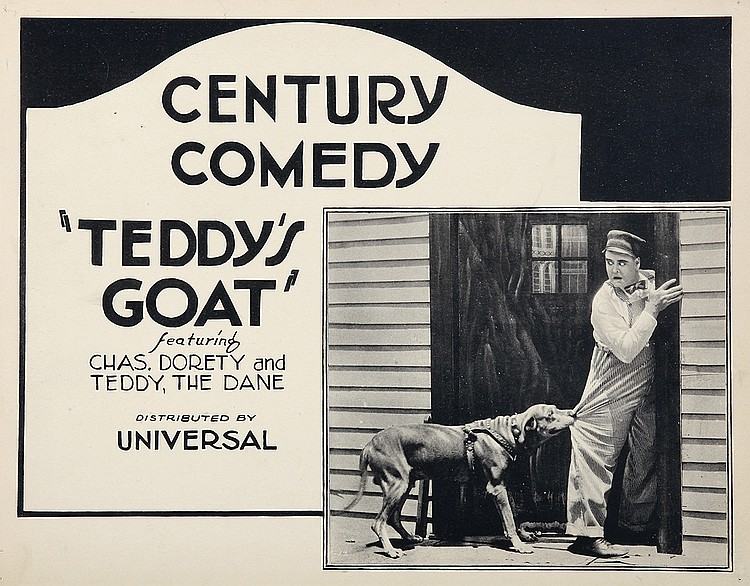
In the amber-hued dawn of 1920s cinema, Teddy's Goat emerges as a testament to the silent film era’s ability to transform simplicity into profound narrative. Fred Hibbard’s screenplay, a delicate ballet of visual gags and pastoral drama, positions Teddy the Dog as a figure of near-mythic labor. His daily routine—hauling a milk wagon, tending to a goat yielding 40 quarts of unprescribed milk—serves as both a metaphor for industrial capitalism and a celebration of rural diligence. The goat, a marvel of biological excess, becomes the film’s MacGuffin, its lactose-rich bounty a symbol of abundance under threat.
Teddy’s world is one of meticulous order, disrupted only by the arrival of a lemon-fueled saboteur. This antagonist, a shadowy figure with a penchant for citrus-based villainy, embodies the chaos of industrial sabotage. Hibbard’s choice of lemon as the weapon of choice is both absurd and poetic—a literal souring of sweetness, a corruption of the pure. Yet Teddy, with his preternatural vigilance, outwits this threat through a series of rapid, near-silent bottle substitutions, a sequence that channels Buster Keaton’s precision with the charm of a golden retriever.
The goat, named only in its role as lactose-producing entity, transcends mere livestock. It is a character in its own right—a silent witness to Teddy’s labor, a victim of kidnapping, and ultimately a symbol of the fragile balance between nature and human greed. Its abduction plot, while predictable in structure, is elevated by the urgency of its stakes. Teddy’s transformation from loyal worker to guardian is rendered with a tenderness that belies the film’s slapstick roots. The sequence where Teddy tracks the abductors through a fog-laden pasture, his paws leaving prints like breadcrumbs of resolve, is a masterclass in silent communication.
Comparisons to The Little Orphan are apt; both films exploit the innocence of their protagonists to underscore societal themes. Yet Teddy’s heroism is unique in its unspoken dedication. Unlike the truant souls of The Truant Soul, Teddy embodies a work ethic that predates industrialization, a canine embodiment of the Protestant work ethic distilled into paw prints and milk pails.
Hibbard’s direction is a study in restraint. The film’s aesthetic is rooted in the practical: milk bottles clink with the rhythm of a metronome, the wagon’s wheels groan in sync with Teddy’s labor. The use of shadow and light—particularly in the lemon-sabotage scene—echoes the chiaroscuro techniques that would later define film noir. Yet the film’s strength lies in its ability to convey emotion without dialogue. A close-up of Teddy’s alert eyes as he detects the lemon-scented bottle is more expressive than a thousand lines of intertitles.
The supporting cast, including Charles Dorety and Baby Peggy, provides a human counterpoint to Teddy’s silent heroism. Their interactions with the dog are less performative than they are participatory, as if the film itself recognizes the primacy of its canine lead. This dynamic recalls the human-animal partnerships of Sonka zolotaya ruchka, but with a distinctly American emphasis on self-reliance.
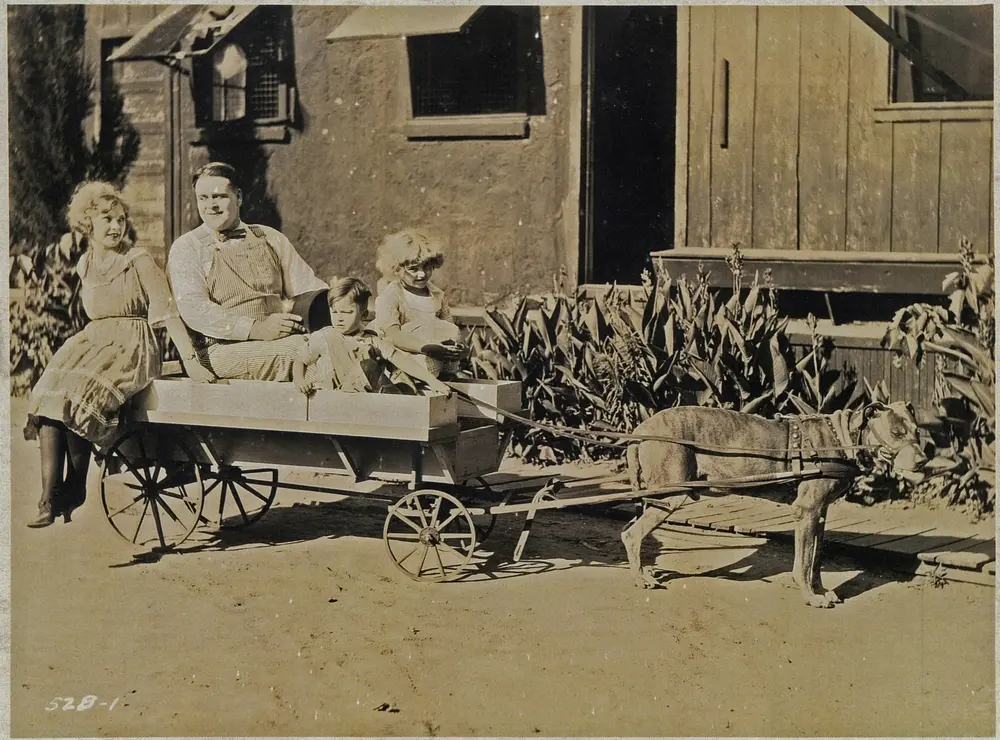
Teddy's Goat occupies a unique niche in cinematic history. It is both a relic and a prophecy—a celebration of rural life that foreshadows the anxiety of industrialization. The goat’s lactose overload, while comically impossible, mirrors the era’s fascination with productivity as a measure of worth. Teddy’s final commission—to pull the wagon carrying the master and his sweetheart—serves as a bittersweet coda. It is a reward, yes, but also a reminder that even in victory, the labor never ends.
For modern audiences, the film offers a window into a world where simplicity was both a virtue and a constraint. The absence of dialogue forces viewers to engage with gesture, expression, and environmental detail in ways that today’s text-heavy narratives often neglect. It is a film that rewards patience, its rewards unfolding like the gradual filling of a milk pail.
Teddy's Goat is more than a silent film; it is a parable of American identity. Teddy’s relentless labor, his thwarting of sabotage, and his ultimate triumph as a guardian of abundance echo the nation’s own myths of perseverance. In an age of algorithmic storytelling and hyper-stylized chaos, this film stands as a reminder that sometimes, the most compelling narratives are those rooted in the quiet, unending toil of a single, devoted soul. Whether you’re a cinephile or a casual viewer, Teddy’s journey offers a lesson in the power of loyalty, the dignity of work, and the unspoken language that binds humans to their canine counterparts.
IMDb 6.7
1932
Community
Log in to comment.