DbcultAccessing Vault...
Cult Review
Senior Film Conservator
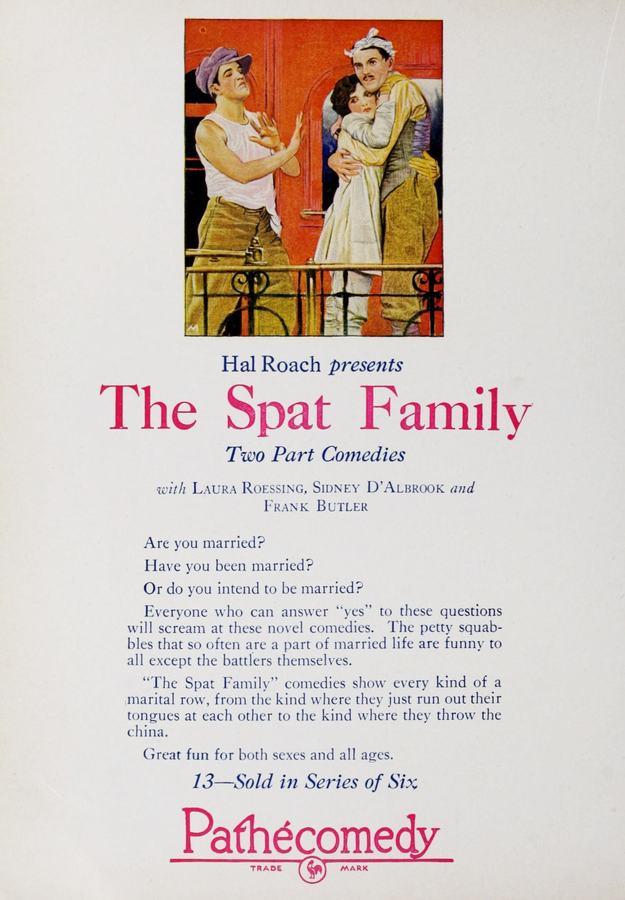
When the Spat family is uprooted from the bucolic safety of their heartland farm and thrust into the raw, sun‑bleached expanse of the West, the film immediately establishes a tension between domestic stability and the chaotic promise of untamed wealth. Sidney D'Albrook, cast as the grizzled foreman, brings a sardonic edge that undercuts the earnest optimism of Frank Butler, whose character embodies the archetypal young pioneer—wide‑eyed, hopeful, and tragically unaware of the mine’s hidden perils.
At its core, Roughing It is less a conventional treasure‑hunt and more a meditation on the corrosive allure of avarice. The mine, purchased on a whim by the patriarch Mr. Spat, operates as a symbol of both promise and ruin; its very existence forces each character to confront personal ambition versus collective responsibility. The screenplay, though uncredited, weaves a tapestry of subplots—rival claim‑jumpers, a looming drought, and the subtle romance blooming between Laura Roessing’s matriarch and the stoic foreman—that coalesce into a richly layered portrait of frontier life.
The cinematography, rendered in stark monochrome, exploits chiaroscuro to accentuate the unforgiving terrain. Shadows linger across the mine’s mouth, suggesting hidden depths while the bright desert light bathes the Spats in an almost holy glow, hinting at the mythic quality of the American West. The director’s choice to linger on long, contemplative shots of the family’s wagon train crossing a river—water that later becomes a literal threat within the mine—demonstrates a visual foreshadowing that rewards attentive viewers.
One cannot discuss the film’s visual language without noting the occasional splash of colour in the original intertitles, a nod to the era’s experimental tendencies. The intertitles, tinted in a muted sea blue (#0E7490), provide not just exposition but an emotional undercurrent, reinforcing the melancholy that pervades the Spats’ journey.
Sidney D'Albrook’s portrayal of the foreman is a masterclass in understated intensity. His eyes, often narrowed against the glare of the desert sun, convey a world‑weary wisdom that no dialogue could articulate. Frank Butler, meanwhile, oscillates between naive optimism and dawning disillusionment, his physical comedy—particularly the slapstick mishap involving a runaway mule—providing levity without undermining the film’s gravitas.
Laura Roessing’s performance as the Spat matriarch is perhaps the film’s emotional fulcrum. She balances stoic endurance with moments of tender vulnerability, especially in the scene where she comforts her youngest child after a cave‑in, her hands illuminated by a single lantern that casts a warm, amber halo—an intentional visual echo of the dark orange (#C2410C) that later appears in promotional material.
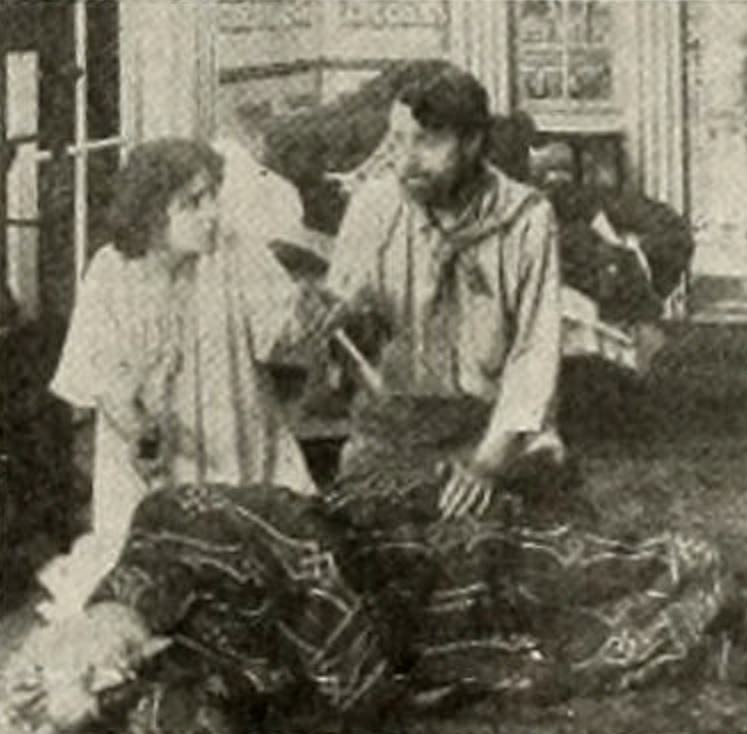
When placed alongside contemporaneous works such as Man-Woman-Marriage or the more militaristic The Commanding Officer, Roughing It distinguishes itself through its focus on familial dynamics rather than external conflict. While Les mystères de Paris revels in urban intrigue, and The Moth and the Flame indulges in melodramatic excess, Roughing It maintains a disciplined narrative economy, allowing the frontier itself to become a character.
The film also anticipates thematic concerns later explored in Salt of the Earth, particularly the tension between individual aspiration and communal well‑being. The Spats’ ultimate decision—to abandon the mine and return to a modest, sustainable life—mirrors the ethical resolution that would become a hallmark of socially conscious cinema in the decades that followed.
Although silent, contemporary screenings of Roughing It often feature a live piano score that weaves motifs of yearning and foreboding. The music’s tonal palette—minor chords underscored by occasional bright major bursts—mirrors the film’s oscillation between hope and despair, reinforcing the narrative’s emotional cadence without verbal exposition.
The film’s pacing is deliberate yet never sluggish. The first act establishes the Spats’ domestic life and the ill‑advised purchase; the second act thrusts them into the wilderness, introducing antagonistic claim‑jumpers and the mine’s structural failures; the final act resolves both external conflict and internal transformation. This three‑act structure, while conventional, is executed with a precision that feels almost modern, allowing each character arc to reach a satisfying crescendo.
A particularly striking sequence occurs midway through the second act: a sudden storm engulfs the camp, lightning illuminating the mine’s entrance as water begins to seep in. The editing rhythm quickens, intercutting frantic shoveling with close‑ups of the foreman's clenched jaw—a visual metaphor for the mounting pressure on the family’s resolve.
Beyond its surface plot, the film teems with symbolic resonance. The gold mine, initially a beacon of prosperity, gradually reveals itself as a hollow cavern—a commentary on the futility of chasing material wealth at the expense of personal integrity. The recurring motif of water—first as a life‑sustaining river, then as a destructive flood—underscores the duality of nature as both benefactor and adversary.
The Spat children’s recurring glances toward the horizon serve as a visual shorthand for the allure of the unknown, a yearning that drives pioneers yet also threatens to destabilize familial cohesion. Their eventual acceptance of a simpler life suggests an implicit critique of the “American Dream” as a myth that can erode authentic human connection.
While Roughing It never achieved the commercial heights of contemporaries such as Vor, its influence can be traced in later westerns that prioritize interior conflict over external spectacle. Film scholars frequently cite its nuanced portrayal of a family unit as a precursor to the more character‑driven narratives of the 1930s and 1940s.
The movie’s restoration in the early 2000s, accompanied by a scholarly edition featuring essays on gender dynamics and frontier economics, has revived academic interest, positioning it as a valuable artifact for studying early 20th‑century American cultural anxieties.
If one juxtaposes Mr. Spat’s hubristic folly with the stoic resolve of the foreman, a clear dialectic emerges: the former represents unchecked ambition, the latter embodies pragmatic endurance. This dichotomy echoes the moral tension present in The Virtuous Thief, where characters grapple with ethical compromises in pursuit of survival.
Laura Roessing’s matriarch, however, transcends the binary. She navigates the patriarchal expectations of her era while asserting agency—most evident in the scene where she negotiates with a hostile claim‑jumper, using wit rather than violence. This portrayal anticipates the more empowered female leads seen in later silent dramas such as Cheated Hearts.
The director’s use of deep focus—rare for the period—allows background elements, such as distant mesas, to remain sharply defined, reinforcing the sense of isolation. Moreover, the strategic placement of the mine’s entrance in the lower third of the frame subtly conveys its looming, oppressive presence throughout the narrative.
The film also employs a pioneering form of cross‑cutting during the climax, juxtaposing the frantic evacuation of the mine with the tranquil sunrise over the plains, thereby creating an emotional juxtaposition that heightens the audience’s sense of relief and renewal.
For contemporary viewers, Roughing It offers more than nostalgic entertainment; it provides a lens through which to examine enduring themes—greed versus community, the myth of the frontier, and the resilience of familial bonds. Its silent‑film artistry, combined with a narrative that feels surprisingly relevant, makes it a compelling study for both cinephiles and scholars.
In an era saturated with high‑octane blockbusters, the measured pace and character‑driven storytelling of Roughing It serve as a reminder that cinema’s power often lies in its ability to reflect the quiet struggles that define human experience.
Overall, the film stands as a testament to the silent era’s capacity for sophisticated narrative construction. Its blend of visual poetry, thematic depth, and nuanced performances warrants a re‑evaluation within the canon of early American westerns. Whether you are a student of film history, a lover of western lore, or simply seeking a story that balances adventure with introspection, Roughing It delivers a richly textured experience that endures across the decades.
IMDb —
1916
Community
Log in to comment.