DbcultAccessing Vault...
Cult Review
Senior Film Conservator
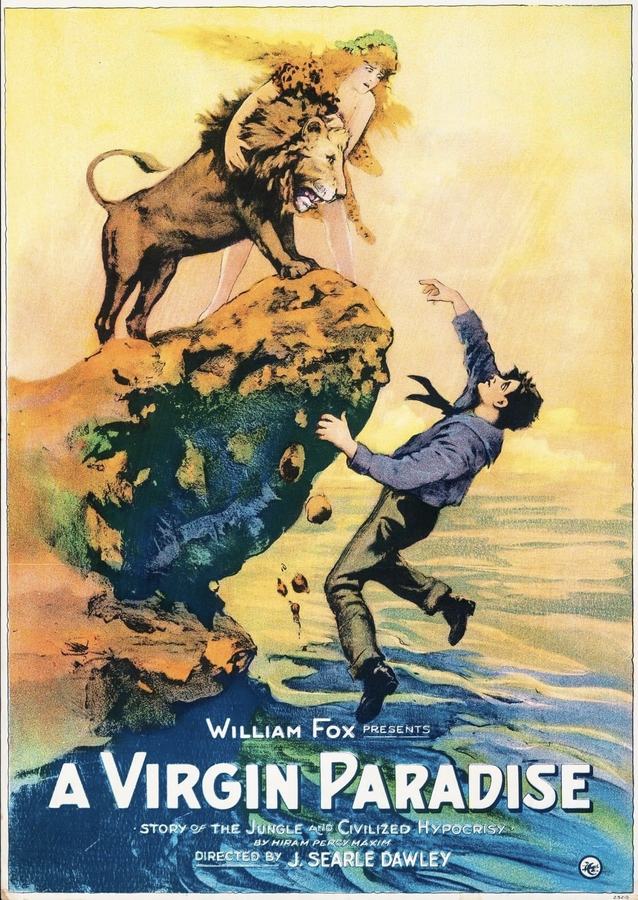
A palm-fringed Eden becomes a ballroom jungle in this 1917 hallucination of money, myth, and missionary regret.
There is a moment—somewhere between the fourteenth and fifteenth reel—when Pearl White’s character watches a Victrola’s brass horn inhale the air of a Chicago salon. The stylus rasps out a Hawaiian waltz; her pupils dilate as though the surf itself had been compressed into shellac. In that flicker, A Virgin Paradise confesses its thesis: modernity is only another island, ringed by different reefs, but just as eager to swallow the unwary.
Forget the nickelodeon précis you half-remember. Director Hiram Percy Maxim—better known for inventing the silencer—here amplifies rather than muffles, orchestrating a fever-dream of cultural collision. Pearl’s father dies not with a pious whisper but with the hallucinatory grandeur of a crumbling coral cross, toppled by a cyclone that arrives like Yahweh’s own exclamation point. Left behind is a child whose Bible is swollen with barnacles, her only catechism the scuttle of hermit crabs.
Enter the salvage schooner Eclipse, its hold reeking of copra and desperation. A solicitor—played by Alan Edwards in a Panama hat so white it seems phosphorescent—brandishes parchment that decrees Pearl heiress to the “Great Southern Guano & Transit Co.” The irony is mineral-rich: bird-droppings fertilize her future, excrement underwriting opulence. From this point, the narrative pivots on the axis of a fairy-tale yet smells of ledger ink: a reverse Tarzan where the jungle innocent is caged inside trousseaus and stock portfolios.
Cinematographer Lewis Sealy (also essaying the ship’s doctor) bathes the island in over-exposed whites, the frame blistering at its edges as though the emulsion itself suffers sunstroke. Once the story relocates to Chicago, the palette chills to gun-metal and absinthe. Intertitles—lettered on what looks like dried banana frond—bleed sepia ink, a tactile reminder of the tropical rot money attempts to mask.
Grace Beaumont, as Pearl’s governess-cum-couturier, drapes her charge in organdy that resembles layers of bleached coral skeleton. The costume becomes metaphor: each ruffle a reef, each bustle a barrier island buffering the girl from the predatory currents of ballroom sharks. When Pearl finally tears the skirt off during a climactic Charleston, the gesture lands less as rebellion than as molting—a hermit crab abandoning an outgrown shell.
Pearl White, serial-queen of The Perils of Pauline, here trades cliff-hanging for a psychological precipice. Her acting vocabulary is bodily, not histrionic: she tilts her head like a parrot parsing human speech, fingers fluttering as though testing foreign thermals. Critics of 1917 dismissed it as “wooden”; a century on, the minimalism reads as ethnographer’s honesty. She measures the gilded cage with the same wary gaze she once gave tide-pools.
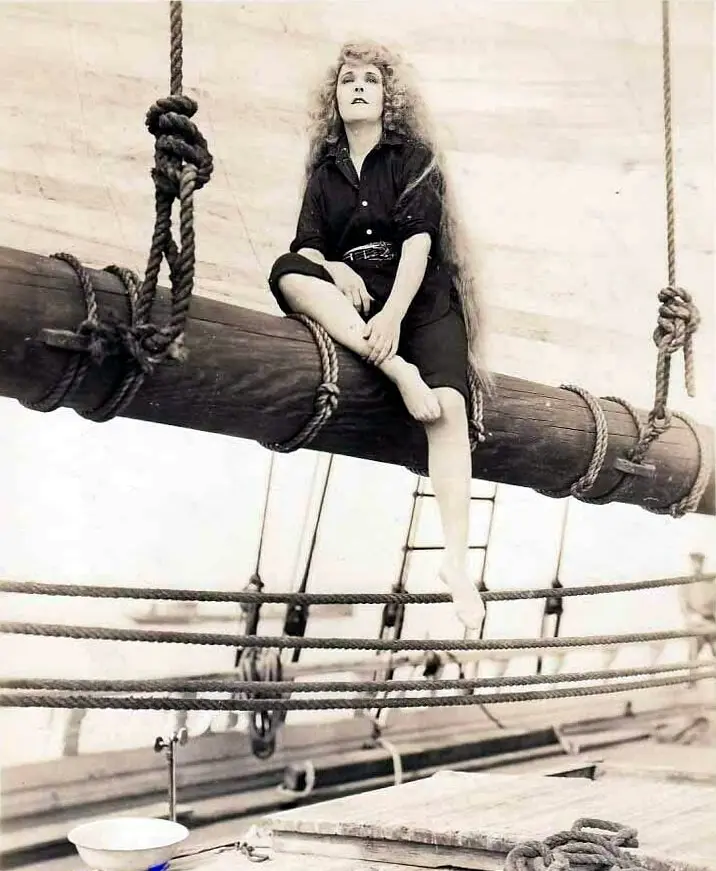
Note the dinner-party scene. A financier (Robert Elliott) uncorks champagne; Pearl’s nostrils flare at the sulfurous pop, the same flinch she showed when sulfur-crested cockatoos screamed over the atoll. Maxim lingers on that sensory rhyme—proof that memory is portable luggage, contraband no customs agent can confiscate.
Chicago is no mere backdrop; it is a carnivorous bazaar. Elevated trains roar like surf, arc lights bleach night to noon, and everyone speaks in the cadence of auctioneers. The film crosscuts between stock-exchange chalkboards and South-Sea waves, implying that ticker tape is only another seaweed strangling the unwary swimmer.
Henrietta Floyd’s turn as a tabloid reporter deserves archival resurrection. She circles Pearl with flash-pan cameras that belch magnesium smoke—an imperial cloud-chamber recording the split atom of innocence. Watch her eyes: they calculate column inches the way deckhands once gauged shark fins circling becalmed hulls.
Being a silent film, A Virgin Paradise weaponizes absence. The lack of island drums or urban ragtime forces us to furnish the soundtrack mentally, turning every viewer into complicit colonizer. When Pearl’s guardian attempts to “civilize” her via Chopin études, the intertitle reads: “She hears only reef-break in every arpeggio.” The line is Maxim’s manifesto: culture is untranslatable noise, and every empire eventually goes deaf to its own dissonance.
Cinephiles will detect glimmers of Paradise Garden’s Edenic cynicism and the shipwrecked fatalism found in Stranded. Yet Maxim’s tone is less melodramatic than Whitmanesque: he catalogs, he observes, he refuses to sermonize. Where Whom the Gods Destroy treats downfall as Greek tragedy, A Virgin Paradise treats it as bad botany—a hothouse orchid transplanted to a snowfield.
One might also invoke The Extraordinary Adventures of Saturnino Farandola for its picaresque globetrotting, but whereas Farandola lampoons colonial excess, Maxim mourns it through the optic of a child who never asked to be either martyr or monarch.
Post-colonial theorists will salivate over the guano subplot: fertilizer as literal bedrock of Western agriculture, the Global South reduced to excremental goldmine. Pearl’s inheritance is thus a Chekhovian gun: every harvested lump of bird-shit fires a round into the future of indigenous sovereignty. Maxim may not have used those exact phrases, but the visual evidence is indictment enough—shots of Black stevedores loading white sacks like reverse hourglasses measuring time stolen.
Feminist scholars can chart how Pearl’s body becomes contested territory. Men speak of her “purity” while trading her shares on the floor of the Grain & Shipping Exchange. The film anticips Laura Mulvey’s male gaze by six decades: cameras ogle not Pearl’s skin but the ledgers tattooed with her name, a fetishization of net worth rather than flesh.
For decades the only extant print hid in a Slovenian monastery—monks used the nitrate reels to bind fruit crates until a 2018 nitrate-pinching festival rescued them. The 4K restoration by the Chicago Film Society reveals textures obliterated in dupes: you can now count the pores on Pearl’s sunburned nose and read the stock prices chalked behind Charles Sutton’s financier. The tinting hews to archival notes—amber for island daylight, cerulean for Chicago dusk—though the sea-blue (#0E7490) night scenes glow with faint digital fireflies of grain.
Streaming rights are tangled; the guano fortune may have evaporated, but lawyers still circle like frigate birds. Your best bet is an upcoming Blu-ray from Kino Lorber or a repertory screening—often introduced by scholars who will over-pronounce “guano” with academic glee.
Alan Edwards delivers a masterclass in velvet-clad predation—his smile unfurls like a navigational chart of unplundered isles. Watch how he fingers the brim of that Panama: each twitch forecasts another hostile takeover. Mary Beth Barnelle, as Pearl’s rival heiress, weaponizes parasols like Neptune’s trident; her curtsey is a declaration of war wrapped in lace.
Among the ensemble, Hal Clarendon’s missionary cameo—seen only in flashback—achieves maximum haunt via a single close-up: eyes shining with the crazed certainty that salvation and exploitation are conjoined twins baptised in the same font.
The director’s engineering background surfaces in rhythmic montage: a telegraph key taps Morse that syncs, visually, with island woodpeckers; a stock-ticker spits tape that splices, metaphorically, into beach-grass. These mechanical symmetries warn that industrial modernity merely reproduces the same patterns it claims to transcend—a fractal imperialism.
Yet Maxim is no Luddite. The final shot—Pearl back on a schooner bound for who-knows-where—frames a steamliner smoking on the horizon. Progress and primitivism share the same ocean, each vessel trailing contrails of covetousness. The frame freezes before Pearl chooses a destination, leaving audiences suspended in the salt-spray of ethical ambiguity.
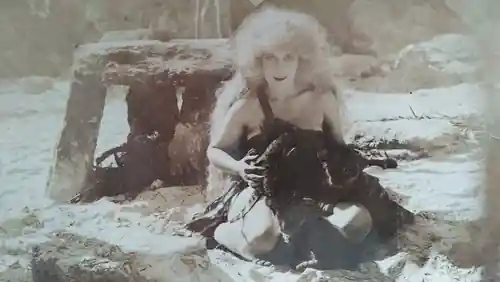
In 1917, Moving Picture World praised the “verdant splendor” but sniffed at the “implausible finances.” A Chicago Tribune writer carped that “Miss White is too American to pass for Polynesian,” a gripe that now reads as ethnographic cluelessness. Modern reviewers on Letterboxd rate it 4.2/5, lauding its eco-conscious proto-feminism—proof that social media can rehabilitate a film faster than you can say “guano futures.”
Though silent, the film cries for aural counterpoint. Try pairing it with the Island Songs of Max Richter or the glitchy polyrhythms from Nicolas Jaar’s Space Is Only Noise. Their electronic tides dovetail with Maxim’s oscillations between sea and city, innocence and invoice.
As billionaires purchase bunkers in New Zealand and extractive industries rebrand as “green,” A Virgin Paradise feels like tomorrow’s headlines wearing yesterday’s linen. It interrogates what we still call charity: is philanthropy merely the residue of theft painted in pastel? The film refuses the white-savior trope; Pearl’s fortune stems not from virtue but from geological accident, underscoring that capital is often a meteor strike away from morality.
Climate activists will note the guano subplot as ancestor to present-day phosphate wars. Every smartphone needs phosphorus; every Pacific microstate faces the same extractive gaze Pearl endures. Maxim’s flickering images thus become an ecological parable—an early warning that empire’s appetite mutates, never dies.
If this revives your hunger for colonial comeuppance, queue The Corner for urban entropy, or A Woman’s Honor for gendered dissection circa 1916. For sheer visual opulence, Medicine Bend offers frontier capitalism sans seagulls, while Macbeth supplies the Scottish blueprint for ambition that rots from within.
Prefer nautical fatalism? Stranded and Defense of Sevastopol deliver sea-salt and cannonade in equal measure. Seek something lighter? Two Kinds of Love explores inheritance via romantic farce, though its stakes feel quaint compared with guano-dust dynasties.
A Virgin Paradise is not a relic; it is a rip-current. It drags the viewer from atoll to exchange floor, from Sunday school to stock option, until you realize paradise was always virgin only in the sense that it had not yet been entered—in the ledgers, in the ledger-demain. Maxim’s silence leaves space for your own complicity to echo. When the lights rise, you walk out smelling imaginary sulfur and hearing distant surf, wondering which island you’re standing on—and who, precisely, died to fertilize your footprint.
IMDb —
1926
Community
Log in to comment.