DbcultAccessing Vault...
5.7/10
Senior Film Conservator
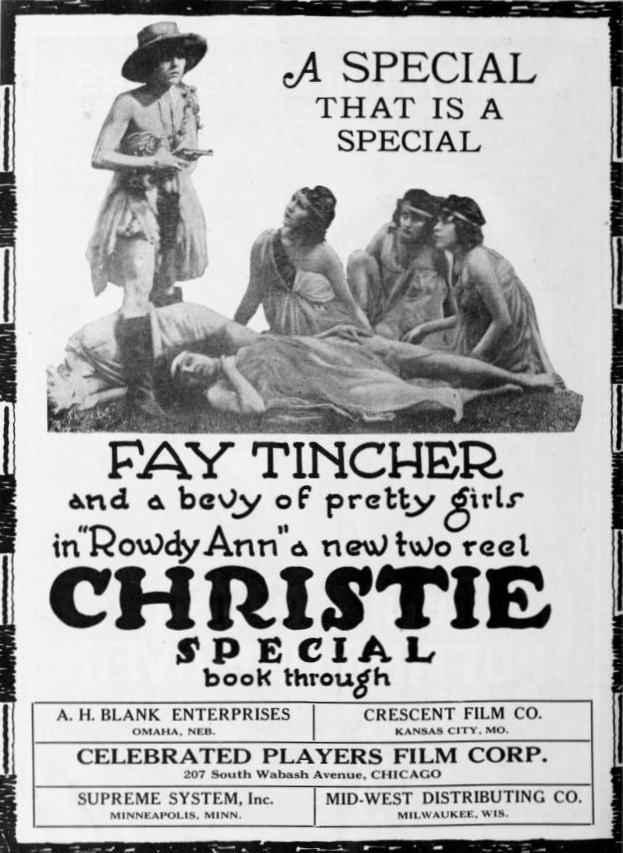
A definitive 5.7/10 rating for a film that redefined the boundaries of cult cinema. Rowdy Ann remains a cornerstone of transgressive art.
Step into the kinetic world of 1919, a pivotal moment in cinematic history, where the nascent art form was still discovering its voice, its power to entertain, provoke, and reflect the rapidly changing societal landscape. Amidst the burgeoning popularity of Westerns, a genre often characterized by its rigid archetypes and clear-cut morality, emerged a film that dared to playfully subvert expectations: Rowdy Ann. This forgotten gem, penned by the astute Scott Darling, offers a delightful and surprisingly nuanced exploration of gender roles, societal pressures, and the enduring spirit of individualism, all wrapped in a package of boisterous physical comedy and heartfelt sincerity. It’s a testament to the silent era’s capacity for sophisticated storytelling, even when delivered with a wink and a grin.
At its heart, Rowdy Ann is a narrative about transformation, or rather, the resistance to it. We are introduced to Ann, portrayed with magnetic vivacity by the inimitable Fay Tincher, not as a demure prairie flower, but as a force of nature. Ann is a cowgirl forged in the crucible of the Wild West, her temperament as untamed as the horses she rides and her spirit as fiercely independent as the landscape around her. Her 'rowdiness' isn't merely a character trait; it's a defining philosophy, a refusal to conform to the delicate sensibilities expected of women in her era. This raw authenticity, while endearing to some, proves a constant source of consternation for her parents, who harbor aspirations of gentility for their spirited offspring. The inciting incident, a rather memorable fisticuff with a local fellow named Hank, serves as the final straw, cementing their decision to dispatch Ann to an Eastern college. Their hope is that the sophisticated milieu of academia will somehow, miraculously, temper her wild spirit and sculpt her into a 'lady.'
This premise immediately sets up a delicious cultural clash, a thematic vein that Scott Darling mines for both humor and insight. It’s the frontier versus the finishing school, raw instinct against cultivated refinement. The silent film medium, relying on exaggerated gestures and expressive facial performances, is perfectly suited to convey the humor and pathos of Ann's predicament. Fay Tincher, a performer whose star shone brightly, if perhaps too briefly, in the silent firmament, imbues Ann with a captivating blend of strength, vulnerability, and an irrepressible zest for life. Her physical comedy is impeccable, allowing the audience to fully grasp the absurdity of her attempts to fit into a world that fundamentally misunderstands her.
Fay Tincher’s portrayal of Ann is, without hyperbole, the pulsating heart of this film. She doesn't just play Ann; she embodies her. From the initial scenes where Ann effortlessly dispatches her male counterparts with a casual flick of the wrist, to her bewildered and often riotous attempts to navigate the labyrinthine etiquette of college life, Tincher commands the screen. Her expressions are a masterclass in silent acting: a furrowed brow conveying confusion over a proper tea ceremony, a mischievous glint in her eye before initiating a prank, or a genuine look of exasperation at the restrictive corsets and voluminous skirts. It’s a performance that transcends mere slapstick, revealing a character grappling with her identity in the face of immense societal pressure. One might draw a parallel to the spirited heroines found in films like Such a Little Queen, where strong female characters navigate unfamiliar social terrains, though Ann’s defiance is arguably more overt and physical.
The supporting cast, including Earle Rodney, Katherine Lewis, Al Haynes, and Blue Washington, among others, provide excellent foils for Tincher's effervescent energy. Russ Powell and Patricia Palmer, as Ann's parents, convey a blend of exasperation and genuine affection, their desire for their daughter's 'improvement' stemming from love, however misguided. Eddie Barry and Harry Depp contribute to the comedic tapestry, often finding themselves on the receiving end of Ann's well-intentioned, if unorthodox, interventions. Blue Washington, an actor of remarkable presence in an era rife with racial segregation, adds another layer to the film's social fabric, though his role, typical of the period, is unfortunately constrained by the prevailing stereotypes. Nevertheless, the ensemble works cohesively to create a vibrant, believable world, even as Ann constantly threatens to upend it.
While undeniably a comedy, Rowdy Ann delves into surprisingly profound thematic territory. The film poses a fundamental question: what constitutes 'ladylike' behavior, and at what cost does one achieve it? Is it worth sacrificing one's authentic self on the altar of societal approval? Ann's journey is a microcosm of the larger societal debate about women's roles in the early 20th century, a period marked by the suffrage movement and a re-evaluation of traditional gender norms. Her struggle mirrors the broader societal tension between the desire for freedom and the pressure to conform. Scott Darling's script, while light-hearted, subtly critiques the artificiality of Eastern 'refinement' and champions the virtues of genuine character over superficial appearances.
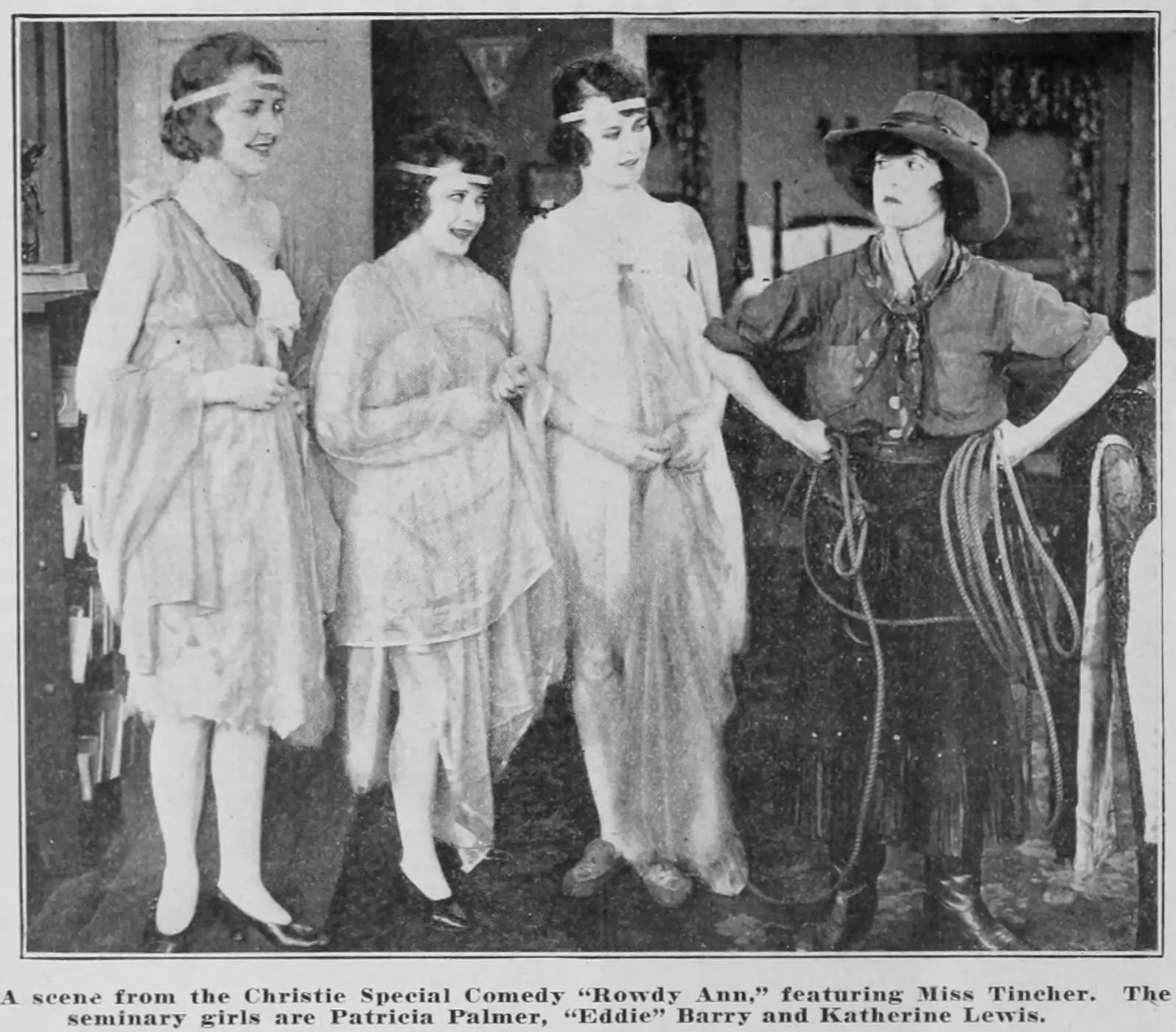
The humor often arises from Ann's inability (or unwillingness) to grasp the arbitrary rules of polite society. A simple dance becomes a wrestling match; a formal dinner devolves into a food fight. These aren't merely comedic set pieces; they are symbolic confrontations between two vastly different cultural paradigms. Ann's 'rowdiness' is not malicious; it's simply her way of interacting with the world, a direct and unvarnished approach that stands in stark contrast to the veiled niceties of college life. In a sense, Ann is a precursor to many strong female characters who would later challenge the cinematic status quo, echoing the rebellious spirit found in films like A Lady of Quality, which also explored women defying societal expectations in different historical contexts.
The narrative structure, credited to Scott Darling, is remarkably tight and effective for a silent comedy. Darling understood the power of visual storytelling and the necessity of clear character motivations. His script never loses sight of Ann's core identity, even as she navigates increasingly outlandish situations. He creates a believable arc, even if the 'transformation' is ultimately more about acceptance than complete change. Darling’s ability to craft engaging scenarios that highlight Ann’s unique personality is commendable. He doesn't just throw gags at the screen; he builds them from character, allowing Ann's inherent nature to drive the humor. This is a hallmark of good writing, regardless of the era or genre. His work here demonstrates a keen understanding of comedic timing and narrative pacing, crucial elements in a film devoid of spoken dialogue.
The visual language of the film also plays a crucial role. The contrast between the expansive, rugged landscapes of the West and the cramped, ornate interiors of the Eastern college is stark and deliberate. The cinematography, though perhaps not groundbreaking for its time, effectively captures the mood and setting. Close-ups are used sparingly but effectively to emphasize Ann's emotional states, while wider shots establish the comedic chaos she often instigates. The use of intertitles is witty and economical, providing just enough context without over-explaining the visual humor. This careful balance ensures that the film remains engaging and easy to follow, a testament to the skilled craftsmanship behind the camera.
In an era that also produced dramatic epics like Traffic in Souls and fantastical tales like The Golem, Rowdy Ann carved its own niche as a spirited, character-driven comedy. While it may not possess the grandiosity of some of its contemporaries, its charm lies in its relatability and its surprisingly progressive message. It implicitly argues that authenticity should be valued above artificiality, and that true strength comes from within, not from conforming to external pressures. This message resonates even today, making Rowdy Ann more than just a historical curiosity; it's a vibrant piece of cinematic heritage that continues to speak to modern audiences.
Comparing it to other Westerns of the period, such as The Border Legion or Wolves of the Border, highlights its unique approach. While those films often focused on law and order, heroism, and vast landscapes, Rowdy Ann turns its gaze inward, examining the personal journey of a woman who is, in her own way, as untamed as the frontier itself. It's a Western that transcends the genre's typical boundaries, using its setting as a backdrop for a universal story about identity and belonging. The film also shares a spiritual kinship with narratives of personal growth and societal integration, albeit with a comedic twist, much like the transformative journeys seen in films such as The Regenerates, where characters undergo significant personal change, though Ann's journey is arguably more about resisting change than embracing it wholly.
Ultimately, Rowdy Ann is a delightful and insightful viewing experience. It reminds us of the power of silent cinema to tell compelling stories with humor, heart, and a keen eye for human nature. Fay Tincher's performance alone is worth the price of admission (or rather, the click of a streaming link), a vibrant testament to an era of filmmaking that often gets overshadowed by its more celebrated successors. For anyone interested in early cinema, gender studies, or simply a good laugh, Rowdy Ann is a film that deserves to be rediscovered and celebrated. It's a joyful rebellion, a cinematic punch in the arm, and a gentle reminder that sometimes, the best way to be a 'lady' is simply to be yourself, no matter how 'rowdy' that self might be.
A Critic's Unfiltered Take.
IMDb —
1926
Community
Log in to comment.