DbcultAccessing Vault...
Cult Review
Senior Film Conservator
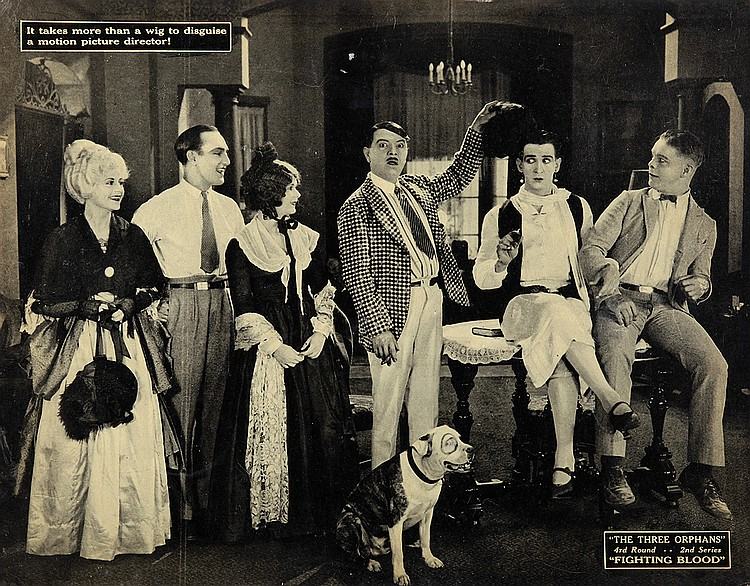
The year 1923 occupied a peculiar space in the evolution of American cinema, a time when the raw physicality of the silent screen began to marry more sophisticated narrative structures. In the center of this transition stood the 'Fighting Blood' series, a collection of shorts that transformed the gritty world of pugilism into a theater of character study and social commentary. The Three Orphans, one of the more poignant entries in this cycle, eschews the standard 'underdog-wins-the-belt' trope to explore a more vulnerable, domestic landscape. Here, the violence of the ring is merely a backdrop for a surprisingly tender, albeit comedic, search for belonging.
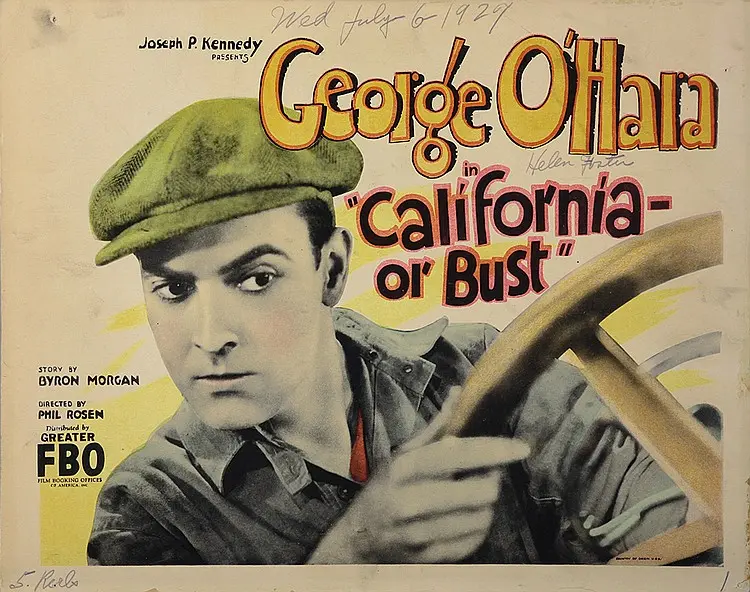
Gale Galen, portrayed with a charmingly stoic physicality by George O'Hara, is not your typical cinematic hero. He is a man defined by what he lacks rather than what he possesses. Despite the accolades of his former championships, Galen and his two companions—his manager and trainer—exist in a state of arrested development. They are 'orphans' not by age, but by circumstance, living in a masculine vacuum where the only language spoken is that of the punch and the parry. This lack of a 'mother' figure is treated not as a tragedy, but as a logistical and emotional deficit that requires a uniquely public solution.
The decision to advertise for a mother is a stroke of H.C. Witwer brilliance. Witwer, whose prose often bridged the gap between the sports page and the literary magazine, understood that the absurdity of the premise would allow for a rich tapestry of character actors to shine. Unlike the more somber moralizing found in John Redmond, the Evangelist, The Three Orphans leans into the situational irony of three tough men being overwhelmed by a 'deluge' of maternal hopefuls.
The sequence involving the applicants is a masterclass in silent film pacing. Each woman who enters the frame represents a different facet of 1920s social anxiety or aspiration. We see the stern disciplinarian, the flighty socialite, and the opportunistic charlatan. The kinetic energy of Al Cooke and Kit Guard provides the perfect comedic foil to O'Hara's more grounded presence. While O'Hara anchors the film with his leading-man gravity, Cooke and Guard navigate the chaos with a vaudevillian flair that keeps the narrative from drifting too far into the saccharine.
This parade of potential mothers serves as a fascinating contrast to the singular focus of a film like The Flame of Life, where domestic struggle is treated with operatic intensity. In The Three Orphans, the struggle is far more whimsical, yet it carries an undercurrent of genuine longing. The film asks: what does it mean to be 'mothered' when you are a man who makes his living through violence? The answer lies not in the service provided, but in the atmosphere created.
When Louise Lorraine appears on screen, the film’s tonal shift is palpable. Lorraine, a frequent collaborator in the 'Fighting Blood' series, possessed an screen presence that was simultaneously ethereal and grounded. Her interaction with the trio is the emotional heart of the film. She doesn't just 'win' the position; she colonizes their chaotic bachelor world with a sense of order and grace. This isn't the high-stakes drama of The Struggle Everlasting, but a more subtle victory of the spirit over the environment.
The chemistry between O'Hara and Lorraine is understated, adhering to the censorship and social mores of the time, yet it crackles with a mutual respect. In many ways, this film acts as a lighter companion piece to Round Two, continuing the development of Gale Galen from a mere fighter into a multifaceted human being. The direction by the uncredited but capable hands behind the series ensures that the boxing sequences—though secondary here—maintain the grit necessary to remind the audience of the world these men inhabit.
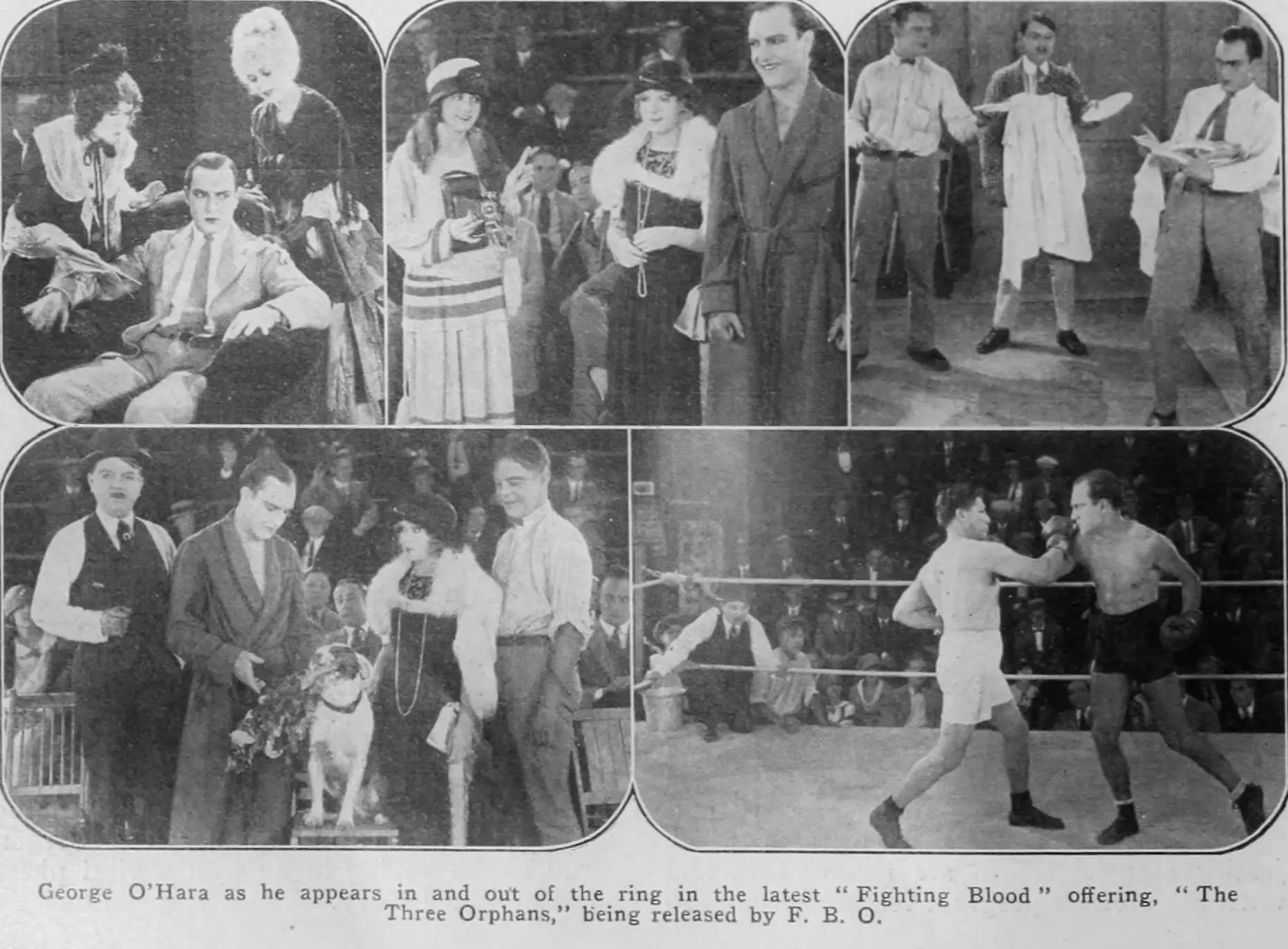
Technically, The Three Orphans utilizes the chiaroscuro lighting common in early 20s sports dramas to heighten the texture of the gym. The dust motes dancing in the light of the high windows, the sweat glistening on O'Hara's brow, and the cluttered, unkempt nature of their living quarters all serve to emphasize the need for a feminine touch. The visual storytelling is so robust that the intertitles almost feel like an afterthought, a testament to the era's peak silent-film grammar. We see the same attention to environmental detail in The Haunted Valley, though applied to a vastly different genre.
The editing is particularly noteworthy during the 'deluge' sequence. The quick cuts between the bewildered trio and the increasingly bizarre applicants create a rhythmic comedy that feels modern even a century later. It lacks the frantic, sometimes disjointed energy of Fellow Citizens, opting instead for a more structured, narrative-driven humor. This precision is what allowed the 'Fighting Blood' series to stand out in a crowded market of silent shorts.
To understand The Three Orphans, one must look at how it treats the concept of the 'orphan.' In Jack, the orphan is a figure of pity and eventual triumph. In this film, the orphanhood is a self-imposed state of isolation that can only be cured through community. The film subtly critiques the hyper-independent 'lone wolf' mentality of the athlete. By seeking a mother, Galen and his friends are acknowledging that even the strongest men are incomplete without the foundational structures of family.
When compared to The Vengeance Trail, which deals with the harsh realities of the frontier, The Three Orphans feels like a cozy urban fable. It doesn't seek to challenge the viewer's morality, but rather to soothe it. Even the more 'scandalous' elements found in films like Girls Don't Gamble are absent here, replaced by a wholesome, almost Dickensian warmth. It shares a certain lightheartedness with A Flirt There Was, yet it possesses more 'muscle' due to its boxing pedigree.
The enduring appeal of George O'Hara as Gale Galen lies in his ability to portray a man who is both a physical specimen and a vulnerable soul. This duality was rare in the early 20s, where characters were often archetypes of either pure virtue or unmitigated villainy. The 'Fighting Blood' series, and The Three Orphans in particular, paved the way for the more nuanced sports dramas of the 1930s and 40s. It lacks the cynicism of later noir-inflected boxing films, offering instead a hopeful vision of how sports and domestic life can coexist.
Even when compared to international efforts like the Danish Konkurrencen, the American sensibility of 'The Three Orphans' shines through. It is obsessed with the idea of 'making it'—not just in the ring, but in the parlor. It’s about achieving a level of respectability that matches one's physical achievements. This drive for social ascent is a recurring theme in Witwer’s work and is perfectly encapsulated in the trio’s quest.
While it may not have the epic scope of Lady Mackenzie's Big Game Pictures or the high-society intrigue of The Grey Parasol, The Three Orphans remains a vital piece of silent cinema history. It captures a moment when the film industry was discovering that audiences wanted more than just spectacles; they wanted stories that mirrored their own desires for connection and family, even if those stories were told through the lens of a boxing manager and his prize fighter.
The film concludes with a sense of 'fair enough'—a nod to the sentiment in Fair Enough—where justice is served not through a gavel, but through the settling of a household. For Gale Galen, the greatest victory wasn't a knockout in the tenth round, but the quiet presence of a woman who finally made his house a home. It is a charming, essential watch for anyone interested in the intersection of sports, comedy, and the early American social fabric. In the grand lineage of silent shorts, this one punches well above its weight class, proving that even the toughest 'orphans' eventually need a place to belong.
IMDb —
1924
Community
Log in to comment.