DbcultAccessing Vault...
Cult Review
Senior Film Conservator
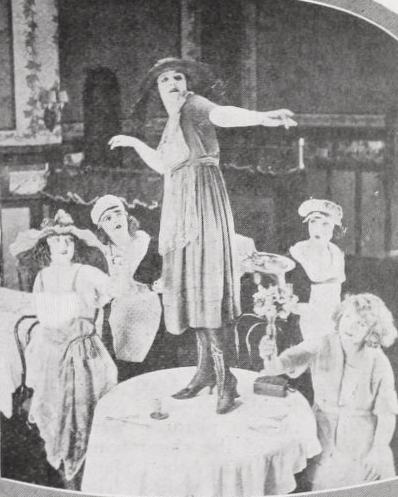
The first time I clocked Eddie Boland’s panicked eyebrows in Running Wild I spat coffee on the keyboard—this 1927 one-reel rocket is what happens when Kafka decides to write a Marx Brothers scenario and Buster Keaton volunteers to stub his toe in every frame.
Picture a metropolis that never existed outside the fever dream of a set designer who just discovered diagonals: fire escapes zig-zag like broken zippers, laundry lines semaphore gossip across alleyways, and the cops wear helmets polished to such a preposterous sheen you could shave in their reflection. Into this pop-up labyrinth bolts our protagonist, a nobody whose pockets contain only three cents and a tram ticket stub. He doesn’t know it yet, but the entire urban orchestra is warming up to crown him king of a fortune so large it needs its own zip code.
What follows is a chase ballet scored by the wheeze of a player piano and the occasional slide whistle, cut together with the rhythmic precision of a Swiss watch having a panic attack. Directors Robert F. McGowan and Charles Oelze understand that silent comedy ages best when it treats plot like a trespasser: acknowledge it, then slam the door on its fingers.
So we ricochet from rooftop to rooftop, across fruit carts that explode into modern-art compost, through a police station where every desk drawer disgorges another breed of banana-peel anarchy. Meanwhile the real story—an inheritance so baroque it could bankroll a small moon colony—waits in the wings like a cat that already owns the house.
When the gag finally pays off and Boland’s character is ushered into the marble mausoleum he’s supposedly meant to occupy, the film flips from slapstick to satire without bothering to signal the turn. Servants line up like dominoes in white gloves; a butler intones the family name with the gravity of a cathedral bell; somewhere in the background a chandelier trembles, sensing the cosmic prank. Our hero, still sporting the soot of the chase, runs his finger along a mahogany table and leaves a smear that looks suspiciously like a question mark.
That smear is the entire movie in microcosm: the stain of the proletariat on the antimacassar of inherited privilege. One moment he’s a statistic, the next a philanthropist whose first charitable act is to purchase the city block he was sleeping behind the night before.
Yet the film refuses to linger in the ballroom. Before the footmen can finish bowing, we’re back on the pavement, because the only thing funnier than sudden wealth is the velocity with which it can turn a man into a fugitive again. The final reel stages a reversal so delirious it feels like the celluloid itself is snickering: the estate’s creditors, like vaudeville gargoyles, appear out of trapdoors to repossess the dream. Boland vaults out a casement window, past marble lions that now seem to smirk, and the chase reboots—only this time he understands the punchline.
Harold Adkins, as the chief flatfoot, has the gait of a man who polishes his own kneecaps; every stride arrives a half-second early, as though gravity owes him interest. Gertrude Gamet plays the stenographer whose typewriter becomes both weapon and Greek chorus, hammering out exposition in Morse-code cadenzas. The Vanity Fair Girls drift through like confetti that’s learned to tap-dance, and when they shimmy in unison the frame itself seems to blush.
But it’s Boland’s rubber-jointed bewilderment that anchors the chaos. His face is a living double-take: eyebrows negotiate upward, mouth files a dissenting opinion, and the eyes—those wide, conspiratorial eyes—plead with the audience to confirm that yes, this is all as ridiculous as it looks.
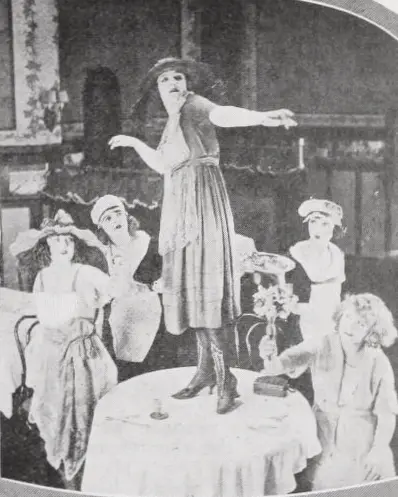
Compare him to Douglas MacLean in The Mysterious Mr. Browning, where the humor is brittle and the stakes are noir-adjacent. Running Wild opts for custard-pie nihilism: nothing matters except the next pratfall, and because nothing matters, everything is permitted.
Watching it today feels like eavesdropping on the moment American comedy learned to wink. The setups pay off before your brain can finish the math; the punchlines arrive stutter-stepped, syncopated, like jazz played on a xylophone made of trash-can lids. There’s even a proto-meta gag: a title card interrupts a foot chase to advertise “a brief intermission for breath,” followed by two seconds of black screen and the sound of nothing—an avant-garde joke ninety years ahead of its audience.
Cinematographer Glen MacWilliams lenses poverty like a glitter bomb; every puddle reflects neon that shouldn’t exist yet, every soot flake looks strategically placed. The result is a universe that runs on cartoon physics but feels tactile enough to bruise your knuckles.
If you crave a darker meditation on inheritance, stride over to The Price of Possession, where manor-house corridors echo with ancestral guilt. Running Wild answers that gloom with a raspberry, then pickpockets your wallet for good measure.
Modern comedies overdose on quip and snark, terrified of sincerity; this 1927 firecracker proves you can be earnest and absurd simultaneously. Beneath the pratfalls lurks a sly manifesto: identity is a coat you can swap on the run, capitalism is a banana peel wearing a tuxedo, and the American Dream is merely a chase scene that ends when you trip over your own shoelaces and discover you’ve inherited the shoe store.
Restoration houses should prioritize this print the way ER doctors triage a cardiac case. The surviving 16 mm dupe is flecked with emulsion rot, but even the scratches seem choreographed—each vertical scar looks like a lightning bolt hurled by a vengeful projectionist.
Stream it beside Andy’s Dancing Lesson for a double bill of kinetic innocence, or pair it with Denn die Elemente hassen if you want to chase your existential comedy with Germanic doom. Either way, keep the pause button handy; you’ll need freeze-frame time to count the gags stuffed into each cubic inch of celluloid.
Final whisper: stay through the credits—yes, a 1927 short with credits—because the last title card delivers a kicker so dry it could desiccate a martini. The film doesn’t end; it simply escapes, vaulting over the horizon while you’re still laughing at the dust cloud it left behind.
Verdict: a caffeinated squirrel of a movie that gnaws through the cage of propriety and leaves acorns of chaos in your cerebellum.
IMDb 6.9
1932
Community
Log in to comment.