DbcultAccessing Vault...
3.2/10
Senior Film Conservator
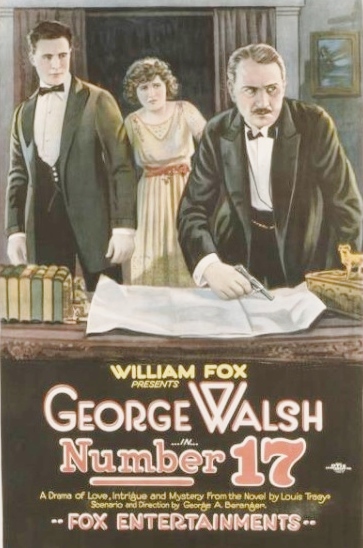
A definitive 3.2/10 rating for a film that redefined the boundaries of cult cinema. Number 17 remains a cornerstone of transgressive art.
Watch how cinematographer Jack MacKenzie tilts his camera toward an El train slicing across Baxter Street: the sparks showering onto wet asphalt become a meteor shower above a microcosm that never sees daylight. In this single shot, Number 17 inscribes New York’s Chinatown as a palimpsest—every neon character painted over another, every brick absorbing dialects the way blotter paper drinks absinthe. The film’s geography is not documentary but fever-chart: alleys elongate when footsteps echo, doorways shrink when pistols emerge, and the harbor exhales fog like a dragon weary of its own mythology.
Jack Newton’s Theydon carries the hollow gaze of a man who has mistaken adrenaline for vocation; his shoulders twitch as though typewriter keys still rattle beneath his skin. Opposite him, Lillian Beck never merely sings—she exhales smoke that curls into calligraphy, spelling refugee addresses the immigration officers will never read. Their duet of glances inside the tea-house, accompanied only by the clack of mah-jongg and the hiss of kerosene lamps, achieves the hush of conspirators who suspect love is another extortion racket.
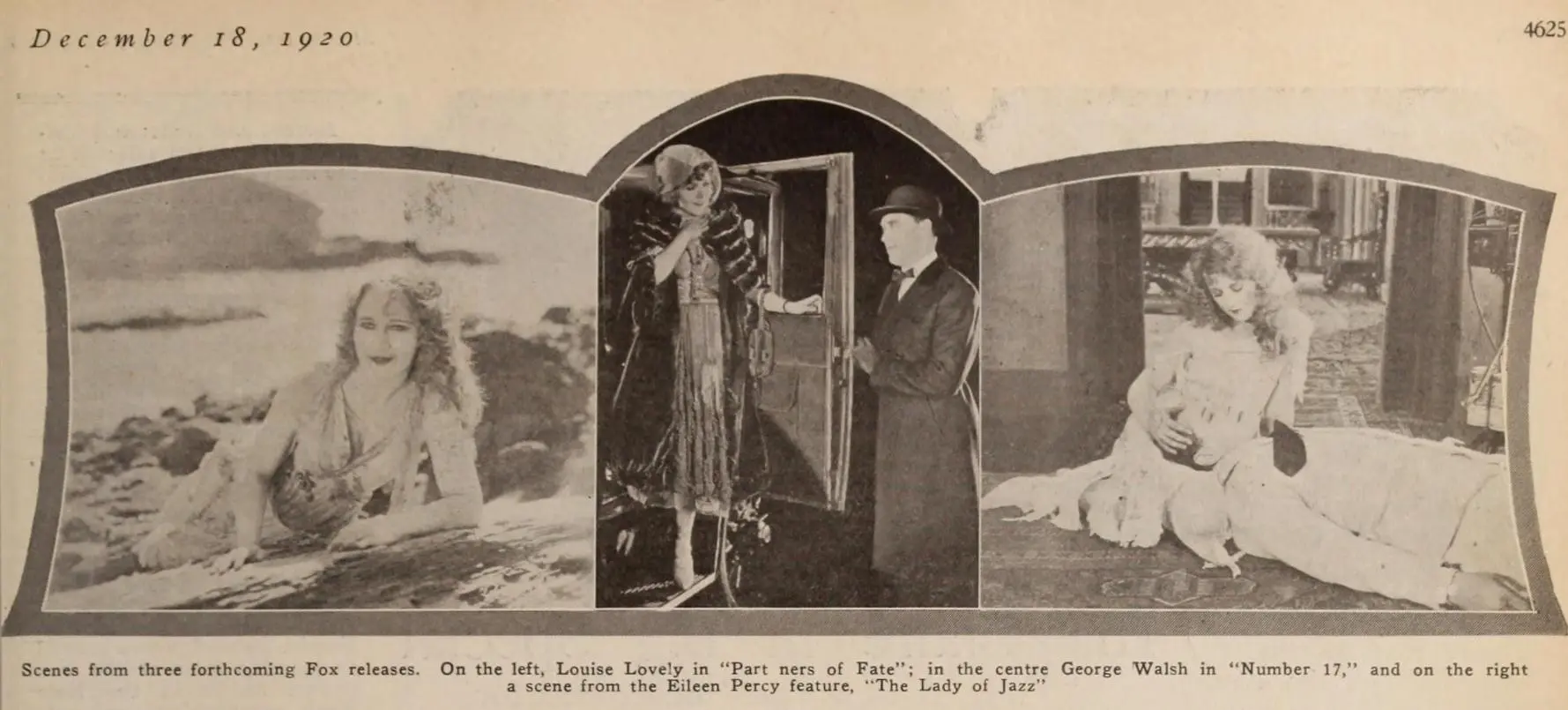
Louis Wolheim, face cratered like a bombed cathedral, plays Green Ribbon overlord Fenner with the languor of a man tickled by mortality. Every syllable he utters seems scraped off a rusted bulkhead; when he offers Theydon a cigarette soaked in something harsher than tobacco, the gesture carries the solemnity of communion administered by Satan.
Because the film is mute, the city’s machinery occupies the frequency of imagination: the rattle of rickety dumbwaiters becomes timpani, the snap of a shutter becomes a guillotine. Intertitles, sparse and elliptical, arrive like telegrams from a war-front: “He traded his byline for a bullet—both spelled ending.” Such austerity weaponizes negative space; the absence of dialogue forces you to listen to the grain of the image, the pockmarks of 1928 emulsion flickering like distant artillery.
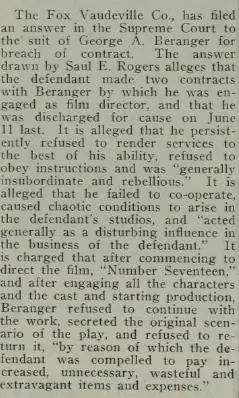
Director George Beranger stages a ten-minute pursuit through a subterranean network of opium furnaces and fish markets in what feels like one breath. Note how the camera pirouettes around hanging eels, their silver bodies strobe-flashing every time a pursuer’s lantern swings—turning the chase into a zoetrope of culpability. The moment Theydon stumbles into a hop den where bodies sprawl like discarded marionettes, the lens tilts thirty degrees, as though morality itself has capsized.
Color-tinted release prints survive in scattered archives: night sequences steeped in arsenical blue, interiors bruised with amber. These chromatic intrusions foreshadow the moral fadeouts—faces that begin in flesh tone dissolve into sulfurous yellow whenever a pact is sealed. The motif crystallizes when Beck’s chanteuse, wrapped in a robe embroidered with phoenixes, stands before a dressing-room mirror. Her reflection, tinted cyan, appears to abandon her body, suggesting the self already negotiating its price.
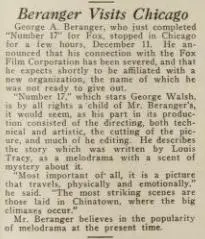
Modern viewers will trace a bloodline from this Chinatown fever dream to Without Honor’s desert motel standoffs and to the neon-soaked back-alleys of Se7en. Yet Number 17 carries a proto-postmodern awareness: the awareness that the observer pollutes the scene simply by watching. Where later noirs console us with cynical detectives who retain a shard of innocence, this silent relic refuses such anesthesia.
“The city never lies; it merely waits for you to lie to yourself.” So reads an intertitle, superimposed over a shot of the Manhattan bridge at dawn, its girders clawing through fog like the ribcage of a leviathan who has swallowed every immigrant story.
Mildred Reardon’s turn as Molly, the streetwise postal runner, smuggles a feminist undertow beneath the testosterone squall. Watch her unspoken alliance with Beck’s chanteuse: cigarettes traded behind pillars, glances that tally bruises, a pact sealed not in words but in synchronized exhalations. Their solidarity flickers only briefly—Molly’s throat is marked by a jade brooch shaped like a broken coin, signaling the price of sororal loyalty in a market run by men who commodify breathing space.
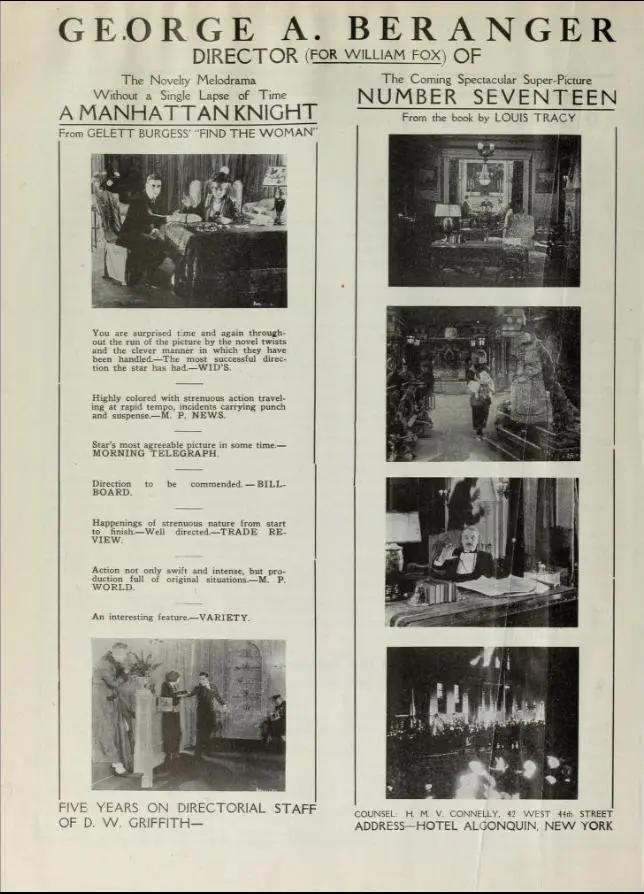
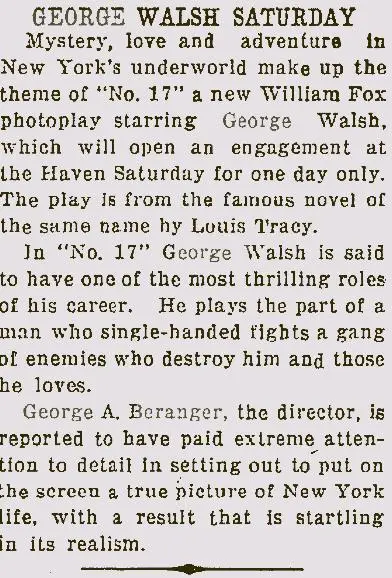
View the warehouse climax with headphones on; your brain supplies the score—dock horns, gull shrieks, the slow crescendo of a tugboat engine. Beranger’s montage alternates between ceiling fans that slice shadows into prison bars and close-ups of Theydon’s pupils dilating as he realizes the exit door is padlocked from the inside. The camera’s final pull-back reveals the skyline through a broken window: daylight barges in like a detective too late for confession.
Regional censors lopped off two minutes of opium-den languor, believing the sight of horizontal Chinese bodies might infect white audiences with lassitude. What remains is an ethnographic vacuum, a lacuna that hisses louder than any excised footage. The absence teaches us that prohibition never targets the act; it targets the witness who might decode the empire’s complicity.
Only a 35 mm nitrate print, scorched at the edges, survives at MoMA; the aroma of vinegar syndrome clings to its canister like the ghost of Chinatown gutters. Every projection risks further cremation, so festival screenings feel like séances where audiences hold breath to keep the film from turning to ash. Yet this fragility intensifies its mystique: you are not watching a movie; you are assisting at the last heartbeat of a civilization that gambled its stories on silver halide.
Compare the fatalistic geography of A Yellow Streak, where colonial corridors entrap their cowards, to the way Number 17’s alleyways fold inward like origami of doom. Or juxtapose the moral vertigo of Jealousy’s love triangles with Theydon’s dawning horror that every story angle is already mortgaged to the highest bidder. What distinguishes Beranger’s work is its refusal to grant catharsis: when the police wagons finally howl toward the pier, the camera stays with a stray cat lapping spilled soy sauce—an indifferent cosmos gnawing at the leftovers of human melodrama.
To call Number 17 a mere curio is to mistake a bullet hole for ornament. In its 63 brittle minutes, the film distills the quintessential noir epiphany: the moment you believe you are surveying the abyss, the abyss has already drafted you into its payroll. Seek it out at any rep cinema brave enough to risk nitrate; let the projector rattle like a Thompson gun, let the emulsion burns flicker like dying fireflies. Walk home under sodium streetlights humming Ligeti, and notice how every doorway now wears the phantom number 17, waiting for the next observer arrogant enough to claim he’s only passing through.
IMDb 6.8
1925
Community
Log in to comment.