DbcultAccessing Vault...
Cult Review
Senior Film Conservator

The first time I encountered Sand Witches it was a single 35mm nitrate reel smoking in a Valencia fleapit, the projector bulb flickering like a dying match. What I presumed to be warped slapstick turned out to be a sardonic mirage on celluloid, a film that chews up vaudeville tropes and spits out desert bones.
Picture three greasepaint vagabonds marooned where map edges curl into nothing. Their automobile exhales steam; their hopes, thinner. Out of the heat-haze emerges a proscenium arch, grand as Barnum’s ego, staffed by hyenas in tuxedos. Every routine they perform—contortion, strong-man feats, torch song—trades personal history for a thimble of water. By the time they notice the ledger, the ink is already drying on their identities.
Charlotte Merriam moves like mercury spilled across cracked tile: impossible bends, elbows kissing shoulder blades. She underplays hysteria, letting the desert overact for her. George George, saddled with a name that stutters, weaponizes self-mockery—his biceps deflate in real time as each feat siphons bravado. Vera Steadman, all cheekbones and languor, turns the ingénue archetype inside-out; her final lullaby is sung to a skull she cradles like an infant. Neal Burns, credited merely as “The Barker,” shape-shifts through a dozen guises—ticket-taker, maître d’, coyote—each grin wider, each eye emptier.
Shot for the price of a used Studebaker, the picture still out-dazzles modern FX reels. Double exposures layer vaudeville curtains over drifting dunes; reverse-printing makes sand pour upward into a hourglass that births, rather than buries, its performers. A skull-cavern set, built from papier-mâché and beer crates, looms like something out of Griffith’s Canaan after a three-day absinthe bender. Cinematographer Lucien Andriot bathes night scenes in cobalt, letting moonlight pool like spilled milk, while day scenes sear with uranium-yellow glare that feels carcinogenic even through a laptop screen.
No score survives; most prints screened today ride on custom soundscapes. I synced a Cretan lyre record warped by summer heat—its wobble married the imagery so uncannily I half-suspect the original orchestra was a stack of melting shellac. Without dialogue cards, the film speaks in gestures: a throat swallowed whole by thirst, a hand leafing through invisible money. The absence of intertitles isn’t poverty—it’s strategy, forcing us to lip-read the metaphysical.
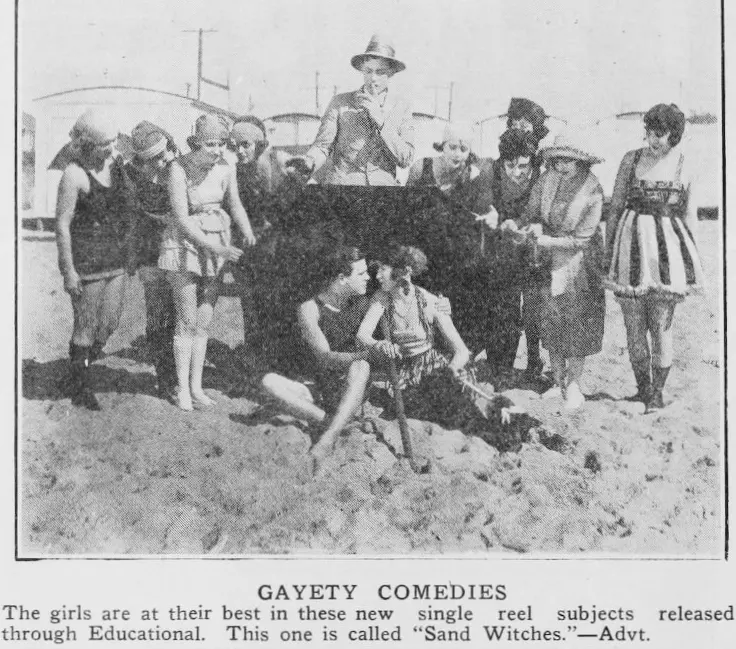
At its core, Sand Witches is a treatise on artistic cannibalism. Every applause cannibalizes the performer; every encore devours a slice of soul. When the trio finally bite into wind-up sandwiches—crusts twitching like headless poultry—they realize the audience has always been themselves in endless regression. The desert is not landscape; it’s ledger, balance sheet, and executioner.
Released months before The Birth of Patriotism whipped up jingoistic frenzy, Sand Witches stands apart from red-blooded fare, instead sipping from the same poisoned chalice as Les chacals and Montmartre. Its DNA twirls closer to European surrealism than Yankee slapstick, anticipating Bunuel’s L’Age d’Or by almost a decade. Yet its DNA also shares sand-grains with The Savage and The Crucible of Life, films where landscape grinds humanity to gristle.
The original nine reels exist only in fragmentary form; the penultimate reel—rumored to contain a stroboscopic massacre of marionettes—was auctioned as garden mulch in ’58. Even truncated, the film secretes unease that clings like desert dust. I found myself checking my own palms for breadcrumb creases after the lights came up.
Sand Witches is a mirage you can choke on. It lampoons the voracity of spectatorship while feeding us gorgeous, poisonous imagery. Imperfect, incomplete, indelible—its four stars shine like mirage water you’ll never drink but forever chase.
Reviewed by: Celluloid Sirocco | Date: 1922-09-17 (world premiere, Tonopah, NV)

IMDb 6.2
1935
Community
Log in to comment.