DbcultAccessing Vault...
Cult Review
Senior Film Conservator
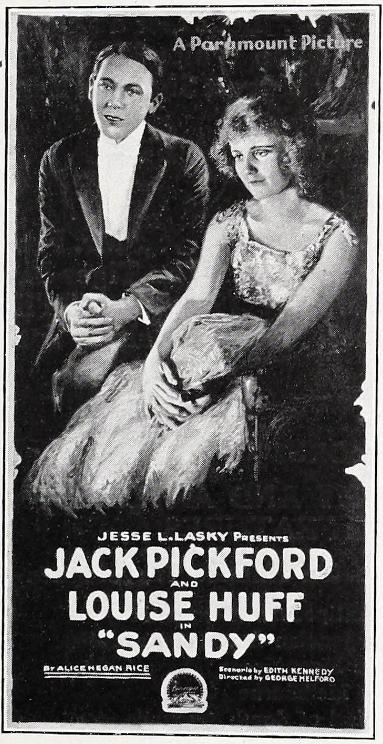
In the vast, often overlooked archives of early cinema, there exist cinematic gems that, despite their age and the absence of spoken dialogue, continue to resonate with universal human experiences. One such treasure is the 1918 production, Sandy. Far from being a mere historical curiosity, this film, adapted from Alice Hegan Rice’s novel, offers a poignant and often delightful exploration of destiny, ambition, and the enduring power of a love rekindled. It’s a testament to the storytelling prowess of its era, capturing nuanced emotions and complex relationships through the sheer artistry of visual performance and well-crafted intertitles. For those accustomed to the sonic bombardments of contemporary blockbusters, delving into a silent film like Sandy might initially feel like a journey into an alien landscape. Yet, it’s precisely this quietude that allows for a deeper, more meditative engagement with its narrative, inviting viewers to truly observe the intricate dance of expressions and gestures that convey volumes.
The narrative unfurls with the quintessential immigrant's dream, a motif that has perpetually stitched itself into the fabric of American mythology. We meet a spirited Scots-Irish lad, his eyes alight with the promise of a new world, embarking on a perilous transatlantic voyage to America. This journey, a crucible for many, becomes for him a stage for an unexpected romantic overture. He encounters a luminous young woman, and amidst the shared vulnerability of the sea, a tender, nascent affection blossoms. Their connection, fragile yet potent, appears destined for a future woven together. However, as is often the cruel twist of fate in such narratives, the chaotic maelstrom of arrival at the bustling port severs their burgeoning bond. They are swept apart, two solitary figures swallowed by the vast, indifferent maw of a new continent, each left with a whisper of what might have been. Years, not merely months, but a significant span of life, elapse. Our protagonist, through sheer grit, industry, and perhaps a touch of luck, has not merely survived but thrived. He has carved out a respectable, even prosperous, existence for himself in a quiet Kentucky town, building a life that, while stable, perhaps lacks the vibrant spark of that youthful sea-born romance. It is here, in the quietude of his established world, that destiny, with its peculiar sense of timing, decides to play its hand again. The very girl from his past, not a faded memory but a living, breathing echo, reappears. This reunion is not merely a pleasant surprise; it’s an emotional earthquake, igniting a conflagration of old feelings that threaten to upend the careful equilibrium of his present. Sparks, undeniably, fly, but with them come complications, a tangled web of past longing, present realities, and the societal expectations that invariably accompany a man of his standing.
In a medium devoid of spoken words, the burden of narrative and emotional conveyance falls squarely upon the shoulders of its performers. Sandy is fortunate to boast a cast whose understanding of this unique challenge is palpable. George Beranger, in the titular role, delivers a performance that is both robust and remarkably nuanced. His journey from a hopeful, somewhat naive immigrant to a settled, successful man is charted not through dialogue, but through subtle shifts in posture, the deepening lines around his eyes, and the evolving confidence in his stride. Beranger avoids the theatrical over-exaggeration sometimes associated with silent film acting, opting instead for a more restrained, yet deeply expressive, portrayal. His initial youthful exuberance on the ship, the quiet longing in his eyes after the separation, and the complex mixture of surprise and rekindled affection upon reunion are all communicated with an admirable economy of gesture. One might draw parallels to the earnest portrayals seen in films like Young America, where the vitality of youth and the promise of a burgeoning nation are similarly embodied through the raw energy of its leads.
Julia Faye, as the object of Sandy’s affection, brings a luminous quality to her role. Her character, though potentially overshadowed by Sandy’s journey of prosperity, maintains a quiet strength and an inner grace that shines through. Faye’s expressions are a masterclass in silent film acting – a slight tilt of the head, a hesitant smile, or a fleeting shadow across her features speak volumes about her character’s resilience and her own enduring feelings. Her chemistry with Beranger is undeniable, a palpable current that electrifies their scenes together, making their initial parting all the more heartbreaking and their eventual reunion all the more triumphant. The supporting cast, including the inimitable Jennie Lee, J. Parks Jones, and Jack Pickford, provide a rich tapestry against which the central romance unfolds. Jennie Lee, often a formidable presence in early cinema, undoubtedly brings a certain gravitas or warmth to her character, grounding the more romantic flights of fancy. Jack Pickford, known for his youthful charm, likely infuses his role with a dynamic energy that complements the leads. The ensemble’s collective effort ensures that the world of Sandy feels lived-in and authentic, a bustling Kentucky community where past and present collide. This collaborative spirit, where every actor contributes to the visual narrative, is a hallmark of the era, reminiscent of the intricate social dynamics explored in films like The Web of Desire, where multiple character arcs intertwine to create a compelling whole.
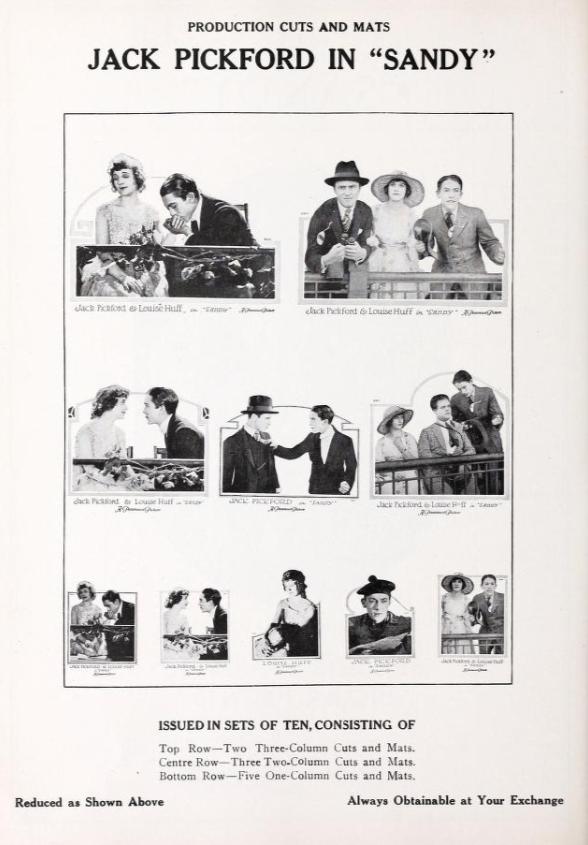
Sandy, at its core, is a romance, but it’s also a thoughtful meditation on several profound themes that transcend its specific era. The most prominent is, of course, the American Dream. Sandy’s journey from a hopeful immigrant to a prosperous Kentuckian embodies the very essence of this ideal – the belief that through hard work and determination, one can achieve success and upward mobility in a new land. His initial struggle and subsequent triumph resonate with countless stories of immigrants who sought fortunes and forged new identities on American soil. This narrative arc, focusing on individual ambition and societal integration, finds echoes in films like Rich Man, Poor Man, which similarly grapples with class distinctions and the pursuit of prosperity, albeit often with a more critical eye towards its moral implications.
Another significant undercurrent is the exploration of fate versus free will. The initial separation of Sandy and his beloved feels like an act of cruel chance, an arbitrary parting orchestrated by external forces. Yet, their eventual reunion, years later, suggests a powerful, almost mystical, pull of destiny. Did they actively seek each other out, or were they merely instruments of a larger, predetermined plan? The film subtly invites viewers to ponder this age-old philosophical question, lending a layer of depth to what might otherwise be a straightforward romantic drama. This interplay of chance and choice, often dictating the course of lives, is a recurring theme in many narratives of the period, reflecting a societal fascination with the unseen forces that shape human existence.
The film also touches upon the complexities of societal integration and the challenges of maintaining personal identity amidst newfound prosperity. Sandy's success likely brings with it a new set of social expectations and responsibilities, potentially creating a chasm between his past self and his present persona. The reappearance of his past love forces him to reconcile these different facets of his identity, prompting questions about authenticity and the sacrifices made on the path to success. This internal conflict, though rendered silently, is powerful, reminding us that external achievements don’t always smooth over internal landscapes. The moral compass guiding characters through challenging circumstances is a theme often explored in films like God's Country and the Woman or The Law of the North, where characters navigate their personal desires against the backdrop of societal or natural laws.
While the director remains often unsung in the annals of early cinema criticism, their role in shaping the visual language of Sandy is paramount. The film demonstrates a keen understanding of how to use composition, editing, and staging to convey emotion and advance the plot without the crutch of dialogue. The visual rhythm, the careful framing of characters, and the judicious use of close-ups all contribute to an immersive experience. The pacing, a critical element in silent film, is handled with a deft touch, allowing moments of tender intimacy to breathe while propelling the narrative forward with appropriate urgency when needed. This mastery of visual storytelling is what elevates many silent films beyond mere pantomime, transforming them into a sophisticated art form in their own right. One can observe similar directorial sensibilities in other character-driven silent dramas, where the focus is on psychological realism rather than grand spectacle, ensuring that the audience connects deeply with the characters' inner lives.
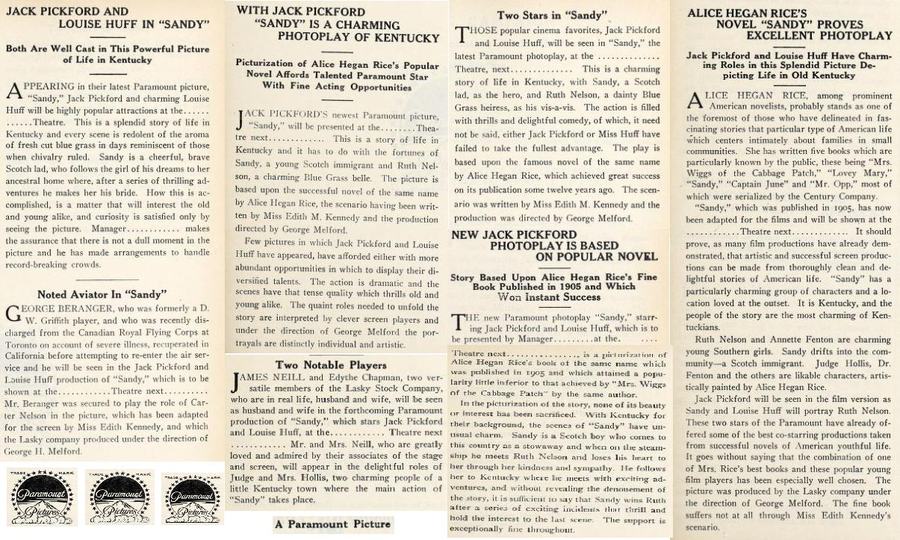
Edith M. Kennedy’s screenplay, based on Alice Hegan Rice’s novel, is another cornerstone of the film’s success. Adapting a novel for the silent screen required a unique skill set: the ability to distill complex literary narratives into a series of visual cues and concise intertitles. Kennedy manages to retain the essence of Rice’s story – its charm, its emotional core, and its character development – while translating it effectively into a purely visual medium. The intertitles are not merely expository; they often serve as extensions of the characters’ thoughts or as poetic descriptions that enhance the emotional landscape. This careful balance between showing and telling is crucial, preventing the film from becoming either too opaque or overly didactic. The strength of the adaptation lies in its ability to make the audience feel the story, rather than just understand it, a challenge that many adaptations, even today, struggle to overcome. The intricate dance of character motivation and plot progression, expertly handled here, rivals the narrative sophistication found in films like Ruling Passions, where the internal lives of characters drive the dramatic tension.
Viewing Sandy today offers a fascinating window into the cinematic sensibilities of the late 1910s. It was a period of immense innovation and rapid evolution for the nascent film industry. Just a few years prior, films like The Capture of a Sea Elephant and Hunting Wild Game in the South Pacific Islands exemplified the early documentary-style, purely visual curiosities. By 1918, however, narrative filmmaking had matured considerably, embracing complex plots, character development, and sophisticated emotional arcs. Sandy stands as a strong example of this maturation, showcasing how silent films could deliver compelling human dramas without relying on sound. The film's aesthetic, from its period costumes to its set designs, provides a rich historical texture, transporting the viewer back to an era where the flicker of images on a screen held a unique, almost magical, power.
The film also serves as a reminder of the unique demands placed upon silent film actors. Their craft was a delicate balance of theatricality and emotional authenticity, requiring them to communicate an entire spectrum of human experience through facial expressions, body language, and carefully choreographed movements. The 'silent voice' was not an absence of sound, but a heightened form of visual communication, a language unto itself. Comparing this to the directness of performances in films like The Silent Voice, one appreciates the nuanced control required to convey inner turmoil or joyous abandon without uttering a single word. Beranger and Faye, along with their colleagues, masterfully navigate this challenge, making their characters feel genuinely alive and relatable despite the temporal and technological chasm separating their world from ours.
The theme of lost love and its unexpected return is a timeless narrative device, one that continues to captivate audiences across generations. In Sandy, this trope is handled with a delicate touch, avoiding overt melodrama in favor of a more heartfelt exploration of human connection. The film suggests that some bonds, once forged, possess an inherent resilience, capable of withstanding the ravages of time and distance. This enduring romanticism, coupled with the protagonist’s journey of self-made success, imbues the film with an optimistic spirit that was likely very appealing to audiences of its time, particularly in the wake of global conflicts and societal shifts. It offers a comforting message: that even after years of separation and the building of new lives, the heart can still find its way back to its original compass point. One might even see parallels to the themes of enduring partnership and the formation of new bonds in films such as Pardners, where relationships, whether romantic or platonic, are tested and ultimately strengthened by shared experiences.
Sandy is more than just a historical artifact; it is a vibrant narrative that speaks to enduring human aspirations and emotions. Its exploration of the immigrant experience, the capricious nature of fate, and the resilient power of love makes it surprisingly relevant even today. While the technological trappings of its production are decidedly vintage, the core human drama remains refreshingly contemporary. The performances are captivating, the direction assured, and the adaptation intelligent. For cinephiles and casual viewers alike, Sandy offers a rewarding journey back to an era when cinema was still finding its voice, yet already speaking volumes through its eloquent silence. It reminds us that stories of hope, ambition, and rekindled affection are truly timeless, capable of transcending the limitations of their medium and finding a permanent place in the collective human heart. It's a film that quietly asserts its place in the pantheon of early American cinema, not with a roar, but with a gentle, persistent whisper of enduring charm and narrative grace, proving that some stories, much like certain loves, are simply meant to be rediscovered.
IMDb —
1935
Community
Log in to comment.