DbcultAccessing Vault...
Cult Review
Senior Film Conservator
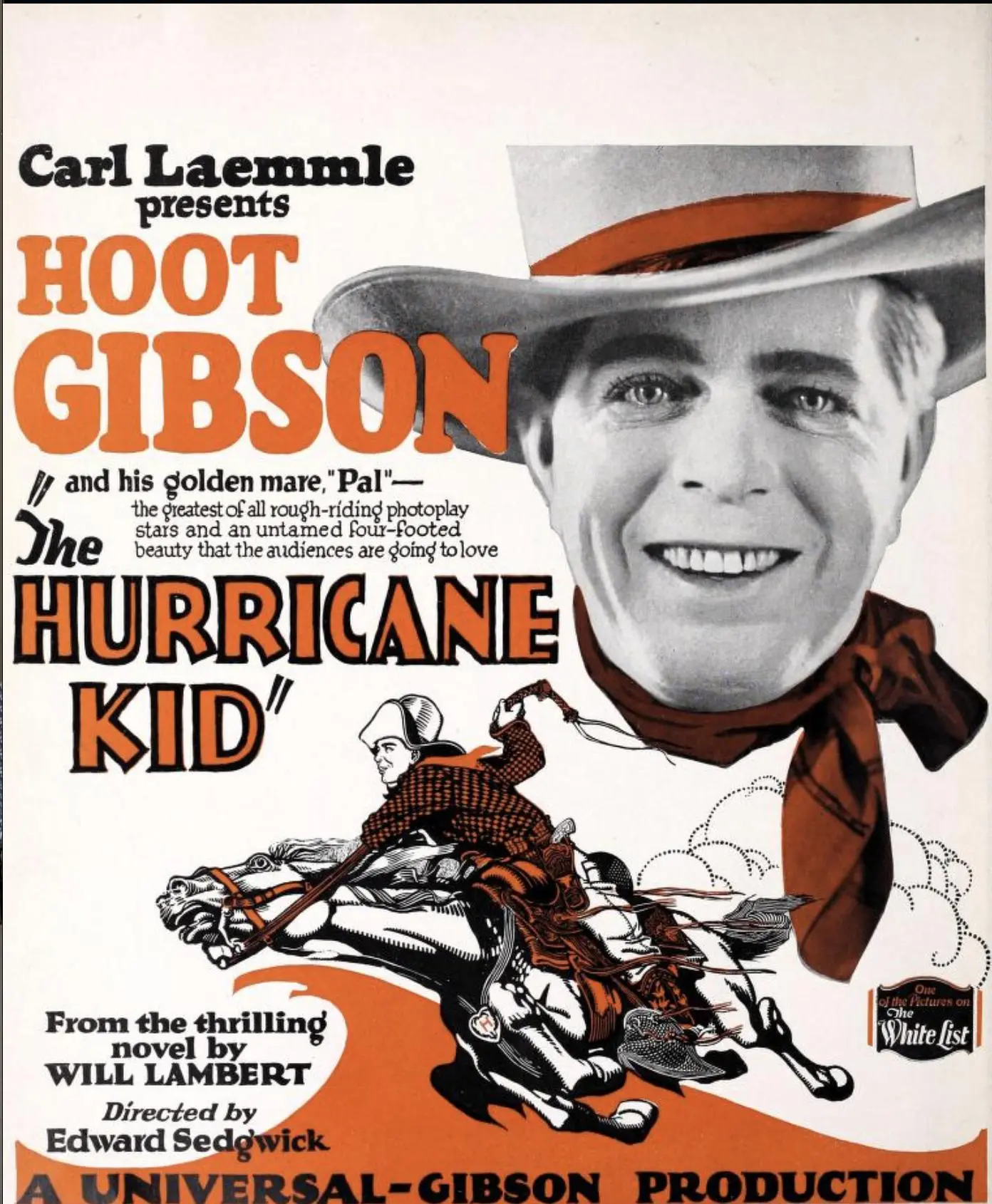
Is The Hurricane Kid worth watching today? Short answer: yes, but with significant caveats that demand a specific kind of viewer. This silent Western, a relic from 1925, is primarily for dedicated film historians, Hoot Gibson enthusiasts, and those with a genuine curiosity for the foundational narratives of American cinema.
It is decidedly not for audiences accustomed to rapid-fire pacing, intricate plots, or modern sound design. If your cinematic palate leans towards contemporary blockbusters or even talkies from the late 1920s onwards, 'The Hurricane Kid' might feel like a slow, quiet journey through an unfamiliar landscape.
The 1920s were a fascinating period for the Western genre, a time when the myth of the American frontier was still fresh in the collective consciousness, and its heroes were often real-life cowboys transitioning to the silver screen. The Hurricane Kid stands as a testament to this era, starring Hoot Gibson, a genuine rodeo champion whose authenticity lent considerable weight to his on-screen persona. Gibson wasn't just acting; he was embodying a lifestyle he knew intimately, a fact that resonates even through the grainy, flickering images of nearly a century ago.
The film’s narrative is as straightforward as a dusty trail: a virtuous hero, a damsel in distress, and a villainous foreman. This simplicity, while a hallmark of the genre, can be both its greatest strength and its most significant limitation. It allows for clear character motivations and an uncluttered plot, but it also leaves little room for thematic complexity or nuanced character development.
To cut straight to the chase for modern viewers:
This film works because of Hoot Gibson's magnetic, authentic screen presence and the raw, unadorned charm of its silent-era Western tropes. It offers a rare, accessible window into early cinematic storytelling, showcasing a time when visual narrative was paramount.
This film fails because its narrative simplicity can verge on the simplistic, and its technical limitations (lack of sound, rudimentary editing) demand a high degree of viewer patience and historical appreciation. Its villain, Lafe Baxter, is particularly one-note, lacking any real depth beyond snarling menace.
You should watch it if you are a student of film history, a fan of silent cinema, or someone who appreciates the unvarnished origins of the Western genre. It's an important piece of the puzzle, even if it's not a thrilling ride for everyone.
Hoot Gibson, as The Hurricane Kid, is undeniably the film's anchor. His performance is a masterclass in silent-era physicality. Without dialogue, every gesture, every tilt of the head, and every wide, earnest stare carries the weight of his character’s intentions. Gibson’s riding sequences are particularly impressive, showcasing a genuine equestrian talent that elevates the action beyond mere stunt work. He brings a sincerity to the role that transcends the often-melodramatic acting style of the period.
Marian Nixon, as Joan Langdon, plays the archetypal damsel with a quiet strength. While her role is largely reactive, Nixon imbues Joan with enough dignity to prevent her from becoming a mere plot device. Her expressions of fear, gratitude, and burgeoning affection are clear and impactful, especially in the context of the visual storytelling. Compare her subtle grace to some of the more overtly theatrical performances seen in films like The Doom of Darkness from a few years prior, and Nixon's approach feels refreshingly grounded.
William A. Steele's portrayal of Lafe Baxter is, unfortunately, less nuanced. Baxter is the embodiment of villainy, driven by crude desire and petty jealousy. Steele leans heavily into the exaggerated sneer and menacing physicality typical of silent antagonists. While effective in creating a clear foil for Gibson’s hero, it offers little in the way of psychological depth. He's a cartoon of a bad guy, which, for some, might be part of the charm, but for others, it's a missed opportunity for a more compelling conflict.
The direction, credited to both William Lambert and Richard Schayer (who also contributed to the screenplay with Raymond L. Schrock), is competent for its time. The filmmakers understand the grammar of the silent Western: wide shots establishing the vastness of the landscape, medium shots for character interactions, and close-ups to convey emotion. The pacing, while slow by modern metrics, is deliberate, allowing the audience to absorb the visual information and the intertitles.
One particularly effective sequence involves The Kid taming the wild mare. It's a visually driven segment that speaks volumes about his character – his patience, his skill, and his connection to the natural world. This scene, more than any other, highlights the strengths of silent storytelling, where action speaks louder than words, even if those 'words' are delivered via title cards.
The cinematography of The Hurricane Kid, while not groundbreaking, is functional and often evocative. The film makes good use of natural light and the expansive Western landscapes, conveying a sense of authenticity that was crucial for the genre. There are moments when the sheer scale of the ranch and the open country is genuinely impressive, reminding us of the practical challenges of filmmaking in that era.
However, one must approach the pacing with a different mindset. This isn't the frenetic, quick-cut style that would define later decades. Instead, scenes unfold with a measured rhythm, allowing the audience to linger on expressions and actions. The horse race, the film's climax, is a prime example. While it lacks the kinetic energy of a modern action sequence, it builds tension through the sheer effort of the riders and the dramatic stakes, rather than rapid editing or dynamic camera angles. It works. But it’s flawed.
For those unfamiliar with silent films, the reliance on intertitles can be jarring. They interrupt the visual flow, demanding reading time that contemporary cinema has largely eliminated. Yet, they are an integral part of the experience, providing dialogue and exposition that fills the void of spoken words. It’s a rhythmic shift that requires adjustment, but one that ultimately rewards patient viewing.
Yes, The Hurricane Kid holds value today, particularly as a historical document. It's a foundational piece of the Western genre, showcasing a genuine cowboy star in his element. While it may not captivate a mainstream audience, it offers a crucial understanding of cinematic evolution. It's a simple story, told simply, but with a heart that beats true to its era.
It's a chance to see how narratives were constructed before sound, how actors conveyed emotion with only their bodies and faces, and how the myth of the American West was first etched onto celluloid. Don't expect a thrilling, modern experience; expect a historical and cultural immersion.
One surprising element is the almost spiritual connection Gibson's character has with the horses. It’s more than just a plot device for the race; it's a recurring motif that speaks to the authentic cowboy spirit. The taming of the wild mare isn't just a display of skill; it feels like a communion, a mutual respect between man and beast that transcends the simple hero-villain dynamic. This subtle emphasis on the animal world grounds the film in a reality that many later Westerns, even with sound, struggled to capture. It gives the film an unexpected depth, a quiet dignity that resonates long after the credits roll.
The Hurricane Kid is more than just a film; it’s a time capsule. It’s a window into the origins of a beloved genre and a testament to the enduring appeal of the cowboy hero. While it won't resonate with everyone, its historical significance and the sheer authenticity of Hoot Gibson's performance make it a worthwhile watch for those willing to engage with cinema on its own terms, nearly a century removed from its creation.
It’s not a film to be judged by today’s standards of spectacle or narrative complexity, but rather as a foundational piece of cinematic art. Its charm lies in its simplicity, its earnestness, and the undeniable star power of a true Western icon. For the right audience, it’s not just a review; it’s a recommendation. Go in with an open mind and an appreciation for history, and you might just find yourself charmed by The Hurricane Kid. It’s an important film, even if it’s not for everyone. It reminds us where it all began, much like Over the Hill reminds us of early melodrama, or Why Worry? showcases silent comedy. Each plays its part in the grand tapestry of cinema.
IMDb —
1920
Community
Log in to comment.