DbcultAccessing Vault...
6.6/10
Senior Film Conservator
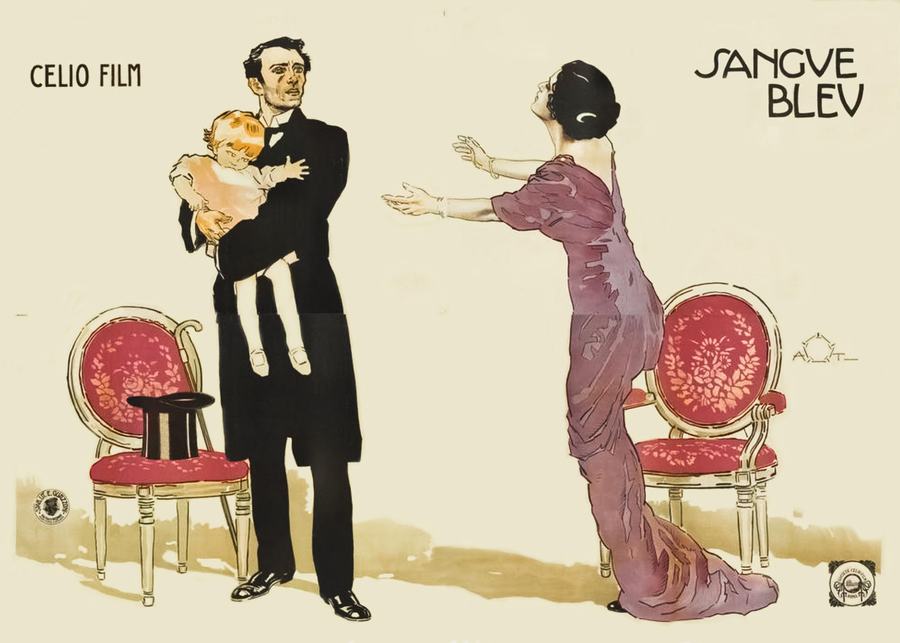
A definitive 6.6/10 rating for a film that redefined the boundaries of cult cinema. Sangue blu remains a cornerstone of transgressive art.
The annals of early cinema are replete with tales of societal intrigue and personal devastation, yet few capture the raw, unvarnished anguish of a woman's public immolation quite like Guglielmo Zorzi and Alberto Fassini's 1914 Italian silent film, Sangue blu. This cinematic artifact, a potent cocktail of melodrama and social commentary, plunges its audience into the heart-wrenching ordeal of a Princess, whose noble lineage, rather than protecting her, becomes the very anvil upon which her dignity is hammered into dust. It is a narrative that, even a century later, resonates with a chilling prescience, exploring themes of reputation, motherhood, and the brutal power of public perception that remain acutely relevant.
At its core, Sangue blu is a character study of a woman caught in the relentless gears of a patriarchal society, exacerbated by her elevated status. The Princess of Monte Cabello, having navigated the treacherous waters of divorce, clings desperately to the one remaining anchor in her storm-tossed life: her cherished daughter. This foundational premise immediately establishes a profound emotional vulnerability, setting the stage for the subsequent, almost inevitable, tragedy. Her ex-husband's mistress, a shadowy figure driven by malice and perhaps a desire for social elevation, orchestrates a scheme of diabolical simplicity and devastating efficacy. The hiring of private detectives, a relatively nascent profession at the time, to procure 'incriminating' photographs with the actor Jacques Wilson, speaks volumes about the burgeoning tabloid culture and the weaponization of visual media even in cinema's infancy. These images, likely doctored or taken out of context, become the instruments of her undoing, a testament to the destructive power of manufactured scandal.
The loss of her daughter, a consequence directly attributable to these fabricated indiscretions, represents not merely a legal defeat but a spiritual shattering. For a woman of her standing, and indeed for any mother, the severing of this bond is an unbearable torment, one that strips away her identity and purpose. It is at this nadir of despair that she falls into the clutches of Jacques Wilson, the very man whose unwitting or complicit involvement sealed her fate. Wilson, depicted as a man of moral laxity, burdened by gambling debts, transforms from a figure of accidental scandal into a deliberate tormentor. His coercion of the Princess to perform on stage, forcing her to trade her royal dignity for the spectacle of public humiliation, is the ultimate act of degradation. This descent into the theatrical world, a realm often viewed with suspicion and disdain by aristocratic society, underscores the complete collapse of her former life and status. The final, poignant note she dispatches to the Prince of Monte Cabello, promising to no longer compromise his name after her first performance, hints at a tragic, perhaps suicidal, resolution, a final act of defiant self-erasure to preserve the honor of her lineage.
While specific directorial choices by Zorzi and Fassini might be lost to the mists of time for many viewers, the sheer dramatic weight of Sangue blu rests heavily on the shoulders of its lead actress, Francesca Bertini. Bertini, a titan of early Italian cinema, was renowned for her expressive performances, her ability to convey profound emotion through gesture, facial nuance, and the very posture of her body. In an era before synchronized sound, the actor's physicality was paramount, and Bertini excelled at embodying complex internal states. One can only imagine the intensity with which she would have portrayed the Princess's initial regal composure, her gradual unraveling under the weight of accusation, the gut-wrenching despair of losing her child, and the ultimate, soul-crushing humiliation of being forced onto the stage. Her performance would have been a masterclass in silent melodrama, a visual symphony of suffering that would have captivated contemporary audiences.
Bertini's portrayal would have likely drawn comparisons to other great tragic heroines of the silent screen, women whose lives were defined by societal strictures and personal sacrifice. One might think of the titular character in La dame aux camélias, who also suffers societal scorn and makes the ultimate sacrifice for love, or perhaps even the stoic endurance seen in portrayals of figures like Cleopatra, albeit in a different context of power and downfall. Bertini's ability to imbue her characters with both vulnerability and an indomitable spirit made her a magnetic presence, ensuring that the Princess's plight in Sangue blu transcended mere plot points to become a deeply felt human tragedy. Her acting style, characterized by its dramatic flair and emotional depth, was perfectly suited to the grand, operatic narratives favored by Italian cinema of the period, making her an ideal choice to convey the full spectrum of a royal's disgrace.
Beyond its individual performances, Sangue blu serves as a fascinating lens through which to view early 20th-century societal anxieties. The film's preoccupation with reputation, particularly for women of high standing, reflects a rigid moral code that governed public and private life. Divorce itself was a contentious issue, often carrying a significant social stigma, and for a divorced woman, especially one with a child, any perceived moral failing could lead to swift and severe consequences. The narrative deftly weaves in elements of class disparity, highlighting how the powerful, even in their fall, become fodder for public consumption and the machinations of those seeking to exploit their vulnerability. Jacques Wilson's character embodies the opportunistic underbelly of society, a stark contrast to the Princess's inherited, though now crumbling, grandeur.
Cinematically, the film belongs to a period of rapid experimentation and evolution. Italian cinema, particularly its historical epics and melodramas, was making significant strides in narrative complexity and visual grandeur. While Sangue blu may not boast the colossal sets of a Quo Vadis? or The Last Days of Pompeii, its strength lies in its intimate psychological drama. The use of close-ups, often employed by Italian directors to emphasize emotional states, would have been crucial in conveying the Princess's torment. The blocking and staging of scenes, particularly those involving the 'incriminating' photographs and her forced stage debut, would have been meticulously crafted to maximize dramatic impact. The very title, 'Blue Blood,' is a poignant irony, as the Princess's noble heritage ultimately offers her no protection from the base instincts of betrayal and exploitation.
The collaborative effort of Guglielmo Zorzi and Alberto Fassini in crafting the screenplay for Sangue blu is a testament to their understanding of popular dramatic sensibilities. Zorzi, a prominent playwright and screenwriter of the era, brought a keen sense of theatrical structure and character development to the project. Fassini, likely contributing to the visual and narrative flow, helped translate these dramatic elements into compelling cinematic sequences. Their combined talents forged a story that, while melodramatic, delves into universal themes of injustice, parental love, and the fragility of honor. The plot's progression, from the initial domestic tranquility to the public spectacle of humiliation, follows a classic arc of tragedy, designed to elicit maximum empathy and emotional engagement from the audience. This was a hallmark of successful silent films, which relied heavily on clear narrative trajectories and heightened emotional stakes.
The film's exploration of moral ambiguity is particularly striking for its time. While the Princess is clearly the victim, Wilson is not a one-dimensional villain; his actions are driven by desperation, a common human failing. The ex-husband's mistress, while malicious, also represents a societal type – the ambitious outsider seeking to undermine established power structures. This nuanced characterization, even within the confines of silent film's broad strokes, adds layers to the narrative. The writers' decision to end with the Princess's cryptic note, rather than a clear resolution, leaves the audience with a profound sense of unresolved tension and impending doom, a sophisticated narrative choice that elevates the film beyond simple morality play.
While Sangue blu may not be as widely known today as some of its contemporary epics, its significance within the landscape of early Italian cinema is undeniable. It represents a potent example of the 'diva film,' a genre that showcased the dramatic talents of leading actresses like Francesca Bertini, often in tales of tragic romance, societal persecution, or grand passion. These films captivated audiences with their emotional intensity and the star power of their leads. The themes explored in Sangue blu – the vulnerability of women, the destructive force of scandal, the clash between individual desire and societal expectation – continue to resonate in contemporary storytelling. It is a reminder that the anxieties and moral dilemmas of humanity are often timeless, merely re-contextualized for each new era.
The film's narrative structure, with its focus on the gradual erosion of a character's standing and spirit, finds echoes in countless later dramas. The idea of a public figure being brought low by manufactured scandal is a recurring motif in cinema, from the early days of Hollywood to modern biopics. In its unflinching portrayal of a woman's public and private agony, Sangue blu stands as a powerful, albeit somber, testament to the expressive power of silent film and the enduring allure of human drama. It beckons us to consider not just the spectacle of a Princess's fall, but the broader implications of a society that so readily condemns and consumes such tragedies. For those interested in the foundational narratives of cinematic melodrama and the profound performances that defined the silent era, Sangue blu remains a compelling, if heartbreaking, viewing experience. It is a vibrant, albeit dark, thread in the rich tapestry of early Italian filmmaking, showcasing the genre's capacity for both grand theatricality and intimate, devastating human emotion. The film’s bold exploration of these often-taboo subjects solidified its place as a significant work in the burgeoning art form, proving that even without spoken words, cinema could articulate the deepest pangs of the human condition with unparalleled clarity and force. The legacy of films such as Sangue blu is not just in their historical value, but in their continued ability to provoke thought and empathy for the struggles of characters who, despite their royal trappings, are ultimately profoundly human.
IMDb 6.3
1935
Community
Log in to comment.