DbcultAccessing Vault...
6.4/10
Senior Film Conservator
A definitive 6.4/10 rating for a film that redefined the boundaries of cult cinema. The Clodhopper remains a cornerstone of transgressive art.
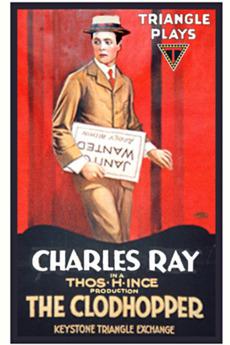
In the shimmering, nascent years of American cinema, a particular archetype held sway over the collective imagination: the 'rube,' the 'country bumpkin,' the innocent from the hinterlands thrust into the bewildering complexities of urban life. This figure, often a source of both gentle amusement and surprising wisdom, found its most quintessential embodiment in the persona of Charles Ray. His films, celebrated for their folksy charm and understated humor, frequently explored themes of authenticity, aspiration, and the clash between rural simplicity and metropolitan sophistication. Among his most beloved and illustrative works stands the 1917 feature, The Clodhopper. More than a mere comedic romp, this film serves as a fascinating cultural artifact, a testament to the era's fascination with self-made success and the enduring appeal of the underdog.
Directed by Victor Schertzinger, though Monte M. Katterjohn is credited with the screenplay, The Clodhopper masterfully weaves a narrative that resonates with timeless human desires: the yearning for freedom, the quest for identity, and the pursuit of a life beyond predetermined circumstances. It is a story that, despite its century-old vintage, still speaks to the universal experience of breaking free from the shackles of expectation and forging one's own destiny. The film’s power lies not just in its comedic beats, but in its earnest portrayal of a young man’s journey from overlooked laborer to an unexpected luminary, challenging societal preconceptions every step of the way.
At the heart of this narrative is Everett Nelson, portrayed with an endearing blend of naiveté and quiet determination by Charles Ray. Everett is an only son, condemned to an existence of unremitting toil on the family farm. His days are a relentless cycle of physical labor, a stark contrast to his father's comparatively genteel occupation as a country banker. This parental dynamic immediately establishes a subtle yet profound tension: the father, economically comfortable and detached from the physical demands of the land, implicitly expects his son to bear the brunt of the farm's burdens. This isn't merely a tale of hard work; it's a depiction of stifling obligation, of a young man’s spirit slowly being crushed under the weight of an unchosen inheritance. The farm, far from being a pastoral idyll, is presented as a crucible of drudgery, a place where ambition withers and personal growth is stunted.
The breaking point arrives, not with a dramatic explosion, but with the quiet, desperate resolve of a soul seeking air. Everett, unable to endure the psychological and physical bondage any longer, makes the momentous decision to abandon his rural confines for the magnetic pull of New York City. This departure is not an act of rebellion born of malice, but a primal scream for self-preservation, a yearning for a life where his identity is not solely defined by the dirt under his fingernails. His arrival in the metropolis is, predictably, a sensory overload, a whirlwind of towering buildings and bustling crowds that stands in stark opposition to the quiet fields he has left behind. The film implicitly critiques the narrow horizons of rural life while simultaneously highlighting the potential for disorientation in the urban sprawl.
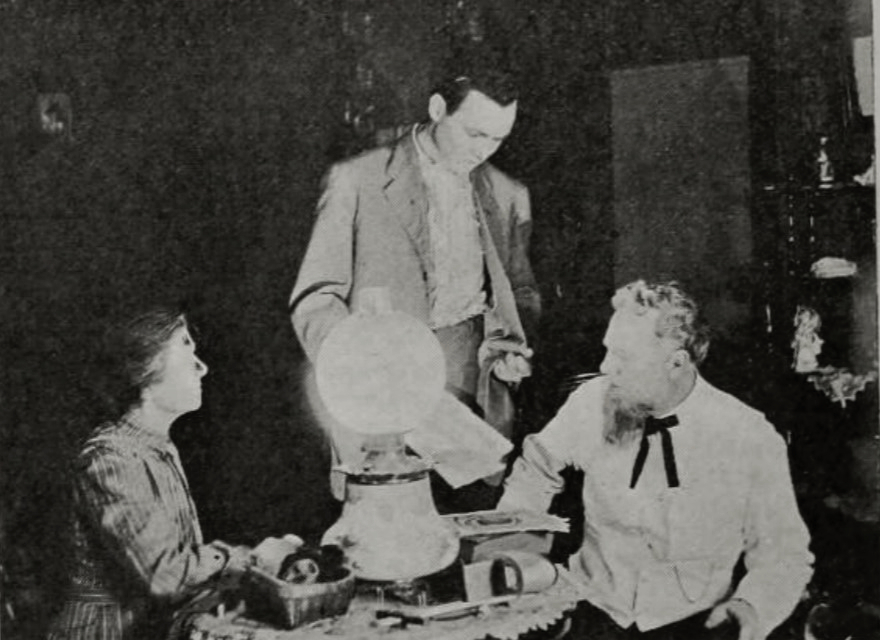
It is in this bewildering new environment that fate, or perhaps simply serendipity, intervenes with theatrical flair. While diligently searching for any means of sustenance, Everett stumbles upon a sign advertising for a janitor. His earnest, if somewhat clumsy, attempt to apply for the position leads him not to a broom closet, but onto the illuminated stage of a theater, mid-rehearsal for a boisterous musical comedy. The incongruity of the scene is palpable: the rough-hewn farm boy, still redolent of the countryside, suddenly stands amidst a flurry of sequined costumes and orchestrated chaos. The astounded manager, initially bewildered by this anachronistic apparition, experiences a sudden, brilliant epiphany. He sees not a clumsy interloper, but an untapped resource, a living embodiment of the rural archetype that could inject a much-needed dose of authentic humor into his show. Thus, the 'Clodhopper' is hired, not for his janitorial skills, but for his very essence—a testament to the unpredictable currents that can sweep one from obscurity to the precipice of fame.
Charles Ray's performance as Everett Nelson is nothing short of iconic, a masterclass in silent film acting that transcends mere caricature. Ray possessed a unique ability to imbue his 'rube' characters with a profound sense of dignity and inner life, moving beyond the easy laughs to reveal the humanity beneath the rustic exterior. His Everett is not simply a figure of fun; he is a young man grappling with self-doubt, societal judgment, and the bewildering demands of a new world. Ray’s subtle facial expressions, his hesitant gestures, and his innate awkwardness on stage initially convey the profound discomfort of a fish out of water. Yet, beneath this veneer of shyness, there is an undeniable core of sincerity and an untouched, genuine charm that slowly begins to captivate both the fictional audience within the film and the real audience watching it.
The brilliance of Ray's portrayal lies in his ability to make Everett's transformation feel earned and organic. When Everett performs his 'rural number,' it is not a calculated act of theatricality but an authentic expression of his lived experience. The humor derives from the raw honesty of his performance, a stark contrast to the polished, perhaps even artificial, routines of his seasoned colleagues. This authenticity strikes a chord, turning what could have been a fleeting novelty into a genuine sensation. Ray allows us to witness Everett's burgeoning confidence, the subtle shift in his posture, the growing glint in his eye as he realizes the power of his own unique voice. He transforms from an object of amusement into a figure of admiration, proving that true talent often resides in the most unexpected places and manifests in the most unvarnished forms.
This nuanced performance by Ray is complemented by the solid contributions of the supporting cast. Lydia Knott, often portraying maternal figures or women of quiet strength in her career, likely brought a grounding presence to the narrative, perhaps as a sympathetic observer or a figure from Everett's past. Tom Guise, a prolific character actor, would have lent his experience to the theatrical manager, making him a figure of opportunistic insight rather than mere exploitation. Margery Wilson, known for her ingénue roles, could have provided a romantic interest or a friendly face in the daunting urban landscape, adding another layer to Everett's journey of self-discovery. Charles K. French, a veteran of the screen, would have brought gravitas and perhaps a touch of sternness to the father figure, embodying the traditional expectations Everett seeks to escape. Together, this ensemble creates a believable world, allowing Ray's central performance to truly shine.
The Clodhopper is more than a simple comedy; it is a rich tapestry of thematic exploration. At its core lies the perennial dichotomy between rural and urban life. The film vividly contrasts the oppressive sameness of the farm with the exhilarating, if overwhelming, dynamism of the city. New York represents not just a geographical shift, but a psychological liberation, a space where Everett can shed the predetermined identity imposed by his birthplace and forge a new one. This theme of escape and reinvention resonated deeply with audiences of the era, many of whom were themselves immigrants or migrants seeking new opportunities in burgeoning cities.
Furthermore, the film is a powerful commentary on social mobility and the American dream. Everett's journey from an unappreciated farmhand to a celebrated stage performer is the quintessential rags-to-riches narrative, albeit one rooted in an unexpected discovery of self. It challenges the notion that one's origins dictate one's destiny, arguing instead for the transformative power of individual talent and perseverance. The film suggests that true worth is not measured by birthright or accumulated wealth, but by the ability to connect with others authentically and to express one's unique spirit. The 'prodigal son' motif is cleverly inverted here; Everett doesn't return in shame but as a triumphant individual, having not squandered his inheritance but rather discovered a far richer one within himself.
Monte M. Katterjohn's screenplay is a testament to the power of simple, yet effective storytelling. He crafts a narrative arc that is both predictable in its ultimate triumph and surprising in its execution. The pacing is deliberate, allowing the audience to fully appreciate Everett's initial struggles before reveling in his eventual success. The comedic elements are woven naturally into the plot, arising from character and situation rather than forced gags. The emotional beats are genuine, particularly in Everett's quiet moments of reflection and his ultimate vindication. Katterjohn understands the appeal of the 'rube' archetype and leverages it not for cheap laughs, but for meaningful insights into human nature.
Although specific directorial credits often blur in the early silent era, the visual language of The Clodhopper is remarkably effective. The contrast between the stark, perhaps even claustrophobic, visuals of the farm and the vibrant, bustling scenes of New York City and the theater is crucial. Cinematography, even in its nascent form, would have been employed to emphasize Everett's isolation and drudgery in the rural setting, perhaps through long shots emphasizing the vastness of the fields and the smallness of his figure. In contrast, the city scenes would have utilized more dynamic compositions, quick cuts, and close-ups to convey the energy and overwhelming nature of urban life. The stage sequences, in particular, would have required careful staging to convey the spectacle of the musical comedy and Everett's transformative performance.
The film's visual narrative likely played heavily on the juxtaposition of Everett's rustic attire and demeanor against the sophisticated backdrop of the theater. His entrance onto the stage would have been framed to maximize the comedic effect of his incongruity, while his subsequent performances would have gradually shifted the framing to emphasize his growing confidence and the audience's rapt attention. The art direction, simple as it might have been for the period, would have served to underscore the social stratification and the journey from one world to another. Every visual element would have contributed to the overarching theme of transformation and the unexpected emergence of talent.
The Clodhopper is a significant entry in the canon of early American silent films, not only for showcasing Charles Ray's singular talent but also for encapsulating a particular cultural moment. It speaks to the ongoing dialogue between tradition and modernity, individual desire and communal expectation, that defined the early 20th century. Its success paved the way for numerous similar 'fish out of water' narratives, a trope that continues to resonate in cinema to this day. The film's uncomplicated charm and uplifting message made it a favorite with audiences seeking escapism and inspiration during a period of immense social change.
When considering films of a similar thematic vein, a compelling comparison can be drawn to The Turmoil (1916). While distinct in their specific settings—The Turmoil delves into the world of industrial ambition and inherited wealth, based on Booth Tarkington's novel—both films explore the internal conflict of a sensitive son struggling against the rigid expectations of a powerful, practical father. In The Turmoil, the protagonist, Bibbs Sheridan, is a poet trapped in a family of industrialists; in The Clodhopper, Everett is an aspiring individual tethered to agrarian labor. Both narratives hinge on the sons' attempts to define themselves outside their fathers' blueprints for their lives, ultimately finding success and self-worth through their own unique talents and inclinations. These films reflect a broader societal questioning of traditional patriarchal authority and the growing emphasis on individual fulfillment.
Another, albeit more abstract, comparison could be made to the mythical journey of Peer Gynt. While Henrik Ibsen's epic poem and subsequent film adaptations are far grander in scope and darker in tone, they share with The Clodhopper the central theme of a protagonist who leaves his humble origins to wander the world, seeking his true self and encountering myriad experiences. Like Peer, Everett's journey is one of self-discovery, though his path is marked by comedic triumph rather than tragic introspection. Both characters, in their own ways, are on a quest to shed societal labels and find what truly defines them.
In conclusion, The Clodhopper stands as a charming and significant work from the silent era, a film that encapsulates the enduring appeal of the underdog and the power of authentic self-expression. Charles Ray's performance as Everett Nelson is a masterclass in nuanced characterization, elevating what could have been a simplistic comedic role into a compelling portrayal of a young man's journey to self-realization. The film's exploration of themes like rural-urban migration, social mobility, and the search for identity remains remarkably pertinent, offering insights into both the historical context of its creation and the timeless human condition.
Monte M. Katterjohn's well-crafted narrative, combined with the effective visual storytelling of its time, ensures that The Clodhopper is more than just a historical curiosity. It is a heartwarming tale of an individual defying expectations, proving that an unvarnished spirit and genuine talent can shine brightest, even on the most unexpected of stages. For those interested in the foundational narratives of American cinema, the evolution of character archetypes, or simply a story of triumph against the odds, The Clodhopper offers a delightful and surprisingly profound viewing experience, cementing its place as a minor gem from a bygone era.
IMDb 6.7
1930
Community
Log in to comment.