DbcultAccessing Vault...
Cult Review
Senior Film Conservator
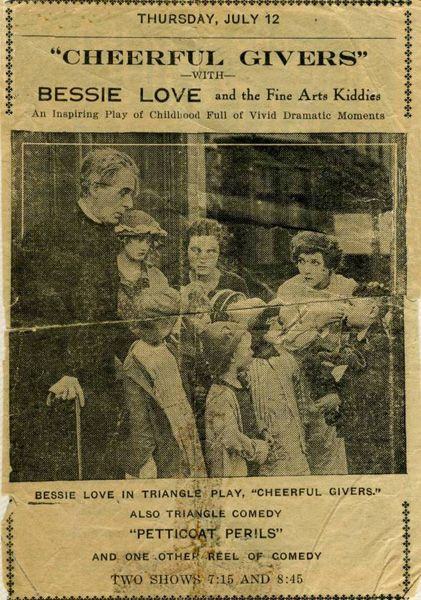
In the pantheon of silent cinema, few films capture the delicate intersection of domestic comedy and social pathos as effectively as the 1917 Fine Arts production, Cheerful Givers. While contemporary audiences might initially perceive the plot as a quaint relic of Victorian sentimentality, a closer inspection reveals a work of surprising structural complexity and thematic resonance. At its core, the film is a vibrant rebuttal to the cold, transactional nature of the era's burgeoning industrialism. It posits that the true measure of a society lies not in its capital accumulation, but in its capacity for spontaneous, inconvenient kindness.
The narrative engine is ignited by an act of corporate coldness that feels strikingly modern. When a formidable businesswoman—played with a chilling, stiff-collared precision—forecloses on an orphanage, she isn't merely reclaiming property; she is liquidating human potential. This act of dispossession serves as the catalyst for Judy’s family to intervene. What follows is not a sanitized depiction of charity, but a gritty, lived-in portrayal of what it means to actually 'take in' seven distinct personalities. The film avoids the pitfalls of easy hagiography, choosing instead to show the logistical and emotional friction that arises when a small home suddenly becomes a microcosm of the world's unwanted.
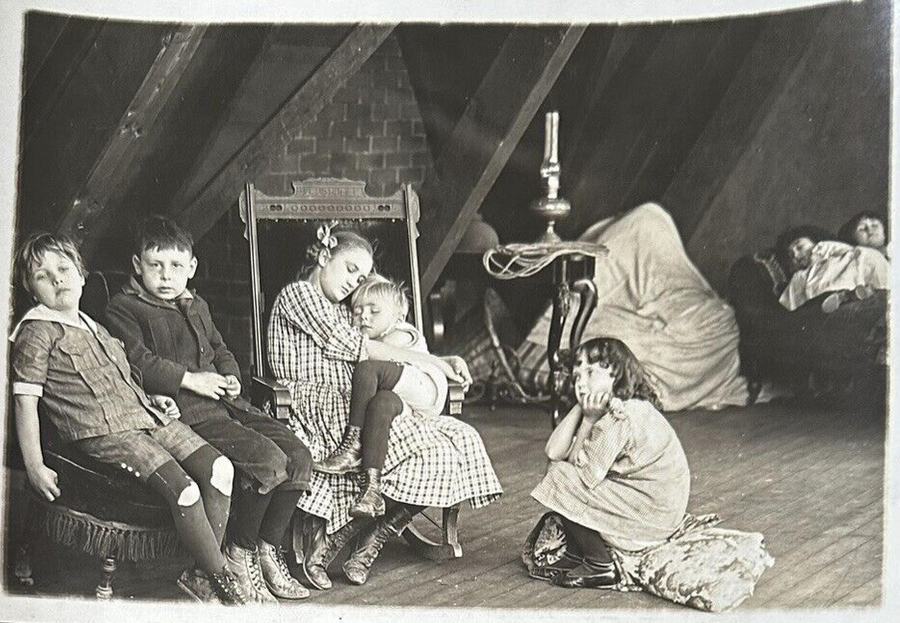
At the center of this storm is Bessie Love. Her performance as Judy is a masterclass in the gestural language of the silent era. Unlike the grand, theatrical flourishes common in earlier melodramas like The Escape, Love employs a nuanced, almost naturalistic approach. Her eyes serve as the film's emotional compass, shifting from the frantic energy of managing seven rambunctious children to a quiet, steely resolve when facing her social superiors. She embodies a specific type of American pluck that was popular during the WWI era, yet she imbues it with a vulnerability that prevents the character from becoming a mere caricature of virtue.
The chemistry between Love and the ensemble of child actors—the legendary 'Triangle Kids'—is the film's beating heart. Performers like 'Baby' Carmen De Rue and Georgie Stone bring a chaotic, unscripted energy to the scenes. These children weren't just props; they were seasoned professionals who understood how to occupy the frame without overshadowing the lead. The scenes of domestic upheaval, where the seven orphans navigate their new surroundings, possess a kinetic quality that rivals the sophisticated social comedies of the time, such as The Social Secretary.
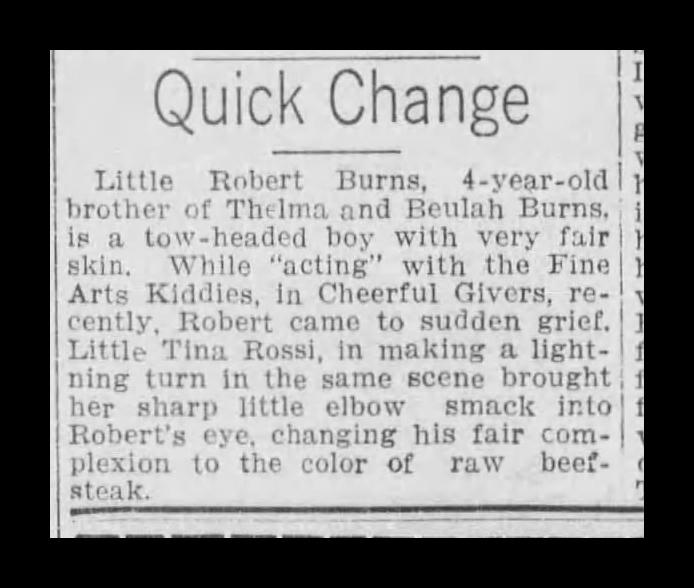
The screenplay by Mary H. O'Connor deserves significant academic attention. O'Connor was a pioneer in the industry, and her writing in Cheerful Givers reflects a keen understanding of class dynamics. She doesn't just present poverty as a condition to be pitied; she presents it as a systemic failure that requires a communal response. The dialogue (conveyed through intertitles) is sharp and devoid of the flowery excess that plagued many of her contemporaries' works. There is a lean, muscular quality to the storytelling that keeps the pacing brisk even during the more contemplative moments.
O'Connor’s work here can be compared to the moral weight found in The Reward of Patience, yet it possesses a more rebellious streak. The businesswoman antagonist isn't just a 'villain' in the traditional sense; she is a representation of a specific ideological stance—the belief that property rights supersede human rights. By framing the conflict in this way, O'Connor elevates the film from a simple tear-jerker to a potent piece of social commentary. It asks the audience to question the morality of an economic system that allows for the displacement of the most vulnerable for the sake of a ledger balance.
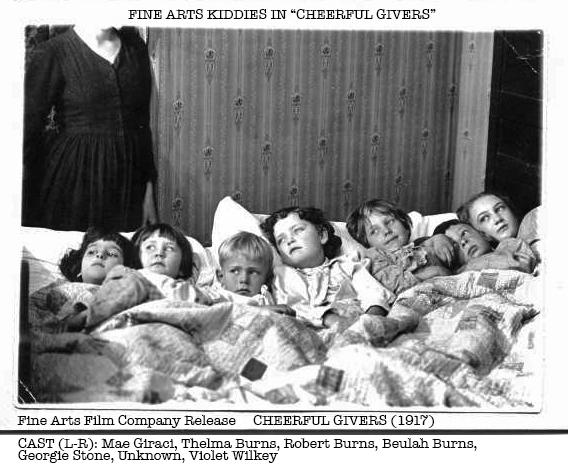
Visually, the film utilizes the cramped interiors of Judy's home to create a sense of 'crowded warmth.' The cinematography employs a shallow depth of field in many of the group scenes, forcing the audience into the physical space with the characters. This is a stark contrast to the wide, cold, and symmetrical shots used to depict the businesswoman’s office and the foreclosed orphanage. This visual dichotomy reinforces the film’s central theme: the coldness of space versus the heat of humanity.
The lighting, while limited by the technology of 1917, is used effectively to highlight the textures of poverty—the worn edges of a table, the patches on a coat, the flickering light of a hearth. These details ground the film in a tactile reality that makes the altruism of Judy’s family feel all the more significant. It’s easy to be a 'cheerful giver' when one has an abundance; it is an act of profound courage to give when one is barely clinging to the edge themselves. This sense of stakes is something often missing in modern retellings of similar stories, which tend to gloss over the material consequences of such radical generosity.
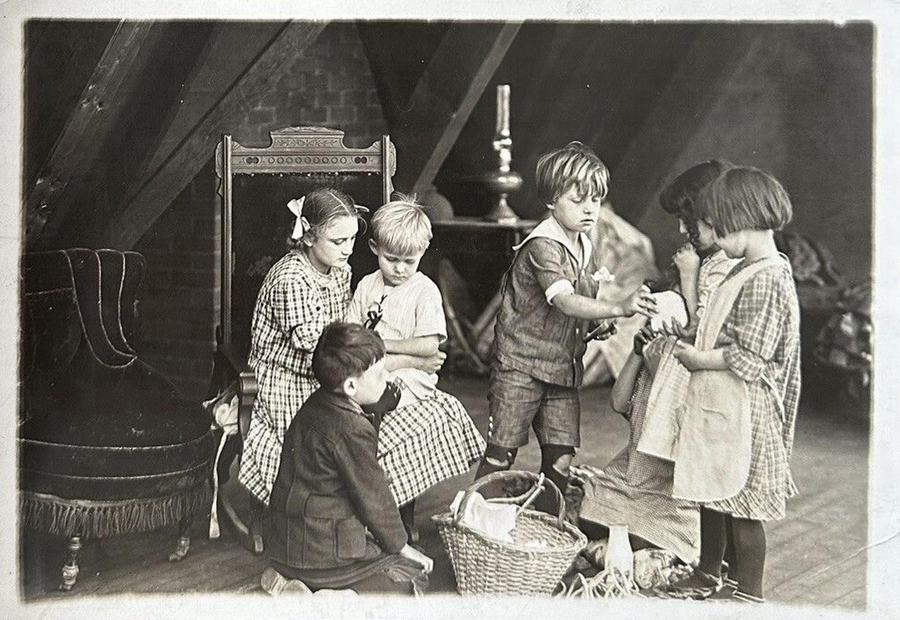
When we place Cheerful Givers alongside other films of the era, such as A Daughter of the City or The Lily and the Rose, we see a recurring preoccupation with the moral fiber of the urban working class. However, Cheerful Givers distinguishes itself by its focus on the collective rather than the individual. While many silent dramas focus on a single protagonist’s rise or fall, this film is an ensemble piece. The children are not just background noise; they are active participants in the narrative, each with their own minor arcs and distinct personalities.
Furthermore, the film’s treatment of the antagonist is more nuanced than the mustache-twirling villains of Jim Bludso. The businesswoman is a product of her environment—a woman who has had to harden herself to succeed in a man's world, only to lose her humanity in the process. This adds a layer of tragic irony to the proceedings. Her redemption, or lack thereof, serves as a cautionary tale about the spiritual cost of unbridled ambition.
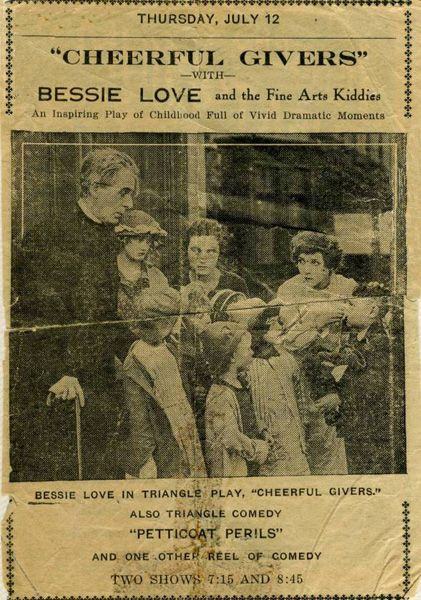
One cannot discuss Cheerful Givers without acknowledging the specific brilliance of the child performers. In an era before strict child labor laws and specialized acting coaches for minors, these kids delivered performances of startling authenticity. Violet Radcliffe and Georgie Stone, in particular, display a comedic timing that feels improvised and fresh. Their presence prevents the film from descending into saccharine territory. They bring a necessary element of 'messiness' to the household, reminding the viewer that children are not just angelic symbols of innocence, but loud, hungry, and demanding human beings.
The way the camera lingers on their faces—capturing moments of wonder, mischief, and occasional sorrow—suggests a directorial respect for the child’s perspective that was ahead of its time. This isn't just a film about children; it’s a film that respects the internal lives of children. This same respect for the marginalized can be seen in the thematic underpinnings of The Girl from the Marsh Croft, though Cheerful Givers maintains a much lighter, more accessible tone.
As we look back at Cheerful Givers over a century after its release, its relevance has not diminished. In an age where the 'housing crisis' and 'institutional neglect' remain headline fixtures, the film’s central conflict feels painfully familiar. It challenges the viewer to look beyond the statistics of poverty and see the faces of the individuals affected. It champions the idea that the domestic sphere is not a place of retreat from the world, but a place where we can actively reshape the world through acts of radical inclusion.
The technical proficiency of the Fine Arts studio, combined with the luminous presence of Bessie Love and the sharp wit of Mary H. O'Connor, creates a cinematic experience that is both intellectually stimulating and emotionally satisfying. It is a film that demands to be seen not just as a historical curiosity, but as a vibrant, living piece of art. It reminds us that while the 'hard-hearted businesswomen' of the world may hold the deeds to the buildings, they do not hold the deeds to our souls. The 'cheerful givers' are the ones who ultimately inherit the earth, even if their inheritance is nothing more than a crowded table and a house full of laughter.
For those interested in the evolution of social drama, comparing this to the grander scale of Vanity Fair or the romantic sweep of The River of Romance provides an excellent context for how 1917 was a pivotal year for American cinema. Cheerful Givers stands as a testament to the power of small stories to tell big truths. It is a quiet masterpiece that deserves a place in the conversation regarding the most influential films of the silent era.
IMDb 7.1
1935
Community
Log in to comment.